
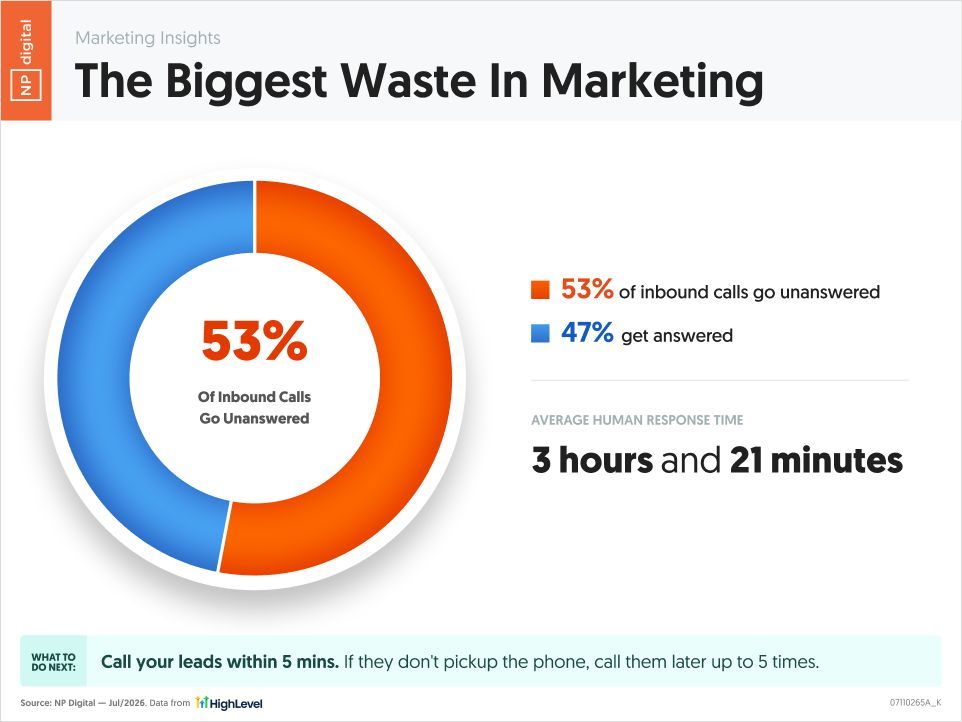
In a recent LinkedIn post, Neil Patel highlights what he believes is the most significant drain on marketing resources: the delayed follow-up with generated leads.
Patel challenges common assumptions about where marketing budgets are most inefficiently spent, moving beyond just ad spend or personnel costs. He points to data suggesting a more critical issue lies in the operational efficiency of sales and marketing teams once a lead is acquired.
What do you think the biggest waste in marketing is?
As Neil Patel notes, the common perception might be that excessive ad spend or high staffing costs represent the primary financial leaks in a marketing strategy. However, he posits that these are not the ultimate culprits.
The Real Culprit: Delayed Lead Response
Neil Patel emphasizes that the true inefficiency, supported by data from HighLevel, stems from the time lag between a lead being generated and the company’s engagement with that potential customer. This delay, he argues, can render initial marketing efforts less effective and significantly impact conversion rates.
It’s not ad spend.
According to Patel, the money invested in generating those leads – whether through advertising, content marketing, or other channels – is often undermined by the subsequent lack of prompt action. This suggests that while lead generation is crucial, its effectiveness is heavily dependent on the speed and quality of the follow-up process.
It’s not the money you spend on humans to get the work done.
Patel further elaborates on this point, suggesting that even a well-staffed marketing and sales team can be inefficient if their processes for lead engagement are slow. The investment in human capital is wasted if those individuals are not empowered or equipped to respond to new leads in a timely manner.
Data-Backed Insights on Lead Management
The core of Neil Patel’s argument rests on the findings from HighLevel. He directs his audience to examine this data to understand the tangible impact of slow lead follow-up.
The Impact of Speed
In Patel’s view, the data underscores a critical operational challenge for many businesses. While generating leads is often a primary goal, the failure to act swiftly on those opportunities represents a significant, yet often overlooked, waste of marketing investment. This highlights the need for businesses to not only focus on attracting leads but also on optimizing their internal processes for rapid and effective engagement.
According to HighLevel, it’s that companies generate leads but take a very long time to get back to them.
Neil Patel concludes by urging marketers and business leaders to re-evaluate their lead management strategies, emphasizing that prompt follow-up is not just good practice but a critical factor in maximizing the return on marketing investments. The insights shared via his LinkedIn post serve as a crucial reminder that the journey from lead generation to conversion is highly time-sensitive.
📝 About This Content
This article is based on insights shared by Neil Patel on LinkedIn.
📅 Originally posted on July 16, 2026 | View original post on LinkedIn →