
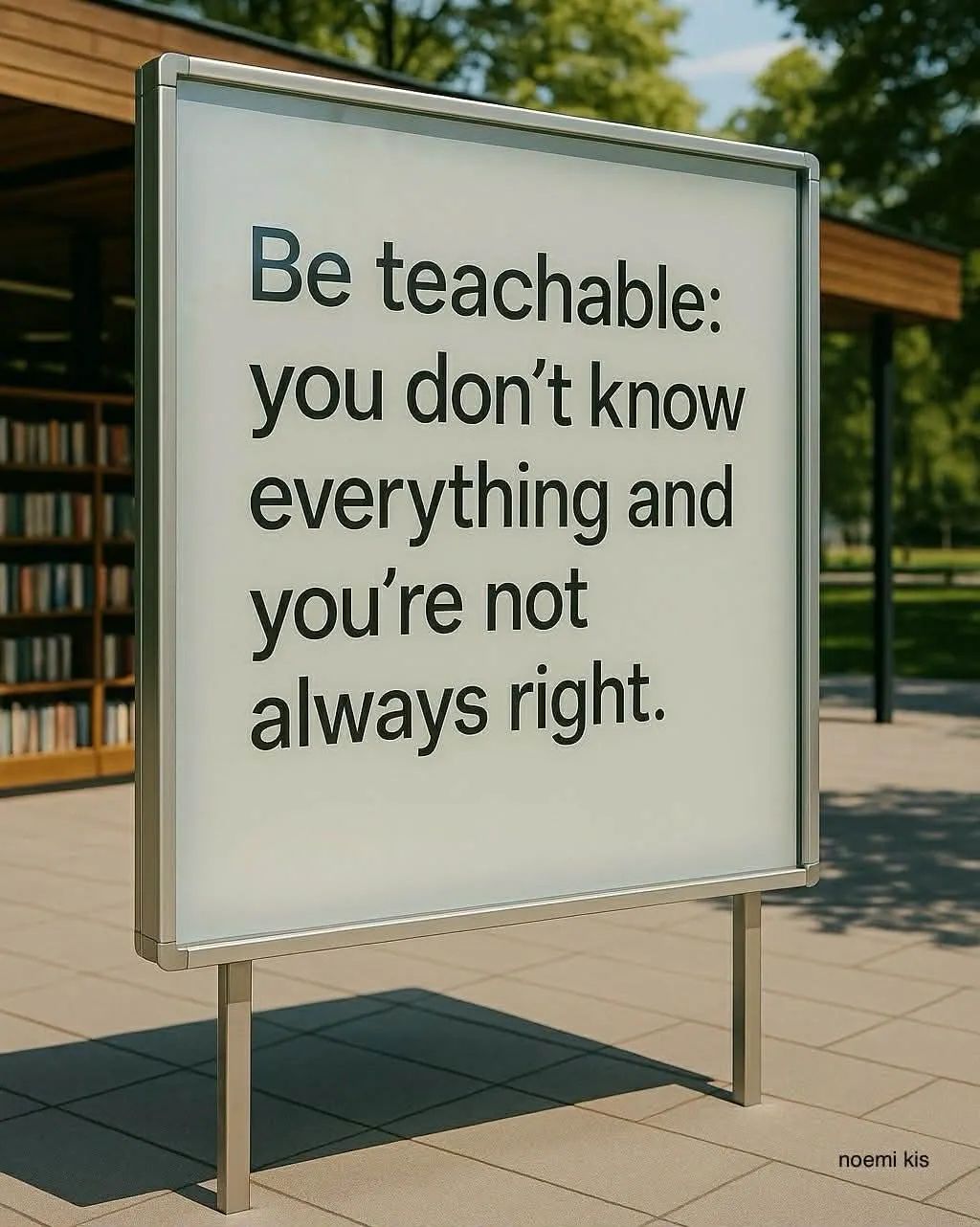
In a recent LinkedIn post, Noemi Kis✨ explores a fundamental yet often overlooked driver of career advancement: the willingness to embrace continuous learning and acknowledge what one doesn’t know. Kis✨ argues that a perceived mastery of a subject can, paradoxically, be the quickest route to stagnation.
The Peril of Perceived Expertise
Noemi Kis✨ begins by highlighting a common pitfall that can derail professional development. According to Kis✨, acting as if one has all the answers is detrimental to long-term success. Top performers, in contrast, adopt a mindset of perpetual learning, viewing every interaction as an opportunity for growth.
“They treat every interaction like a chance to level up. They’re not afraid to be wrong, they WANT to be wrong. Because every mistake is a shortcut to growth.”
This perspective reframes mistakes not as failures, but as essential components of a rapid learning curve. Kis✨ emphasizes that this active pursuit of knowledge and self-improvement is the true differentiator in professional environments, rather than inherent intelligence, job titles, or simply putting in long hours.
Actionable Strategies for Continuous Improvement
To illustrate this philosophy, Noemi Kis✨ outlines three key areas where individuals can cultivate a growth-oriented approach:
1. Treating Everything as a Learning Opportunity
Kis✨ suggests that even when familiar with a topic, diligent professionals will still engage actively. This includes:
- Taking thorough notes.
- Asking clarifying questions without hesitation.
- Actively looking for underlying patterns and connections, not just surface-level answers.
2. Embracing Feedback
A crucial aspect of continuous learning is how individuals receive and process feedback. Noemi Kis✨ advises:
“Ask for specific, real-time input. Reflect before reacting. Track what they’ve applied.”
This proactive approach to feedback, involving thoughtful reflection and application, ensures that input leads to tangible improvements rather than defensiveness.
3. Building Systems for Improvement
Sustained growth requires structured effort. Kis✨ recommends establishing systems such as:
- Weekly reviews of both successes and missed opportunities.
- Maintaining a dedicated document for learnings.
- Regularly auditing personal blind spots.
The Discipline of Discomfort
Ultimately, Noemi Kis✨ posits that career longevity and success are built not on existing knowledge, but on the velocity of learning. The critical factor, according to Kis✨, is the discipline to remain in a state of productive discomfort.
“This is the separation line. Not IQ. Not title. Not hours worked. It’s the discipline to stay uncomfortable. The willingness to be wrong. And the hunger to get better – every single day.”
This unwavering commitment to learning and self-improvement, even when it involves facing errors or uncertainty, is presented as the true engine of career advancement.
📝 About This Content
This article is based on insights shared by Noemi Kis✨ on LinkedIn.
📅 Originally posted on December 30, 2025 | View original post on LinkedIn →