
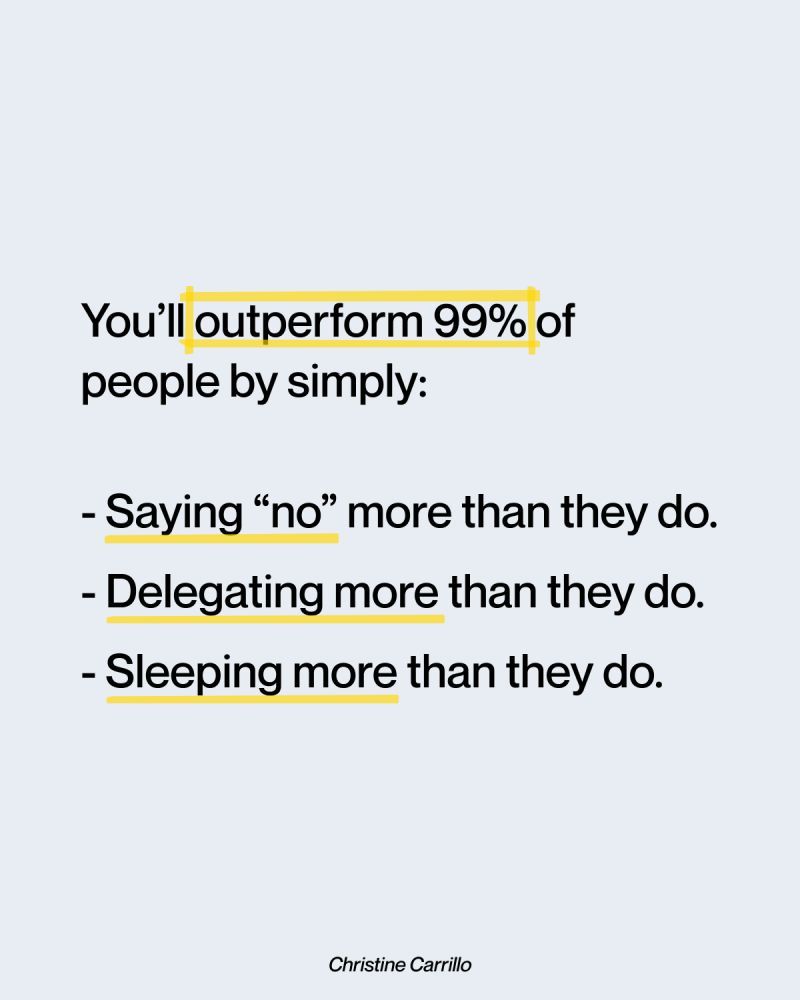
In a recent LinkedIn post, Christine Carrillo discusses a crucial, yet often overlooked, skill for Chief Executive Officers: the ability to intentionally do less. Carrillo argues that contrary to popular belief, relentless 24/7 grinding does not equate to success, but often leads to burnout and hinders business growth.
Carrillo highlights the detrimental impact of overwork, stating:
“Most CEOs burn out before they ever reach success. They think grinding 24/7 means they’ll get ahead. It does not.”
The business advisor contends that this intense, unsustainable pace has led many capable leaders to self-destruct, taking their businesses down with them. As Carrillo notes, she has “watched brilliant CEOs burn themselves and their business to the ground because of it.” This perspective challenges the conventional Silicon Valley ethos of constant hustle, proposing a more strategic approach to leadership.
The Power of Strategic ‘No’
Carrillo proposes that by adopting a few simple practices, CEOs can significantly outperform their peers. The first, and perhaps most impactful, is mastering the art of saying no. According to Carrillo, the default should be to decline opportunities unless they are a resounding “hell yes.” This approach acts as a powerful filter against distractions that pull focus away from core objectives.
“If it isn’t a hell yes, it’s a distraction.”
This principle, Carrillo suggests, is fundamental to maintaining focus and ensuring that energy is directed towards the most critical initiatives. By rigorously vetting commitments, CEOs can protect their time and mental bandwidth for what truly matters.
Delegation as a Core Competency
Another key tenet of Carrillo’s advice centers on delegation. She asserts that CEOs should delegate any task that can be accomplished adequately by someone else. The benchmark for delegation, as outlined by Carrillo, is surprisingly lenient: if a task can be performed “80% as well as you, let it go.” This strategy frees up the CEO’s time for higher-level strategic thinking, problem-solving, and leadership development, rather than getting bogged down in operational details.
“Delegating everything that someone else can do. If it can be done 80% as well as you, let it go.”
Carrillo emphasizes that this isn’t about shirking responsibility, but about optimizing the CEO’s role and empowering the team. Effective delegation fosters growth within the organization and allows the CEO to focus on their unique contributions.
The Importance of Rest and Recovery
Finally, Carrillo stresses the often-underestimated importance of sleep and rest. She argues that optimal performance, creativity, and decision-making stem from a well-rested mind. The post posits that a company cannot afford a CEO who is perpetually exhausted and struggling to keep up.
“Your best ideas come when you’re rested and focused.”
In Carrillo’s view, prioritizing sleep is not a sign of weakness but a strategic imperative. A rested leader is a more effective leader, capable of making sound judgments and driving the business forward with clarity and vision. She concludes by drawing a parallel: “Imagine hiring a CEO to replace you, who was always tired and barely keeping it together? Your company can’t afford that hire. And it can’t afford you running on empty either.”
Christine Carrillo’s insights offer a compelling counter-narrative to the burnout culture, advocating for a more sustainable and effective model of leadership.
📝 About This Content
This article is based on insights shared by Christine Carrillo on LinkedIn.
📅 Originally posted on March 30, 2026 | View original post on LinkedIn →