
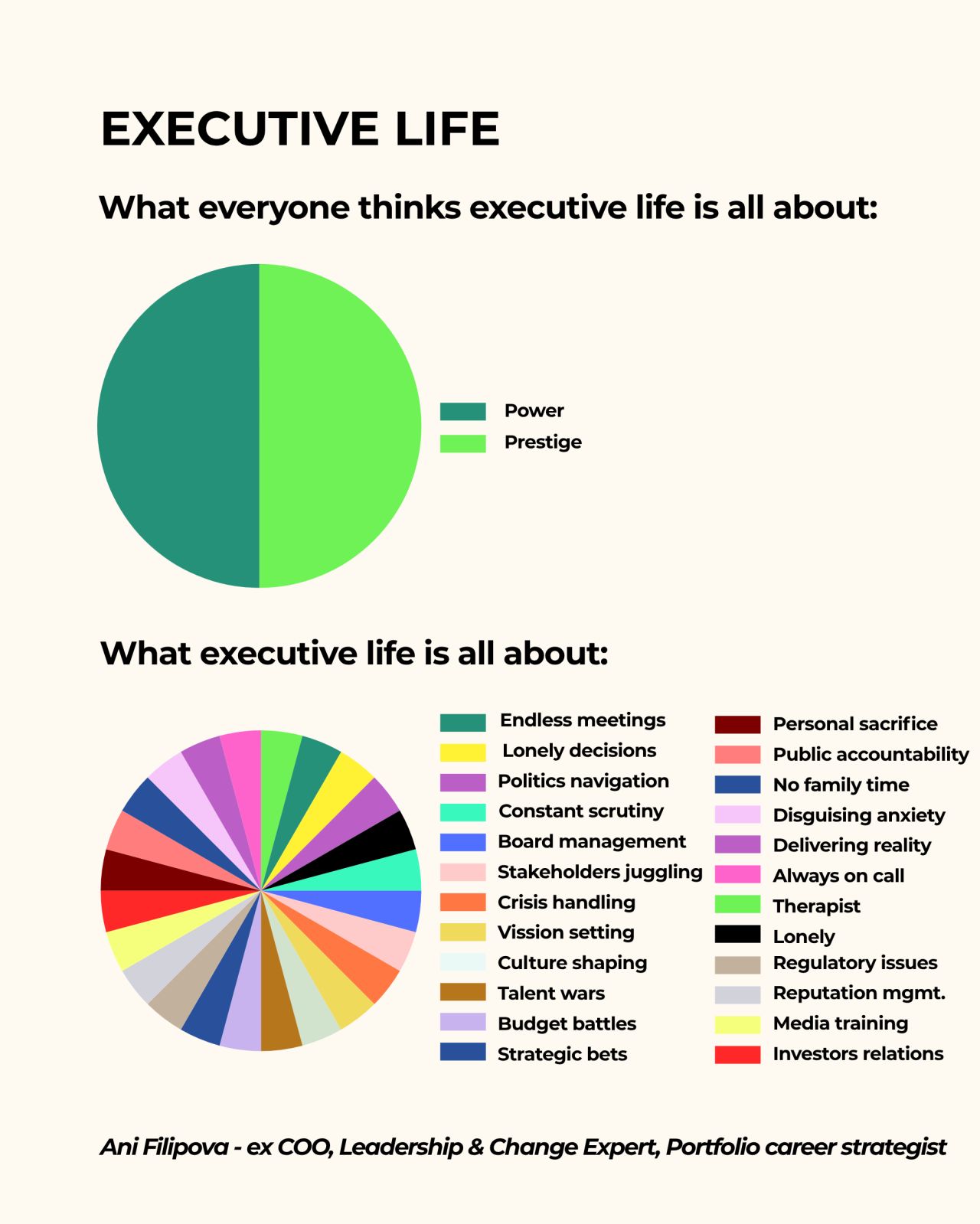
The executive life. It’s often painted with broad strokes of power, prestige, and unwavering confidence. We see the corner office, the commanding presence, and the decisive actions. But beneath the polished surface lies a reality far more complex and demanding, a version of leadership that rarely makes headlines or boardroom presentations. This is the executive life nobody talks about – the human cost behind the success.
Executives, despite their elevated positions, are fundamentally human. They experience the same basic needs and emotions as everyone else: they eat, they sleep, they love, they feel joy, and they suffer. They face moments of doubt, questioning their own adequacy, and they experience the sting of failure. Yet, the nature of their role often demands that these vulnerabilities remain hidden, masked by a facade of strength and certainty.
The Hidden Realities of Executive Responsibility
Drawing from personal experience, Ani Filipova sheds light on the unspoken challenges that define the executive journey:
The Daily Grind and Strategic Burdens
- Endless Meetings: The executive calendar is not merely a schedule; it’s a master. Time is consumed by a relentless stream of meetings, often dictating the flow of the day rather than serving it.
- Lonely Decisions: The weight of critical choices often falls solely on the executive’s shoulders. The hardest calls, those with far-reaching consequences, are made in solitude, devoid of shared burden.
- Political Navigation: A significant portion of an executive’s energy is dedicated to managing interpersonal dynamics, navigating egos, and fostering alliances, often overshadowing core strategic tasks.
- Constant Scrutiny: Every communication, every decision, and every action is subject to intense analysis and often criticism, demanding a level of precision and foresight that is exhausting.
- Board Management: There’s a perpetual need to justify decisions, demonstrate value, and earn the confidence of the board, requiring constant performance and reassurance.
- Stakeholder Juggling: Balancing the diverse and often conflicting demands of various stakeholders – employees, customers, investors, and the public – is a perpetual act of complex negotiation.
- Crisis Handling: In times of turmoil, the executive is invariably the first point of contact, the one expected to provide immediate solutions and calm the storm.
The Long-Term Vision and Human Impact
- Vision Setting: Communicating a clear and compelling vision requires relentless repetition, ensuring the message resonates across the entire organization, time and time again.
- Culture Shaping: With thousands looking up to them, executives are architects of organizational culture, their actions and attitudes setting the tone for the entire company.
- Talent Wars: Attracting and retaining top talent is a constant battle, as high performers are frequently courted with more lucrative offers.
- Budget Battles: Securing the necessary resources often involves intense competition and advocacy, fighting for funding with limited available capital.
- Strategic Bets: Making high-stakes, million-dollar decisions with incomplete or uncertain information is a regular occurrence, demanding a high tolerance for ambiguity.
- Regulatory Compliance: The meticulous, often tedious, work of ensuring regulatory compliance is crucial; failure to do so can have catastrophic consequences.
- Reputation Management: In the digital age, a single misstep or negative comment can quickly erode years of built trust and goodwill.
- Media Training: Executives must learn the art of articulate communication, often mastering the skill of conveying information without revealing substance.
- Investor Relations: Consistently bridging the gap between projected outcomes and actual results requires skillful communication and expectation management.
The Personal Sacrifice at the Summit
Beyond the professional challenges, the executive role demands profound personal sacrifices:
- Personal Sacrifice: The relentless demands often mean missing significant personal milestones and moments that can never be reclaimed.
- Public Accountability: When initiatives fail or crises erupt, the executive bears the brunt of public criticism and is often the face of failure.
- Family Estrangement: The constant travel and long hours can lead to a feeling of being a stranger at home, with children perceiving the parent as perpetually absent.
- Anxiety Disguiser: Projecting unwavering confidence while grappling with internal doubt and anxiety is a constant performance.
- Chief Apologizer: Executives often find themselves apologizing for circumstances beyond their control or for decisions that impact others negatively, even when they weren’t directly responsible.
- Reality Deliverer: Even when delivering difficult news or making unpopular decisions that impact dreams, the executive must remain resolute.
- Always On Call: The mental and digital tether to the job is unbroken; there is no true ‘off switch’ for the responsibilities that weigh on an executive’s mind.
- Untrained Therapist: While employees bring their problems to the executive, the executive’s own burdens are rarely shared or addressed.
- Loneliest Person in the Building: Despite being surrounded by people, the unique pressures and isolation of the role can lead to a profound sense of loneliness.
The allure of power and prestige is undeniable. However, the price of reaching the top is not measured merely in financial terms but in the intangible pieces of oneself that are irrevocably altered or lost. As Ani Filipova wisely advises, aspiring to the corner office is a valid pursuit, but it’s crucial to understand the full scope of what that entails. The climb to the top may offer a breathtaking view, but the journey itself is often a solitary and challenging one.
This article was inspired by the insights shared by Ani Filipova on LinkedIn.
📝 About This Content
This article is based on insights shared by Ani Filipova on LinkedIn.
📅 Originally posted on October 27, 2025 | View original post on LinkedIn →