
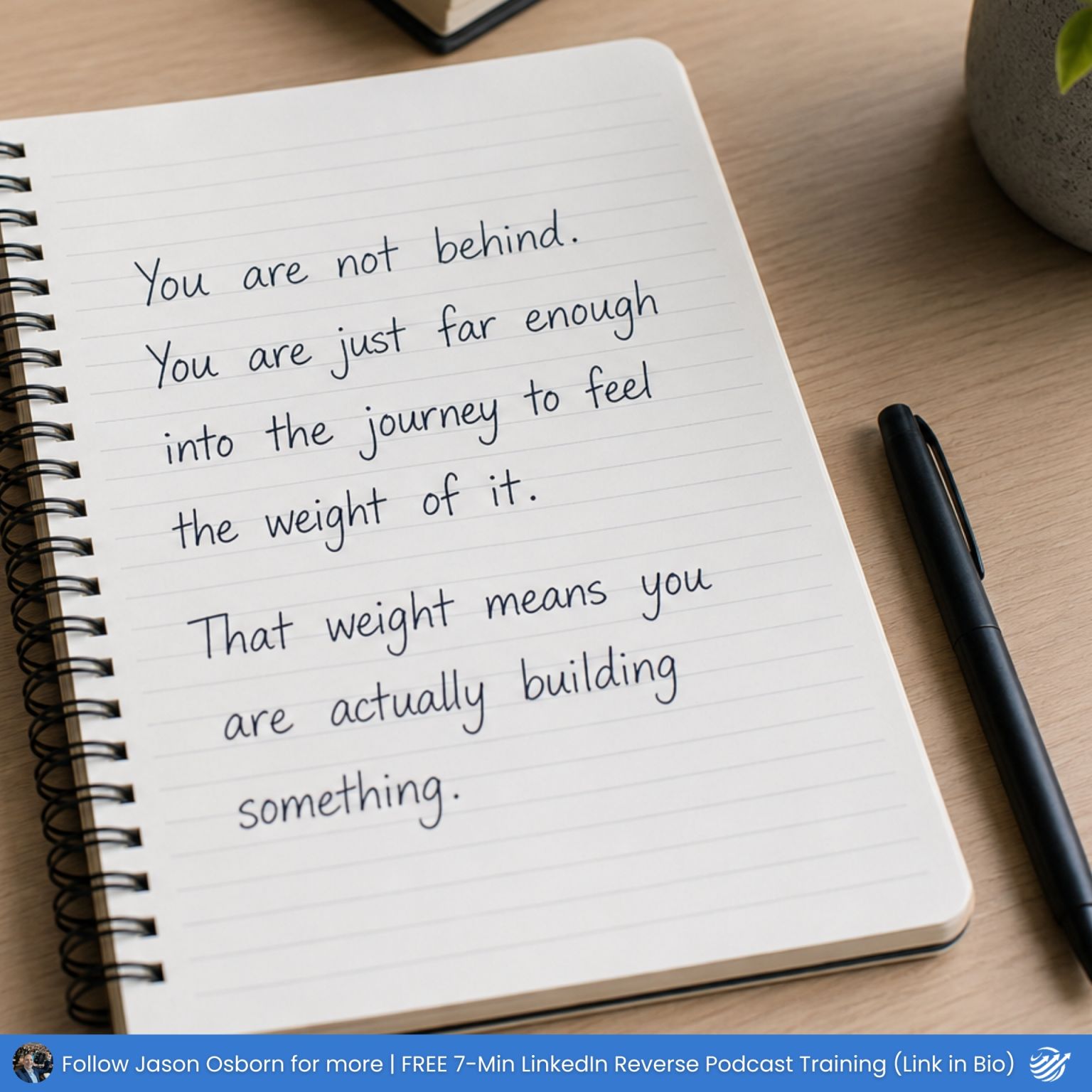
In a recent LinkedIn post, Jason Osborn offers a compelling reframing of the common feeling of being “behind” in one’s professional journey. Instead of viewing this sentiment as a sign of failure, Osborn argues that it is actually an indicator of significant progress and commitment. He contends that this feeling is not a reflection of being truly behind, but rather a natural consequence of investing substantial time and effort into building something meaningful.
Distinguishing Feeling Behind from Being Behind
Osborn highlights a crucial distinction that many entrepreneurs and professionals overlook: the difference between feeling behind and actually being behind. He suggests that the initial excitement of starting a new venture, where progress seems rapid and obvious, eventually gives way to a more challenging middle phase. This is the stage, as Osborn describes it, “Where the novelty wears off. Where results aren’t matching effort yet. Where the gap between where you are and where you want to be feels widest.”
“That’s not failure. That’s the weight of real progress.”
According to Osborn, it is precisely at this juncture that many individuals mistake the discomfort for a definitive sign that they are not on the right track. He points out that this feeling of weight is not a deterrent but a testament to the depth of one’s commitment. “You’ve gone far enough to have something real to lose. Far enough to know this matters. Far enough that quitting would actually cost you something,” Osborn writes.
The Middle Phase: A Necessary Hurdle
The middle phase of any significant undertaking, Osborn explains, is often the most arduous. The initial surge of enthusiasm wanes, and the tangible rewards may not yet match the input of effort. This is where the perceived gap between aspiration and reality becomes most pronounced. Osborn frames this period not as a sign of being incapable, but as a critical test of resilience. He notes that those who push through this phase understand it as an unadvertised part of the process, while those who quit might misinterpret it as a personal failing.
“The people who quit here call it a sign they were never going to make it. The people who push through call it the part nobody warned them about.”
Osborn emphasizes that this feeling of pressure is actually a positive signal. It signifies that the individual has invested enough to have something substantial at stake, indicating that the endeavor holds genuine importance. This realization, he argues, is not a reason to falter but rather confirmation of true dedication.
The Compounding Power of Persistence
A core message from Osborn’s post is the danger of making decisions based on fleeting feelings rather than objective reality. He observes that many people incorrectly equate the feeling of being behind with the state of being behind. This misinterpretation often leads to premature departures from ambitious projects, particularly during the most challenging yet crucial stages. “Most people confuse the two and make the wrong decision because of it. They quit during the hardest part, just before everything they built starts to compound,” Osborn states.
“Keep going. Not because it gets easier. Because what you’re building gets more worth it.”
Ultimately, Osborn encourages perseverance, not on the promise of ease, but on the certainty that the value of what is being built increases with continued effort. He concludes by posing a reflective question to his audience: “What would you tell yourself six months ago about where you are now?” This prompt invites readers to acknowledge their own progress and the lessons learned along their respective journeys, reinforcing his central thesis that the weight experienced is a sign of valuable, ongoing creation.
📝 About This Content
This article is based on insights shared by Jason Osborn on LinkedIn.
📅 Originally posted on August 5, 2026 | View original post on LinkedIn →