
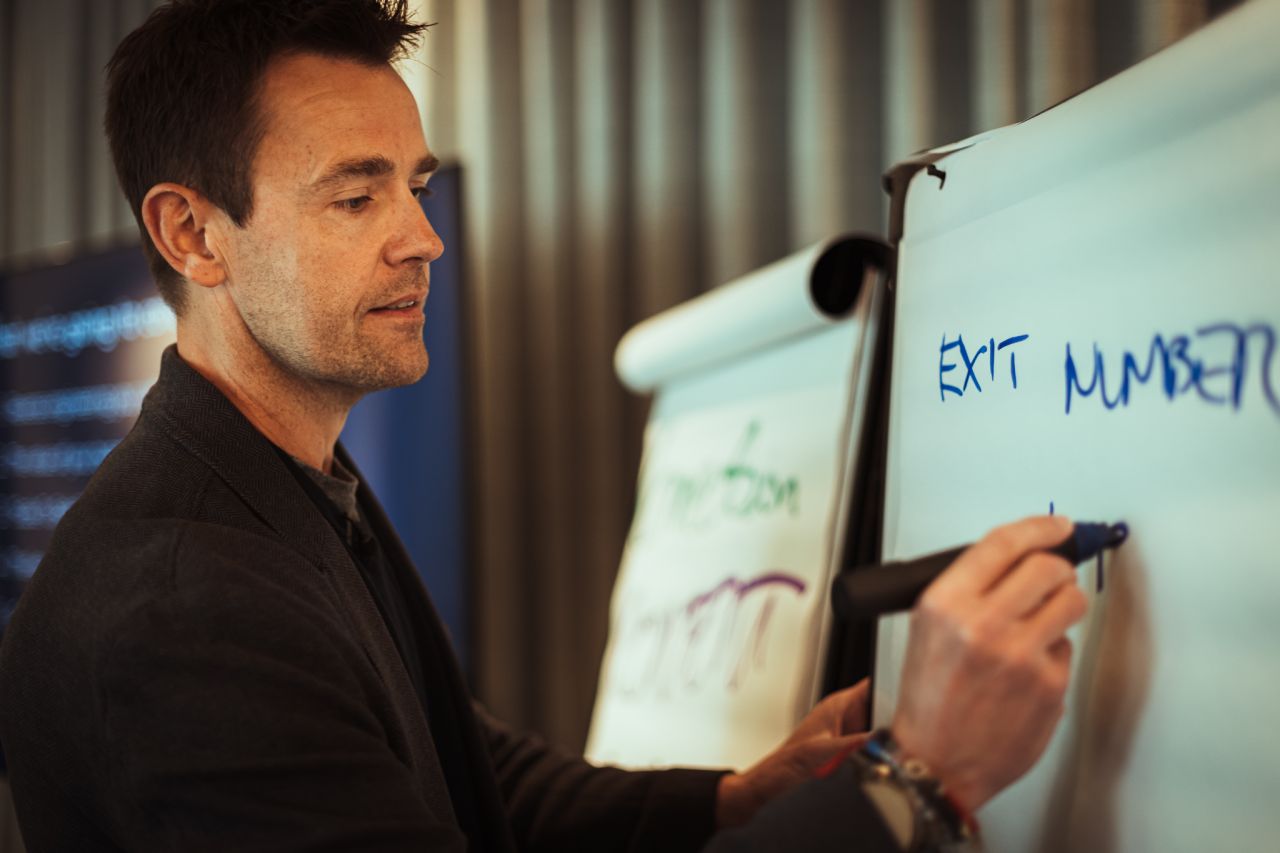
In a recent LinkedIn post, Nick Bradley discusses a common misconception among founders regarding business exits, arguing that there are three distinct stages, not just one. He emphasizes that skipping the initial stages can lead to a disappointing final sale.
Bradley highlights that many founders aim to jump directly to the final “share sale” exit, often overlooking the crucial preparatory phases. According to Bradley, buyers can readily identify businesses that haven’t completed these earlier stages.
“The problem is a lot of founders want to jump straight to the third one. But buyers can see when the first two haven’t happened.”
The Three Stages of Business Exit
Nick Bradley outlines three sequential exits that founders should focus on. He posits that a successful business sale is contingent upon successfully navigating these preceding stages.
Exit 1: Exiting the Chaos
The first stage, as described by Bradley, is about moving the business out of a state of constant crisis. This involves transitioning from a reactive, “daily firefight” mode to one characterized by established processes and greater control.
As Nick Bradley notes, this phase is marked by:
- Less founder panic.
- More process.
- More control.
This foundational step is essential for building a stable operational environment.
Exit 2: Exiting the Operation
The second exit focuses on the founder’s detachment from day-to-day operations. Bradley explains that this is achieved when the business can function effectively without the founder’s direct involvement in every decision.
“That’s when the business can run without your fingerprints on every decision. Leadership team. Clear ownership. You stop being the bottleneck.”
This stage requires building a capable leadership team and delegating clear ownership, thereby removing the founder as the primary constraint on growth and efficiency.
Exit 3: Exiting the Business
The final stage, which many founders aspire to reach first, is the actual sale of the business. Bradley cautions that without the preceding two exits, this final step is often fraught with difficulty.
According to Nick Bradley, if a business is still chaotic or heavily reliant on the founder, it hasn’t truly become a sellable asset. He argues:
“If the business is still chaotic, or still founder-dependent, you haven’t really built an asset yet. You’ve built a demanding job with revenue.”
Bradley concludes by urging founders to reflect on their current focus, asking, “Which of those three exits are you actually working on right now?” This prompts a critical self-assessment of whether efforts are aligned with building a truly transferable and valuable business, rather than just a profitable but founder-dependent enterprise.
The insights from Nick Bradley underscore the importance of strategic, phased development for founders aiming for a successful and lucrative business exit.
📝 About This Content
This article is based on insights shared by Nick Bradley on LinkedIn.
📅 Originally posted on April 6, 2026 | View original post on LinkedIn →