
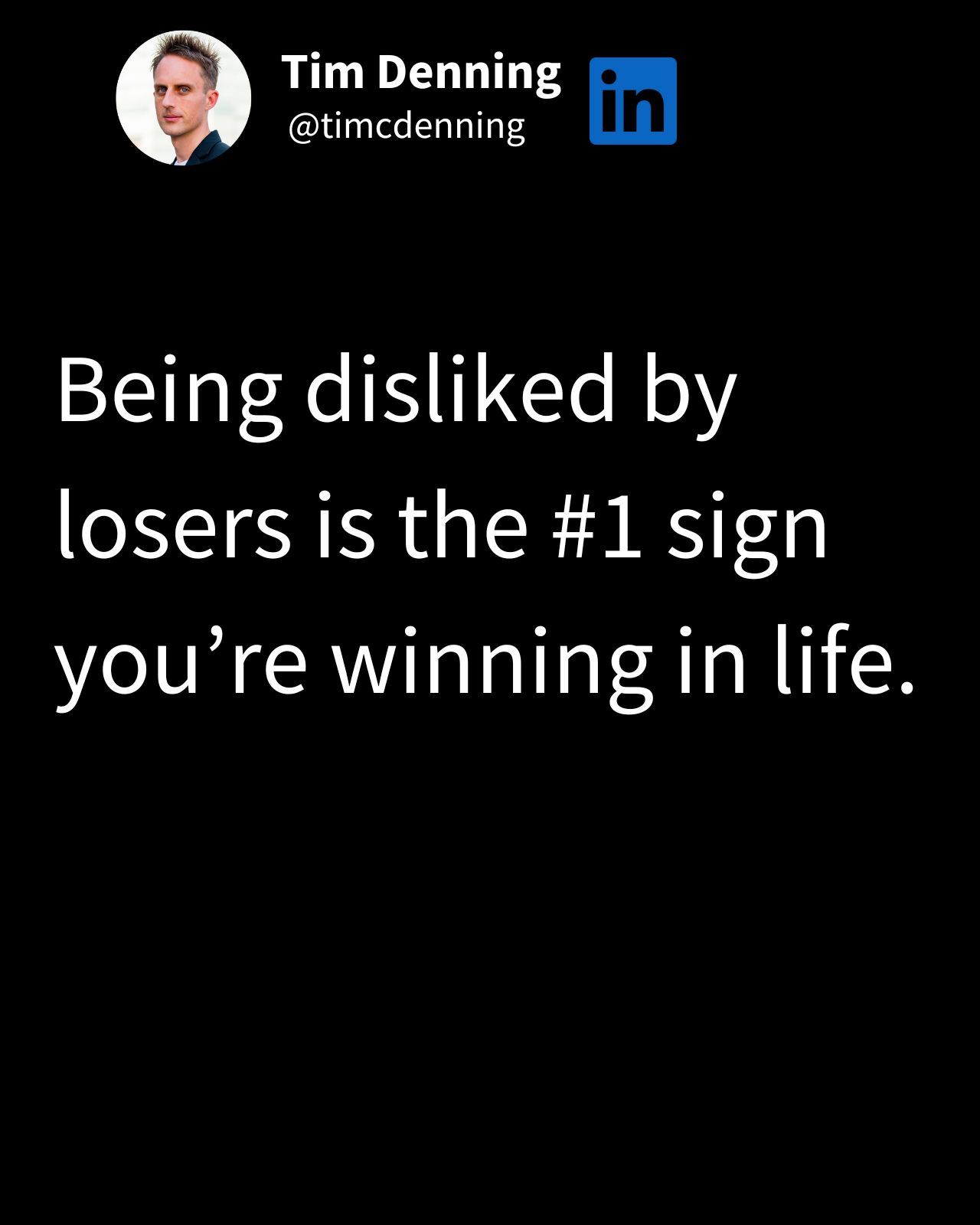
In a recent LinkedIn post, Tim Denning explores the common pitfall of seeking and valuing opinions from individuals who may not be equipped to offer constructive advice, particularly when pursuing ambitious goals. Denning argues that much of the feedback received, especially when one begins to achieve success, comes from people who are themselves playing small due to fear or comfort, and who may unconsciously want others to remain in the same stagnant position.
The Perils of Unfiltered Feedback
Denning recounts his own past mistakes, where he would solicit opinions on his ideas from friends, family, and coworkers who had not taken significant risks in their own careers. He highlights the dissonance between their advice and their own life experiences, noting how a person stuck in the same job for 15 years advised against entrepreneurship due to perceived risk, while someone who had never published criticized his writing quality. This, Denning suggests, led to wasted time and self-doubt.
“The person working the same job for 15 years told me entrepreneurship was ‘too risky.’ The friend who’d never published anything said my writing wasn’t good enough. The family member who played it safe their whole life warned me I was ‘moving too fast.'”
According to Denning, the key issue is the source of the advice. He posits that individuals who are actively succeeding and building something significant are too busy to offer unsolicited criticism. Their focus is on their own progress and creation, not on judging the efforts of others.
Identifying Valuable Input
Tim Denning proposes a simple yet powerful filter for evaluating feedback: assess whether the person giving the opinion has successfully achieved what you are trying to accomplish. If they haven’t, Denning asserts that their advice likely stems from their own fear and limitations, rather than genuine insight into your specific path.
“Before I take anyone’s opinion seriously, I ask one question: Have they done what I’m trying to do? If the answer is no, their opinion is just fear dressed up as advice.”
As Denning emphasizes, the opinions that truly matter come from those who have walked a similar path and achieved similar goals. These individuals understand the challenges and nuances involved and can offer guidance born from experience, not from a place of fear or envy. He suggests that protecting one’s mental energy and focusing on a curated circle of trusted advisors is crucial for progress.
Confirmation, Not Criticism
Denning reframes negative feedback from those who are stuck or fearful as a form of confirmation. When people who have never taken a risk tell you your move is too risky, or when a crowd judges you for leaving them behind, Denning views this not as a valid critique, but as evidence that you are on the right track and moving beyond their limitations.
“When the crowd that’s stuck judges you for leaving them behind? That’s not criticism. That’s confirmation.”
Ultimately, Tim Denning’s message is a call to action for individuals to be more discerning about the advice they accept. By filtering feedback through the lens of the advisor’s own achievements, one can avoid being swayed by fear-based opinions and stay focused on their own journey of growth and success. He concludes that being disliked by the wrong people is often a positive indicator of progress.
📝 About This Content
This article is based on insights shared by Tim Denning on LinkedIn.
📅 Originally posted on January 11, 2026 | View original post on LinkedIn →