
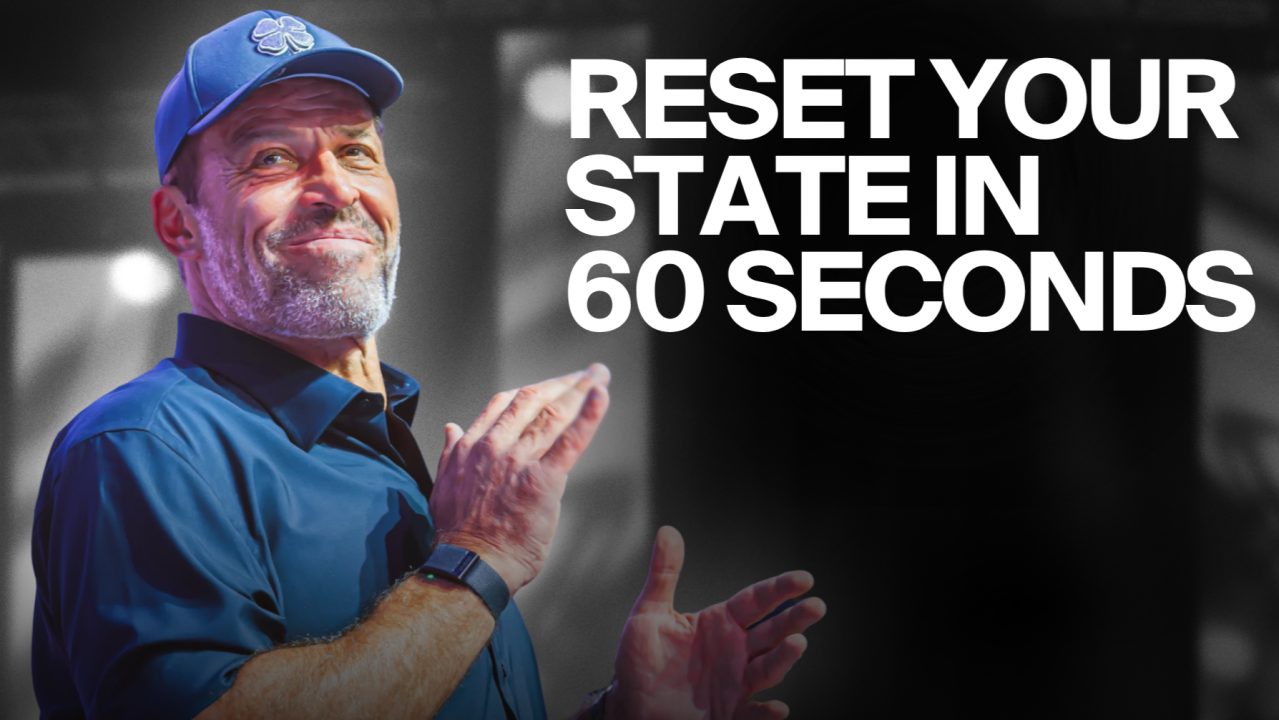
In a recent LinkedIn post, Tony Robbins discusses the critical importance of managing one’s emotional state, arguing that true fulfillment comes not from waiting for the weekend, but from actively creating a positive state daily. Robbins challenges the common practice of enduring the week with the expectation of relief on Friday, suggesting this approach is unsustainable.
As Tony Robbins notes:
“Most people are waiting for the weekend to feel good. They white-knuckle through the week and tell themselves Friday is the finish line. But here’s the truth: if you need two days off to recover from five, you’re not managing your energy — you’re surviving on borrowed time.”
Robbins emphasizes that an individual’s emotional state is not a passive experience but an actively created one, capable of being shifted rapidly. He introduces his well-known framework, the ‘Triad,’ as the key to achieving this control.
Understanding the Triad for State Management
The Triad, according to Robbins, is composed of three fundamental forces that govern our emotional experience in real-time. These forces are either consciously directed or operate implicitly, shaping our feelings and reactions. Robbins breaks these down into distinct components:
Physiology: The Body’s Influence
The first element of the Triad is physiology, which refers to how an individual uses their body. Robbins suggests that physical posture, breathing, and movement have a profound impact on our emotional state. By consciously altering one’s physiology, such as standing taller or breathing more deeply, one can begin to shift their feelings.
Focus: The Power of Attention
Secondly, Robbins highlights focus, or what an individual chooses to give their attention to. He argues that where our attention goes, our energy flows. By intentionally directing focus towards positive aspects or solutions, rather than dwelling on problems, individuals can significantly alter their internal experience. As Tony Robbins points out:
“Focus — what you’re giving your attention to”
Language: The Narrative We Tell Ourselves
The third component is language, encompassing the internal and external stories we tell ourselves. Robbins asserts that the words we use, both in our self-talk and in our communication with others, shape our perception of reality and, consequently, our emotional state. Changing the narrative from one of struggle to one of opportunity can be transformative.
“Language — the story you’re telling yourself about it”
Robbins advocates for the deliberate application of the Triad as a daily practice. He believes that by consistently applying these principles, individuals can move from merely surviving their weeks to building sustainable momentum and experiencing greater fulfillment every day.
“Change any one of these, and you change everything.”
The core message from Robbins’s LinkedIn post is that immediate, actionable steps can be taken to improve one’s state of being, rather than relying on external factors like the weekend for happiness. He encourages readers to implement these techniques proactively, emphasizing that personal well-being is an ongoing practice, not a distant reward.
📝 About This Content
This article is based on insights shared by Tony Robbins on LinkedIn.
📅 Originally posted on April 4, 2026 | View original post on LinkedIn →