
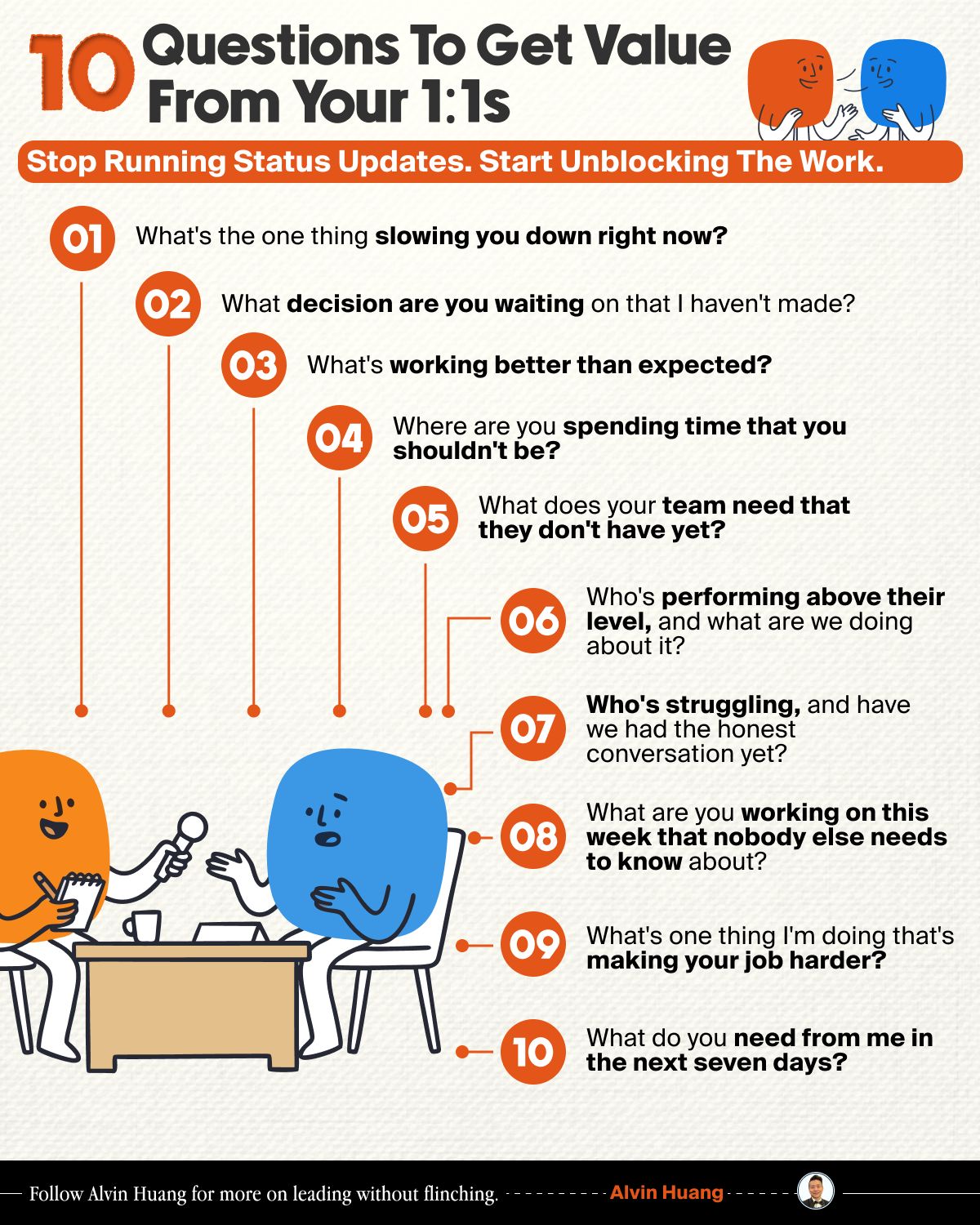
In a recent LinkedIn post, Alvin Huang offers a sharp critique of conventional one-on-one (1:1) meetings, arguing that they often devolve into unproductive status updates. Huang, drawing on over 20 years of leadership experience across two restructures, proposes a more effective model focused on problem-solving and decision-making.
Huang begins by challenging the common practice of using 1:1s for simple check-ins, stating:
Most 1:1s are just status updates with eye contact. Your team could have sent that in a Slack message.
He recounts his own past experiences, noting that asking team members how they were feeling yielded minimal tangible results. The turning point, according to Huang, came when he shifted the focus to what was impeding progress.
The 1:1 as a ‘Clearing Exercise’
Alvin Huang redefines the purpose of a 1:1 meeting, framing it not as a therapeutic session or a simple update, but as a strategic “clearing exercise.” The goal, as he outlines, is to actively remove obstacles that are hindering the team’s or individual’s progress.
“If you leave with nothing decided and nothing changed, the meeting didn’t happen,” Huang asserts, emphasizing the need for concrete outcomes from these crucial interactions.
Key Questions for Unblocking Progress
To facilitate this shift, Huang provides a list of 10 potent questions designed to elicit actionable insights and drive decisions. These questions move beyond superficial inquiries to probe deeper into team dynamics, roadblocks, and leadership effectiveness.
Identifying Blockers and Bottlenecks
Huang stresses the importance of pinpointing what is slowing individuals down. He contrasts his approach with generic check-ins, suggesting:
Not “how’s everything going.” Give them a problem to name.
He also highlights the need to identify decisions that are pending, particularly those requiring leadership input. As Huang points out, “What decision are you waiting on that I haven’t made?” can reveal significant bottlenecks that founders often overlook.
Maximizing Team Potential and Addressing Challenges
Beyond identifying problems, Huang’s framework encourages leaders to focus on what’s working well and to proactively manage team performance. He advises leaders to ask:
What’s working better than expected?✅ Tells you where to double down, not just where to fix.
Furthermore, Huang addresses the critical aspects of team development and accountability. He poses questions about individuals performing above their level and those who might be struggling, advocating for direct conversations to address performance issues before they escalate. He also includes a question to gauge personal impact on the team’s work: “What’s one thing I’m doing that’s making your job harder?” This, he notes, can be uncomfortable but is essential for self-awareness and improvement.
Shifting from Therapy to Action
Huang concludes by drawing a distinction between effective 1:1s and what he terms “therapy sessions.” In his view, team members need decisive leadership and problem-solving, not just a listening ear. “Most leaders run 1:1s like therapy sessions. Your team doesn’t need a therapist. They need someone who’ll listen, make a call, and unblock them,” he argues.
The core message is clear: leaders should “Ask sharper questions, and make decisions in the room.” Huang encourages readers to implement these strategies to ensure their 1:1 meetings are productive and lead to tangible progress.
📝 About This Content
This article is based on insights shared by Alvin Huang on LinkedIn.
📅 Originally posted on June 24, 2026 | View original post on LinkedIn →