
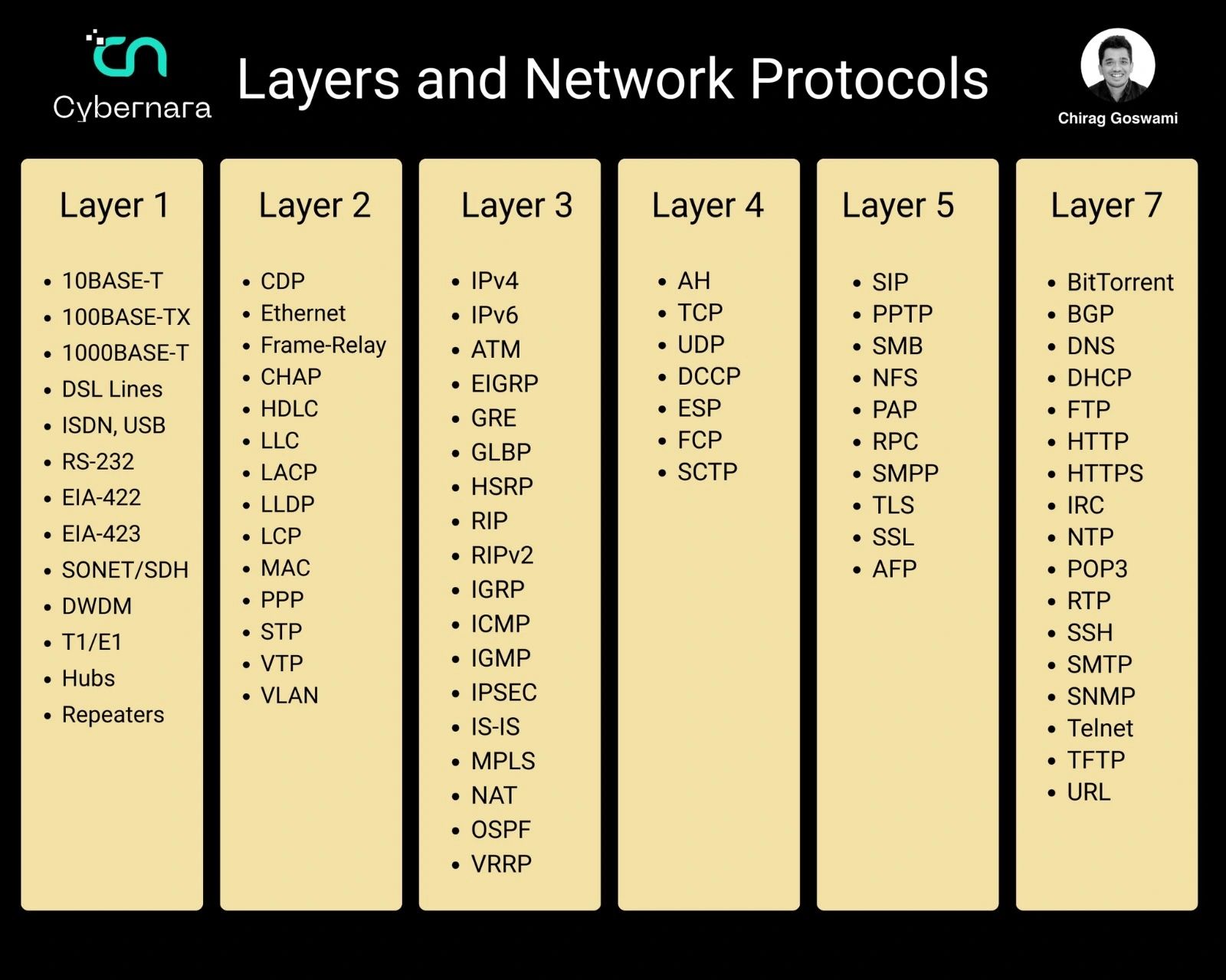
In a recent LinkedIn post, Chirag Goswami provides a clear and accessible explanation of the different layers involved in network communication, drawing parallels to the established OSI and TCP/IP models. Goswami emphasizes that grasping these layers is crucial for professionals in IT and cybersecurity to effectively troubleshoot network issues.
Goswami breaks down the complex topic by assigning a specific function to each layer, illustrating how they work in concert to transmit data between devices. He begins by highlighting the foundational role of the physical layer.
“Layer 1 – Physical
Cables, signals, connectors, hardware transmission.
Examples: Ethernet cable, fiber, hubs.”
The Role of Each Network Layer
As Chirag Goswami explains, each successive layer builds upon the one below it, handling increasingly sophisticated tasks. The Data Link layer, for instance, is responsible for moving data within a local network using MAC addresses, with examples like Ethernet and VLANs cited.
Moving up, Goswami details the Network layer’s critical function in handling IP addressing and routing between different networks. “Layer 3 – Network
Handles IP addressing and routing between networks. Examples: IPv4, IPv6, ICMP, OSPF, RIP,” he writes.
The Transport layer, as described by Goswami, focuses on the reliability and speed of data delivery through protocols like TCP and UDP. This is followed by the Session layer, which manages the communication sessions between systems. Finally, Goswami points to the Application layer as the interface for users and applications, citing common protocols such as HTTP, HTTPS, and DNS.
Practical Application of Network Layers
To illustrate the practical application of these layers, Chirag Goswami uses the common example of opening a website. He breaks down how multiple layers are engaged simultaneously in this process.
“Real-world example:
Opening a website uses multiple layers at once:
• Layer 1 = cable/Wi-Fi signal
• Layer 3 = IP routing
• Layer 4 = TCP port 443
• Layer 7 = HTTPS webpage”
This real-world scenario, as presented by Goswami, effectively demonstrates the interconnectedness of the layers and their collective role in enabling everyday internet use.
Troubleshooting and Expertise
Goswami strongly advocates for the importance of understanding these network layers for IT and cybersecurity professionals. “If you work in IT or cybersecurity, learning layers helps you troubleshoot faster,” he asserts. This insight underscores the value of a deep, foundational knowledge of network architecture for practical problem-solving in the field.
The post also briefly mentions Cybernara, an entity that assists businesses with securing networks, applications, and infrastructure, suggesting a connection between this expertise and the principles discussed.
📝 About This Content
This article is based on insights shared by Chirag Goswami on LinkedIn.
📅 Originally posted on April 23, 2026 | View original post on LinkedIn →