
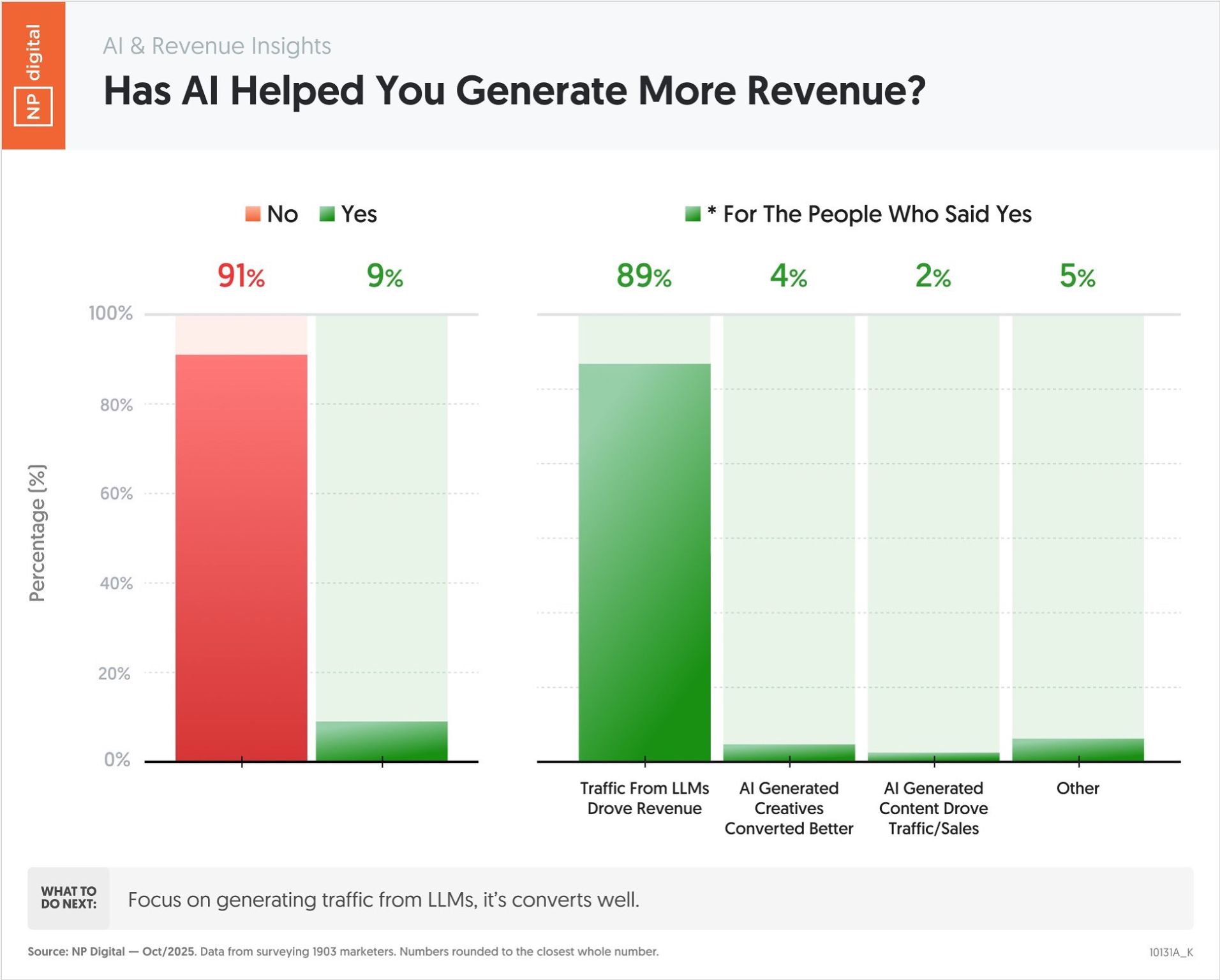
In the rapidly evolving landscape of digital marketing, a critical question emerges: Is Artificial Intelligence genuinely contributing to increased company revenue? While the direct impact of AI on software efficiency might not be immediately apparent to many marketers, the indirect benefits, particularly in driving traffic and sales, are becoming increasingly undeniable.
The real power of AI, as observed by many in the field, lies not in optimizing internal processes but in its ability to influence customer acquisition through the platforms that are shaping how content is discovered and consumed. These AI-driven platforms are the new gatekeepers of visibility, and ignoring them means leaving significant revenue potential on the table.
The Shift in Traffic Generation
Traditionally, marketers focused on SEO, paid advertising, and social media outreach. However, the rise of sophisticated AI algorithms within major online platforms has fundamentally altered the traffic generation paradigm. These algorithms analyze user behavior, preferences, and intent to recommend content, products, and services. For businesses, this means that their visibility is increasingly determined by how well they align with the recommendation engines of these platforms.
Why Platform Optimization is No Longer Optional
If your business has not yet prioritized optimizing for the platforms that actively recommend content to users, you are likely missing out on a substantial stream of organic traffic and potential sales. This isn’t just about appearing in search results; it’s about being surfaced by AI when a user is most receptive. Think of it as being recommended by a trusted advisor rather than just found in a directory.
Understanding AI’s Role in Recommendations
AI recommendation systems work by processing vast amounts of data to predict what a user is likely to engage with next. This can include:
- Analyzing past user behavior (clicks, likes, shares, watch time)
- Understanding content characteristics (keywords, topics, format)
- Considering user demographics and stated interests
- Identifying patterns and trends across user groups
By understanding these mechanisms, marketers can tailor their content and strategies to be more discoverable and recommendable.
Key Strategies for Optimization
To capitalize on AI-driven recommendations, consider the following:
- Content Quality and Relevance: Ensure your content is high-quality, addresses user needs, and is relevant to the platform’s audience.
- Engagement Signals: Encourage user interaction with your content. High engagement rates signal to AI that your content is valuable.
- Platform-Specific Nuances: Understand how different platforms use AI and tailor your approach accordingly. What works on one platform might not work on another.
- Data Analysis: Monitor your performance on these platforms and use the insights to refine your strategy.
The Bottom Line
While the efficiency gains from AI might be a longer-term play for some, the immediate revenue-generating potential through improved traffic and sales is a tangible benefit that businesses cannot afford to overlook. By strategically optimizing for the AI platforms that recommend content, companies can unlock significant untapped traffic and drive substantial growth.
This article was inspired by insights shared by Neil Patel on LinkedIn.
📝 About This Content
This article is based on insights shared by Neil Patel on LinkedIn.
📅 Originally posted on October 14, 2025 | View original post on LinkedIn →