
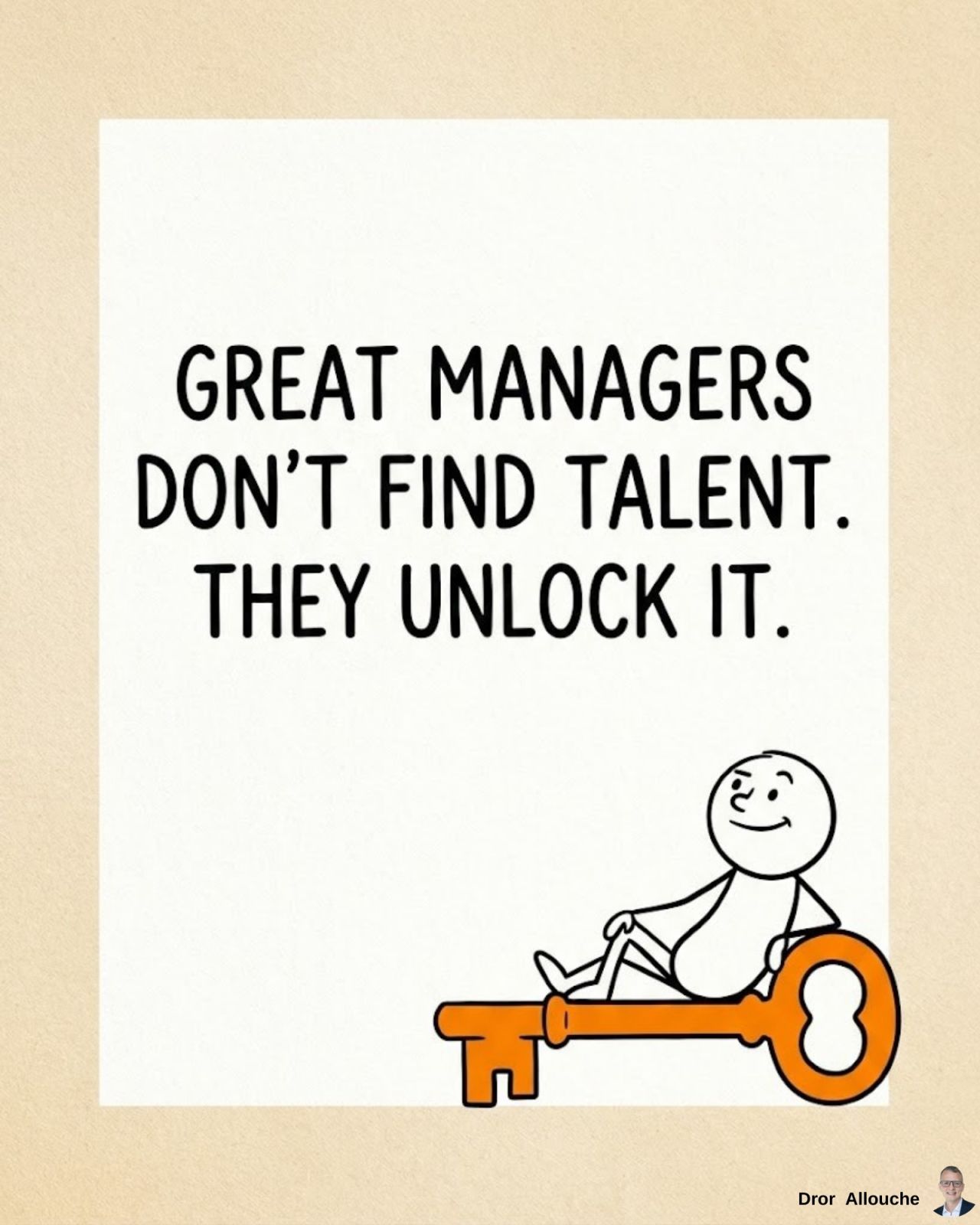
In a recent LinkedIn post, Dror Allouche explores the critical, yet often overlooked, role of managers in unlocking their team members’ full potential. Allouche argues that the failure to recognize and nurture employee capabilities is a significant drain on business productivity and innovation, costing companies millions.
Highlighting the statistic that 69% of employees are not fully engaged, Allouche frames leadership as the key to unlocking this untapped reservoir of talent. He emphasizes that this disengagement leads to tangible business costs.
“The cost of ignored potential: – Missed innovations – Slower growth – Lower profits”
Allouche posits that effective leadership is about more than just assigning tasks; it’s about fostering an environment where employees can see their own value and potential.
The High Cost of Unacknowledged Potential
Dror Allouche details the substantial financial and operational impact that stems from leaders failing to identify and develop the latent abilities within their teams. He contends that this oversight directly translates into missed opportunities for groundbreaking ideas, hampered business expansion, and ultimately, reduced profitability.
“Leadership is communicating potential so clearly that people see it in themselves,” Allouche quotes Stephen Covey, underscoring the transformative power of a leader’s belief in their team. This perspective shifts the focus from mere management to genuine enablement.
A Playbook for Cultivating Growth
To combat this widespread issue, Allouche presents a five-step playbook designed to help leaders actively foster employee potential. Each strategy is geared towards making employees more engaged and productive by connecting their work to their personal aspirations and professional development.
1. Help Them Paint THEIR Future
This strategy involves guiding employees to envision their long-term career goals. Allouche suggests prompting them with questions like, “Imagine 3 years from now…” and “What’s your ideal role?” This helps individuals clarify their aspirations and the steps needed to achieve them.
2. Remind Them Why They Do It
Connecting daily tasks to larger dreams is crucial. Allouche advises leaders to capture successes as they happen and consistently link an employee’s current work to their personal ambitions. A dedicated weekly feedback session is recommended to reinforce this connection.
3. Strategic Delegation
Allouche advocates for delegating tasks that not only align with an employee’s goals but also gently push them beyond their comfort zones. The key, he notes, is to clearly articulate “what’s in it for THEM,” ensuring the employee understands the developmental benefit of the assignment.
4. Be Their Growth Partner
This involves a proactive approach to development, including celebrating an employee’s strengths regularly and addressing obstacles with honesty. Creating a 360-degree feedback mechanism involving key stakeholders is suggested to provide a holistic view of their growth.
5. Fight For Their Future
The final step involves actively championing employees. Allouche encourages leaders to promote their team members’ expertise and connect them with opportunities that can advance their careers, including supporting them for their next promotion.
Allouche concludes with a practical call to action: choose one person, select one strategy, and schedule the time to implement it. He firmly believes that significant breakthroughs lie dormant within the hidden potential of every team.
📝 About This Content
This article is based on insights shared by Dror Allouche on LinkedIn.
📅 Originally posted on February 7, 2026 | View original post on LinkedIn →