
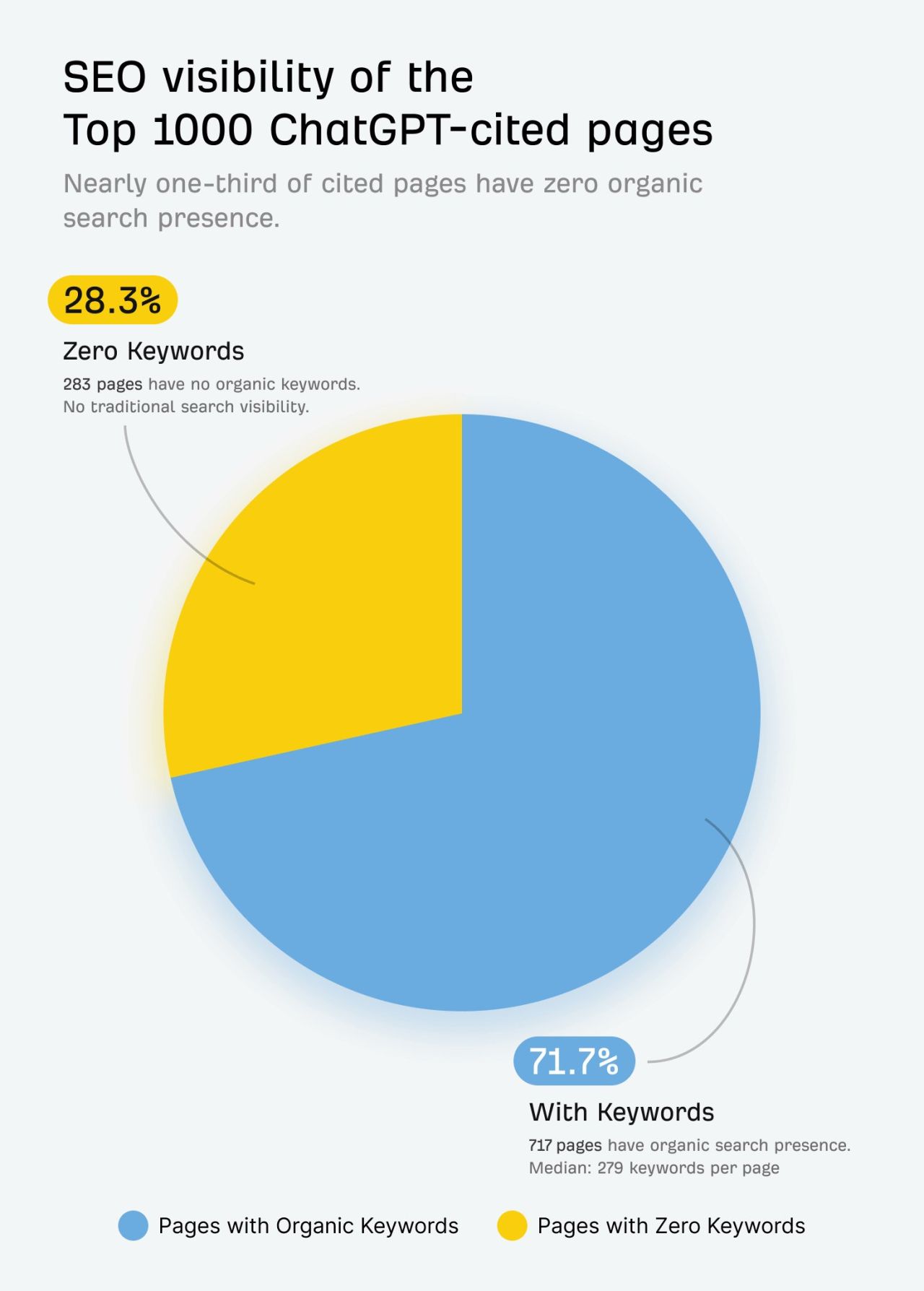
A recent study from Ahrefs has sparked a conversation, suggesting that ‘28% of ChatGPT’s most-cited pages have ZERO organic visibility in Google.’ This statistic has led some to speculate about the declining importance of Google or the potential shift of ChatGPT’s reliance on Bing. However, a deeper dive reveals a more nuanced picture, one that requires us to look beyond the surface-level data.
Before jumping to conclusions about the ‘death of Google’ or the independence of AI models, it’s crucial to conduct a practical exercise. As I’ve done recently, prompting AI models for commercial queries and then cross-referencing the results with Google’s search engine can offer valuable insights.
The Exercise: Connecting AI Citations to Google Rankings
The process involves a few key steps:
- Prompt for Commercial Queries: Start by asking the AI for something with commercial intent, such as ‘best sneakers for rainy weather.’ If the AI doesn’t immediately perform a search, encourage it to do so.
- Observe the Fan-Out: Pay attention to how the AI expands or refines the initial query. This ‘fan-out’ can often reveal the underlying search terms the AI is considering.
- Search on Google: Take the refined query (or the original, if no fan-out occurred) and search for it on Google.
- Identify Non-Ranking URLs: Note any URLs that ChatGPT cites but do not appear on Google’s first page of results.
- Investigate Publication Ownership: Identify the owner of these non-ranking publications.
- Track OpenAI Partnerships: Crucially, investigate whether these publications have any existing partnerships with OpenAI.
Real-World Observations and Partnerships
In my recent experience, a strong correlation exists: unless there’s a specific partnership in play, Google’s top-ranking URLs consistently appear to be cited by ChatGPT. This suggests that AI models are, to a significant extent, still leveraging established search authority.
Consider this recent example:
- Prompt: “best apps for managing your finances”
- Fanned-out query: “best personal finance apps 2025”
- Correlation: The top-ranking URLs on Google for this query were almost entirely mirrored in ChatGPT’s citations, with only minor reordering.
However, the Ahrefs study’s premise might overlook critical factors. For instance, a URL like kiplinger[.]com/personal-finance/how-to-save-money/best-budgeting-apps, which might not rank on Google’s first page for a specific query, belongs to Future Publishing. This entity famously has a commercial agreement with OpenAI.
Rethinking the Correlation
When we attempt to correlate Google visibility with ChatGPT citations, it’s essential to account for these existing commercial relationships. These partnerships can influence which sources an AI model prioritizes, potentially skewing the perception of direct organic search influence. Therefore, while AI’s impact on search is undeniable, attributing visibility solely to organic ranking without considering these strategic alliances may present an incomplete picture.
This article was inspired by insights from Ann Smarty’s LinkedIn post.
📝 About This Content
This article is based on insights shared by Ann Smarty on LinkedIn.
📅 Originally posted on October 28, 2025 | View original post on LinkedIn →