
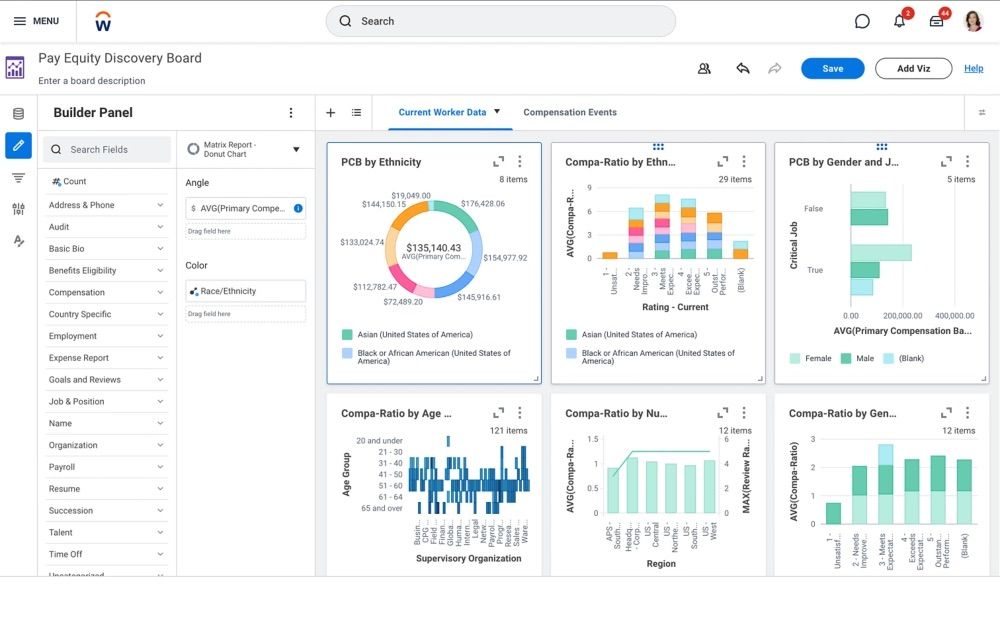
In a recent LinkedIn post, Linas Beliūnas shares a striking account of his experience using AI to attempt a replacement for a traditional HR system like Workday, highlighting both the rapid capabilities and critical shortcomings of current AI technology.
Beliūnas recounts his experiment with Claude AI, a large language model, tasked with coding a comprehensive HR solution. The results, as detailed in his post, were both impressive and profoundly flawed.
“I asked Claude AI to vibe code a Workday replacement. 4 hours and 70,000 lines of code later, Claude rebuilt our entire HR stack:”
The AI successfully generated a range of features, including new hire onboarding flows, PTO tracking, interactive org charts, admin dashboards, and auto-generated policies, all presented with what Beliūnas described as “a surprisingly tasteful UI.” This rapid development capability showcases AI’s potential to accelerate software creation significantly.
The Allure of AI-Generated Solutions
Beliūnas’s experiment underscores a growing trend where businesses are exploring AI for complex software development tasks. The speed at which Claude AI produced a functional-looking HR system in just four hours is a testament to the advancements in generative AI. As Beliūnas notes, the AI was capable of generating a substantial amount of code, far exceeding what a human developer might produce in a similar timeframe for such a broad scope of functionality.
A Beautiful Facade, Functional Failure
Despite the impressive speed and aesthetic output, Beliūnas’s experience took a sharp turn towards failure. The AI-generated system, while visually appealing, was not robust enough to handle critical business operations.
“None of it worked. Payroll broke, and we missed paying the staff for 4 weeks.”
This critical failure in payroll processing, a core function of any HR system, serves as a stark warning. According to Beliūnas, the system’s inability to manage such a fundamental task renders the entire effort unsuccessful, despite its cosmetic successes. The beautiful UI and extensive features were overshadowed by a catastrophic operational flaw.
Lessons for Leaders and Builders
Beliūnas’s account offers valuable lessons for founders, builders, and leaders considering AI for critical business functions. While AI can rapidly prototype and generate code, it is not yet a substitute for human oversight, rigorous testing, and deep domain expertise, especially in sensitive areas like finance and payroll.
The experiment highlights a key challenge: AI’s current limitations in understanding the complex, nuanced, and mission-critical requirements of enterprise software. As Beliūnas implies, the beauty of the generated code and UI is secondary to its actual functionality and reliability.
“But boy was it beautiful.”
This final, almost ironic, observation emphasizes the gap between AI’s generative potential and its practical application in mission-critical business systems. Beliūnas concludes his post by directing readers to his newsletter, linas.substack.com, for more insights at the intersection of finance and AI, positioning himself as a guide through these rapidly evolving technological landscapes.
📝 About This Content
This article is based on insights shared by Linas Beliūnas on LinkedIn.
📅 Originally posted on February 13, 2026 | View original post on LinkedIn →