
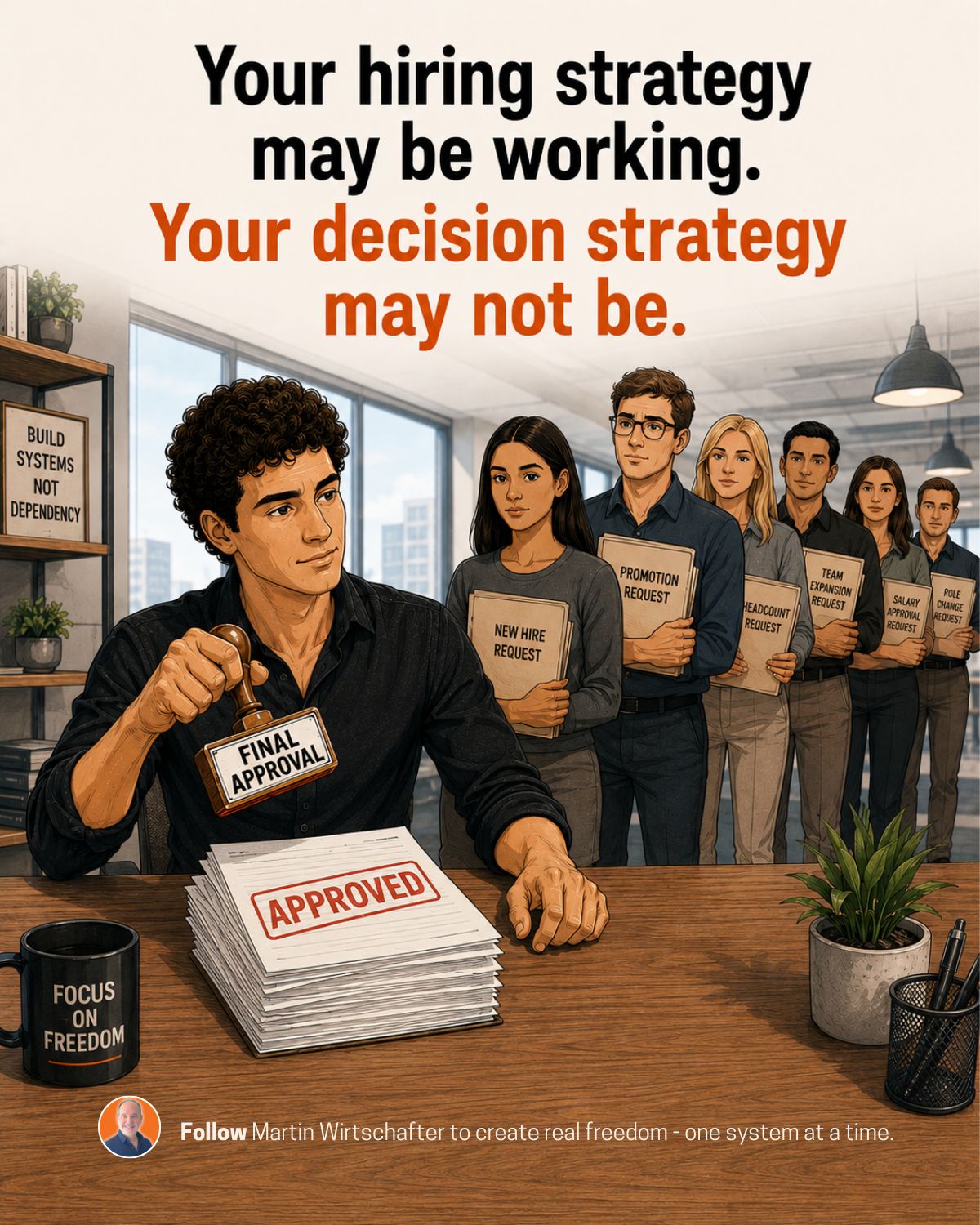
In a recent LinkedIn post, Martin Wirtschafter discusses the challenging but necessary transition founders face when their company’s growth outpaces their own direct involvement. Wirtschafter reflects on his personal journey, highlighting the common founder tendency to remain deeply enmeshed in daily operations, even for significant decisions.
He shares his past experience, noting a period where he believed he was fulfilling the ideal founder role by staying close to the business and handling critical decisions himself. This included pricing, hiring, and customer issues, a level of involvement he didn’t initially question.
“For a long time, I thought I was doing exactly what a founder should do. I stayed close to the business. The bigger the decision, the more likely it landed on my desk.”
The turning point, Wirtschafter explains, came when his company began planning for international expansion. This strategic initiative prompted a deeper self-reflection about his own role. He realized that many operational decisions, which he was still handling, could have been managed by others if the business had been structured differently.
The Gradual Realization of Over-Involvement
Wirtschafter details how this realization wasn’t a sudden epiphany but an accumulation of numerous small instances. Approvals, minor questions, and conversations that didn’t strictly require his input became the norm. He points out the subtle nature of this growth, stating:
“It accumulated so gradually that it just became normal. Looking back, the business had been asking something different from me for quite a while. I just hadn’t noticed.”
According to Wirtschafter, the company was signaling a need for him to evolve beyond day-to-day management, a signal he initially missed. This over-involvement, while perhaps stemming from a desire to be relied upon, ultimately hindered the company’s ability to scale effectively.
Shifting Focus to Strategic Leadership
The founder’s subsequent shift in his daily activities is a key takeaway from Wirtschafter’s post. His calendar transformed from one filled with immediate operational concerns to one focused on longer-term vision, talent development, and anticipating future challenges.
From Operational Details to Future Vision
Wirtschafter describes his current focus:
“These days my calendar looks very different. Most of my time is spent thinking further ahead, helping people grow into bigger roles, and paying attention to the things that won’t become obvious until six months from now.”
He argues that the company didn’t need his constant attention on immediate tasks but rather his strategic foresight and ability to empower others. This transition, he admits, took longer to understand than he would have liked.
Embracing ‘Freedom by Design’
The core message Wirtschafter conveys is that a company’s growth can demand a new version of its founder – one who delegates, empowers, and focuses on strategic direction rather than operational minutiae. He concludes by reflecting on this evolution:
“Looking back, the company was ready for the next version of me before I was.”
Wirtschafter frames this evolved leadership style as achieving ‘freedom by design,’ where presence is felt in life and strategic impact, rather than being a bottleneck in daily operations. This shift is crucial for founders aiming to scale their businesses sustainably while also fostering personal growth and a more balanced approach to leadership.
📝 About This Content
This article is based on insights shared by Martin Wirtschafter on LinkedIn.
📅 Originally posted on July 11, 2026 | View original post on LinkedIn →