
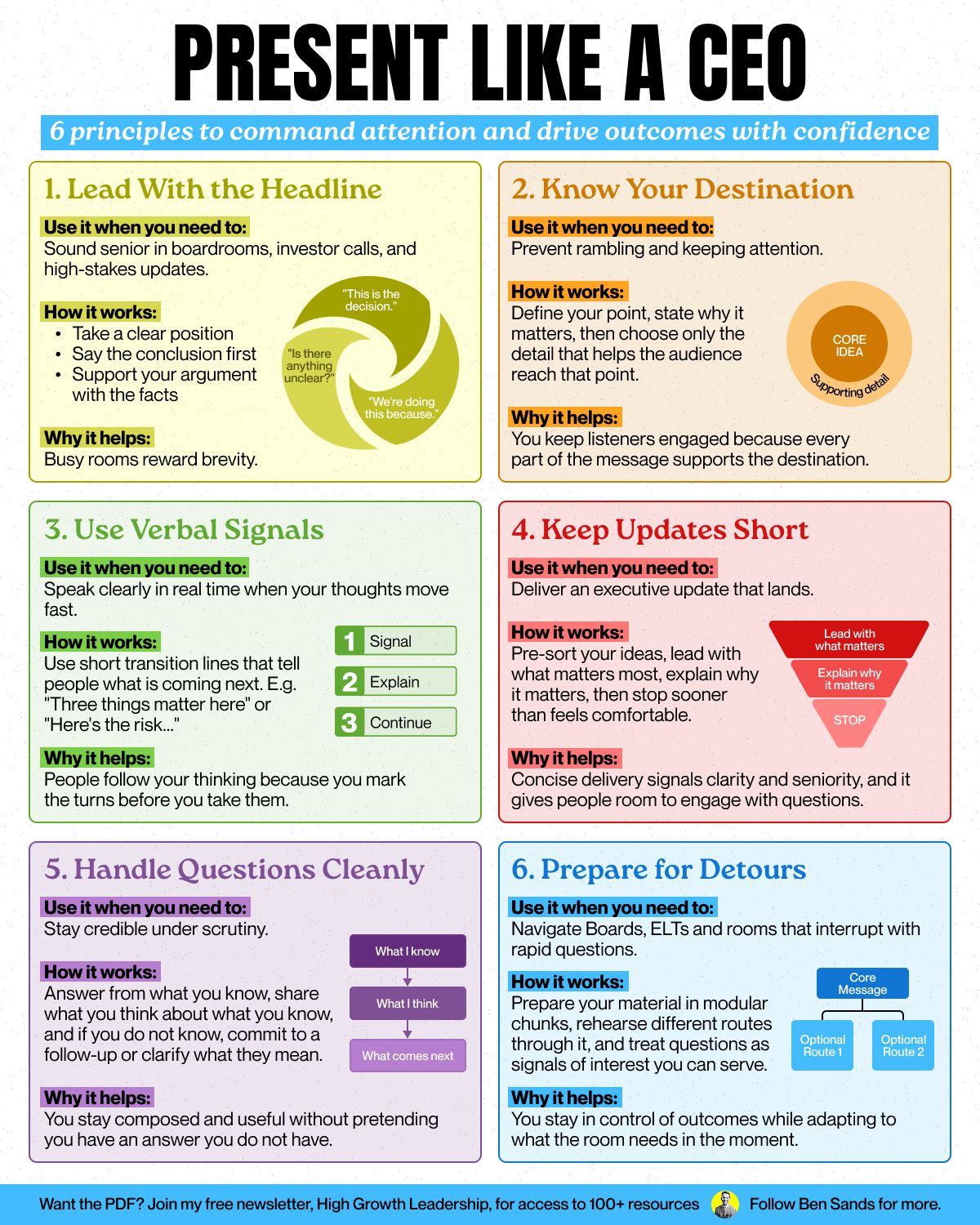
In a recent LinkedIn post, Ben Sands explores the critical link between clarity in communication and perceived leadership effectiveness, particularly under pressure. Sands argues that the ability to articulate thoughts concisely and coherently is not merely a communication skill but a foundational element of credibility and strong leadership.
He highlights a common pitfall for many senior professionals: a tendency to ramble when faced with challenging situations. This, according to Sands, can lead to a loss of audience attention and a diminished perception of their confidence and judgment. “If you ramble under pressure, you lose the room,” Sands states directly in his post, emphasizing the immediate impact of unstructured speech.
The Executive’s Communication Challenge
Sands identifies a key paradox: many capable leaders falter not due to a lack of intelligence, but a lack of structured thinking when speaking. He proposes that mastering communication under duress is essential for conveying competence. “How you speak shapes how people perceive your confidence, judgment, and leadership,” he writes, underscoring the high stakes involved.
“Yet this is where many strong leaders stumble — not from lack of intelligence, but from lack of structure.”
To address this, Sands outlines six actionable strategies that effective executives employ to maintain clarity when it matters most.
Strategies for Clear Communication Under Pressure
Sands’ advice focuses on practical techniques to ensure messages are delivered effectively, even in high-stakes environments:
- Lead with the headline: Sands advocates for starting with the conclusion or main point. This approach, he suggests, respects the audience’s time and ensures the core message is immediately understood. “Busy rooms reward brevity. Say the conclusion first. Then support it,” he advises.
- Know your destination: This principle emphasizes the importance of having a clear objective before speaking. Without a defined endpoint, the message can become lost. “Start with the point. Always. If you don’t know where you’re going, your audience won’t either,” Sands notes.
- Use verbal signposts: To guide listeners through complex information, Sands recommends using transitional phrases. Examples like “Three things matter here…” or “Here’s the risk…” help structure the narrative and make it easier to follow.
- Keep updates short: Sands posits that brevity in updates conveys confidence, while excessive length can signal uncertainty.
- Handle questions cleanly: Direct and honest answers are key. When faced with a question he cannot answer, Sands suggests admitting it and committing to a follow-up, rather than evading or guessing.
- Prepare for detours: Recognizing that pressure can lead to unpredictability, Sands encourages leaders to anticipate potential shifts in conversation or unexpected questions, suggesting that rehearsal can help manage these deviations.
“Clarity isn’t just communication. It’s execution.”
Concluding his post, Sands reiterates that clarity is more than just an effective communication style; it is intrinsically linked to effective execution and leadership. He prompts readers to consider the essential messages they need to deliver to their teams.
For leaders seeking to assess their current performance, Sands offers a tool called the “Executive Health Quiz,” designed to provide insights into areas of strength and potential areas for improvement.
📝 About This Content
This article is based on insights shared by Ben Sands on LinkedIn.
📅 Originally posted on February 17, 2026 | View original post on LinkedIn →