
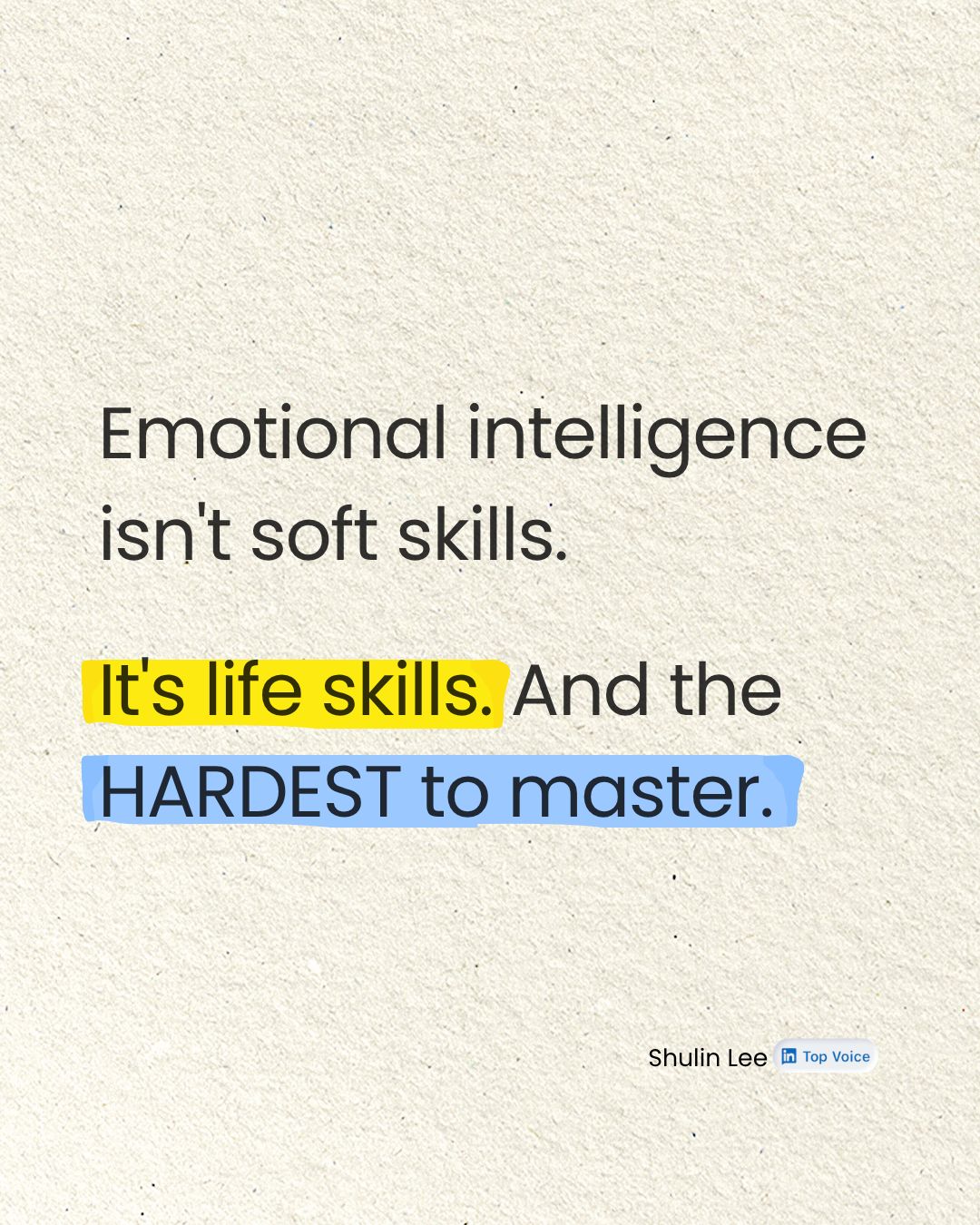
In a recent LinkedIn post, Shulin Lee explores the critical role of emotional intelligence (EQ) in professional success, arguing that technical expertise alone is insufficient for advancement. Lee challenges the common undervaluing of “soft skills,” positioning EQ as a key differentiator between good and great professionals.
The post opens with a direct assertion: “Being the smartest person in the room won’t save you.” Lee elaborates on this by stating that even extensive technical knowledge can be a limiting factor if not complemented by strong emotional management and communication abilities.
“You can have all the technical expertise in the world. But if you can’t manage your emotions, communicate under pressure, or navigate conflict — you’ll hit a ceiling.”
Lee emphasizes that EQ is often misunderstood, clarifying that it is not merely about being agreeable. Instead, the focus is on fundamental aspects of self-awareness, empathy, and effective communication.
The Core Components of Emotional Intelligence
According to Shulin Lee, emotional intelligence encompasses several key traits that are crucial for navigating the complexities of the workplace. These include:
- Self-awareness: Understanding one’s own emotions and their impact.
- Empathy: The ability to understand and share the feelings of others.
- Regulated responses: The capacity to control emotional reactions, especially under stress.
- Discerning communication: Knowing precisely when to speak and when to listen effectively.
As Lee points out, these are not innate qualities that can be acquired overnight. “That takes years to build. And a lifetime to refine,” the post states, underscoring the ongoing development required to master these skills.
“EQ isn’t about being nice all the time.”
Shulin Lee argues that the traditional dichotomy between “hard” technical skills and “soft” interpersonal skills is misleading. The insights shared suggest that these “soft” skills are, in fact, foundational to leveraging technical abilities effectively.
EQ as a Career Accelerator
The central thesis of Lee’s post is that emotional intelligence acts as a critical enabler for career growth. While technical skills might open doors, it is EQ that allows individuals to progress beyond a certain level.
Navigating Workplace Dynamics
Lee highlights that the ability to “manage your emotions, communicate under pressure, or navigate conflict” is essential for overcoming professional plateaus. Without these competencies, even the most technically brilliant individuals may find their career progression stalled.
“Stop undervaluing the ‘soft’ stuff. It’s often what separates good from great.”
In the concluding remarks of the post, Shulin Lee prompts readers to reflect on their own EQ development, sharing a personal example: “What’s one EQ skill you’re still working on? Mine is pausing before reacting.” This interactive element further reinforces the message that EQ is a continuous journey of self-improvement.
Shulin Lee’s analysis on LinkedIn serves as a timely reminder for professionals to invest in their emotional intelligence, recognizing it not as an optional add-on, but as a core competency for sustained career success.
📝 About This Content
This article is based on insights shared by Shulin Lee on LinkedIn.
📅 Originally posted on July 22, 2026 | View original post on LinkedIn →