
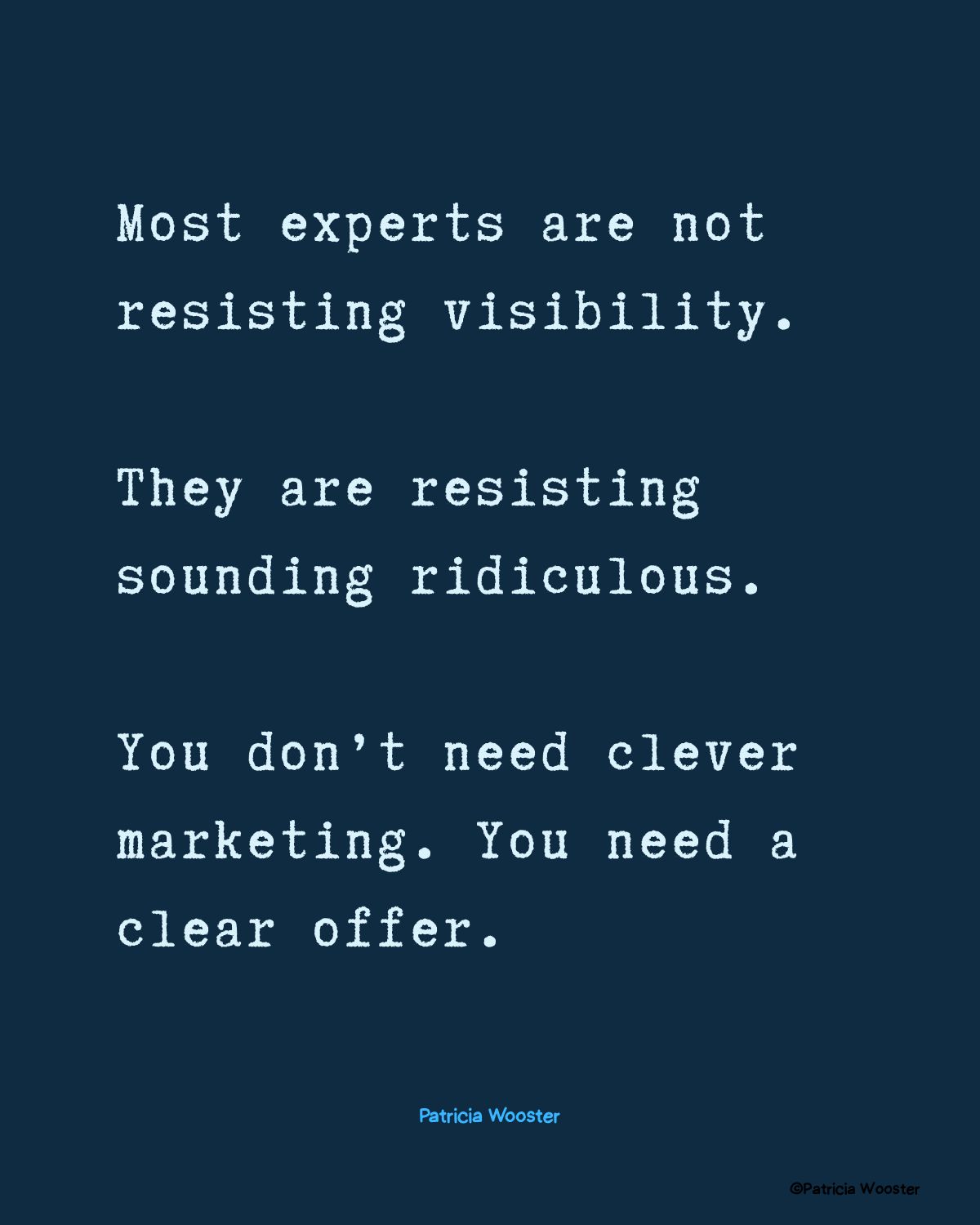
In a recent LinkedIn post, Patricia Wooster discusses a common disconnect she observes between traditional marketing advice and the preferences of accomplished experts. Wooster argues that much of the prevailing marketing guidance is designed to inflate the perceived value of mediocre work, leading seasoned professionals to feel uncomfortable with its tactics.
Wooster highlights specific elements of marketing that often alienate experts. She writes:
“The fake urgency. The clever funnel language. The exaggerated promises.”
According to Wooster, these tactics contribute to a negative perception of marketing among those who possess genuine expertise. She points out that experts are not inherently averse to visibility, but rather to the idea of sounding inauthentic or ridiculous.
The Core of Expert Resistance to Marketing
Patricia Wooster asserts that the fundamental issue lies in the nature of the advice itself. She suggests that marketing strategies often feel “ick to accomplished experts” because they are predicated on a different objective than showcasing true value.
Wooster elaborates on this sentiment:
“A lot of marketing advice is built for people trying to make average work look more valuable than it is.”
This framing, Wooster explains, creates a scenario where experts, who are confident in their differentiated abilities, find the common marketing playbooks misaligned with their reality. Their resistance, therefore, is not a sign of an unwillingness to engage with potential clients or the market, but a rejection of methods that feel disingenuous.
Wooster’s Recommended Approach for Experts
Instead of engaging with what she describes as often inauthentic marketing tactics, Patricia Wooster proposes a more focused and value-driven approach for experts. She outlines three key strategies that, when implemented effectively, can build a strong professional presence and attract the right opportunities.
1. LinkedIn Profile Optimization for Value Communication
Wooster emphasizes the strategic use of LinkedIn. She advises experts to:
“Optimize your LinkedIn profile: use it to build relationships and communicate your differentiated value.”
This involves moving beyond a simple resume-like presentation to actively using the platform as a tool for connection and clear communication of unique selling propositions.
2. Leveraging Other People’s Audiences (OPA)
Another core recommendation from Wooster is the strategic use of OPA. This involves identifying opportunities to add value within existing networks and communities that are not necessarily one’s own. By contributing meaningfully to other people’s audiences, experts can gain visibility and credibility in relevant circles.
3. Intentional Referral Strategies
Finally, Wooster stresses the importance of being deliberate about seeking and managing referrals. This suggests a proactive rather than passive approach to leveraging satisfied clients and professional connections for new business.
Wooster concludes her post by noting that when an expert has a clear and well-packaged offer, mastering these three areas can be sufficient for effective marketing. This approach prioritizes authenticity and strategic relationship-building over the often-criticized tactics of conventional marketing.
📝 About This Content
This article is based on insights shared by Patricia Wooster on LinkedIn.
📅 Originally posted on July 8, 2026 | View original post on LinkedIn →