
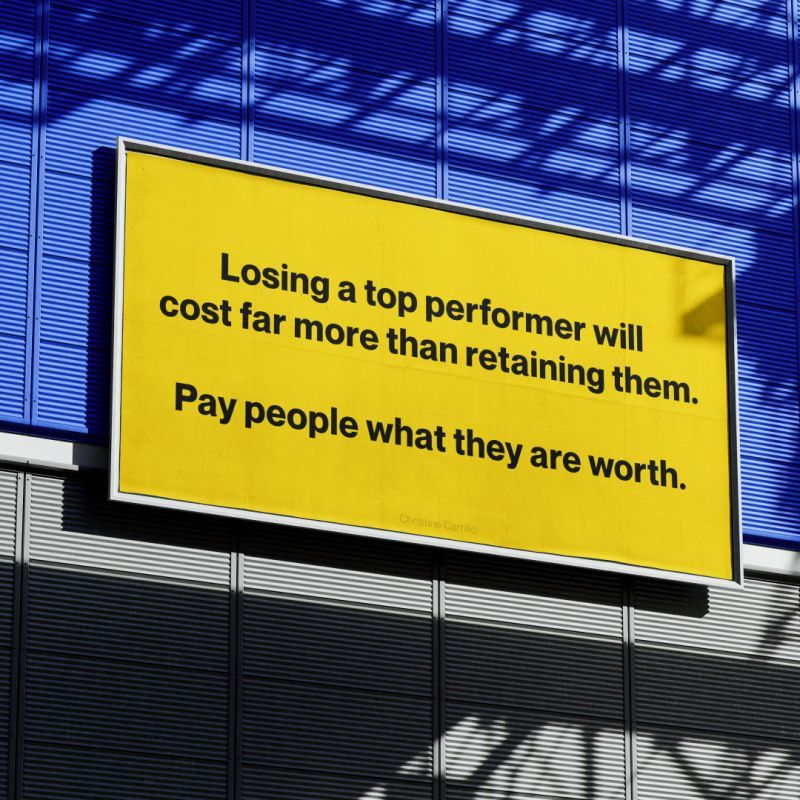
In a recent LinkedIn post, Christine Carrillo tackles the pervasive myth that competitive salaries are merely an expense, arguing instead that fair pay is a critical investment for business success. Carrillo, a business insights provider, highlights the significant, often underestimated, costs associated with high employee turnover.
Carrillo opens her post with a direct challenge to conventional thinking:
Fair pay isn’t an expense, it’s an investment.
This core assertion sets the stage for her analysis of why underpaying employees ultimately proves more costly than investing in competitive compensation. According to Carrillo, the perceived savings from cutting corners on salaries are a false economy, leading directly to the departure of valuable talent.
The True Cost of ‘Cheap Salaries’
Christine Carrillo elaborates on the downstream effects of attempting to save money through lower pay. She contends that what might seem like a cost-cutting measure is, in reality, a direct driver of expensive problems. The process of replacing an employee is far from simple or inexpensive, as Carrillo details.
She outlines the extensive resources consumed when a company needs to fill a vacant position:
Hiring isn’t just posting a job and waiting. It means: ✅ Weeks of interviews ✅ Endless back-and-forth ✅ Months before new hires are fully productive
Carrillo emphasizes that even after this significant investment of time and resources, there is no guarantee of a successful hire. The new employee might soon realize they are underpaid, feel undervalued, or receive a better offer elsewhere, negating the entire hiring effort.
The money you tried to save ends up costing you more. And you’re back to square one.
In Carrillo’s view, this cycle of underpaying, losing talent, and then bearing the high cost of replacement is a significant drain on any business. She posits that the money purportedly saved through lower wages is quickly eclipsed by the expenses associated with recruitment, onboarding, and the productivity gap left by departing employees.
Building a Strong Company Through Fair Compensation
Transitioning from the problems of underpayment, Christine Carrillo offers a clear solution: paying employees their true worth. She argues that building a robust and stable company is fundamentally linked to valuing its workforce.
Carrillo’s central thesis is that a high turnover rate is one of the most significant factors that can weaken a business. By contrast, investing in fair compensation fosters loyalty and retention, creating a more stable and productive environment.
The Retention Advantage
As Christine Carrillo notes, the direct financial benefits of retention far outweigh the perceived savings of underpaying. When employees feel adequately compensated and valued, they are more likely to remain with the company. This stability reduces the need for constant recruitment and training, freeing up resources and maintaining institutional knowledge.
Carrillo concludes her post with a call to action, urging business leaders to prioritize fair pay as a strategy for long-term success. Her insights suggest that a commitment to equitable compensation is not just a matter of ethics but a fundamental business strategy for sustainable growth and operational efficiency.
📝 About This Content
This article is based on insights shared by Christine Carrillo on LinkedIn.
📅 Originally posted on July 29, 2026 | View original post on LinkedIn →