
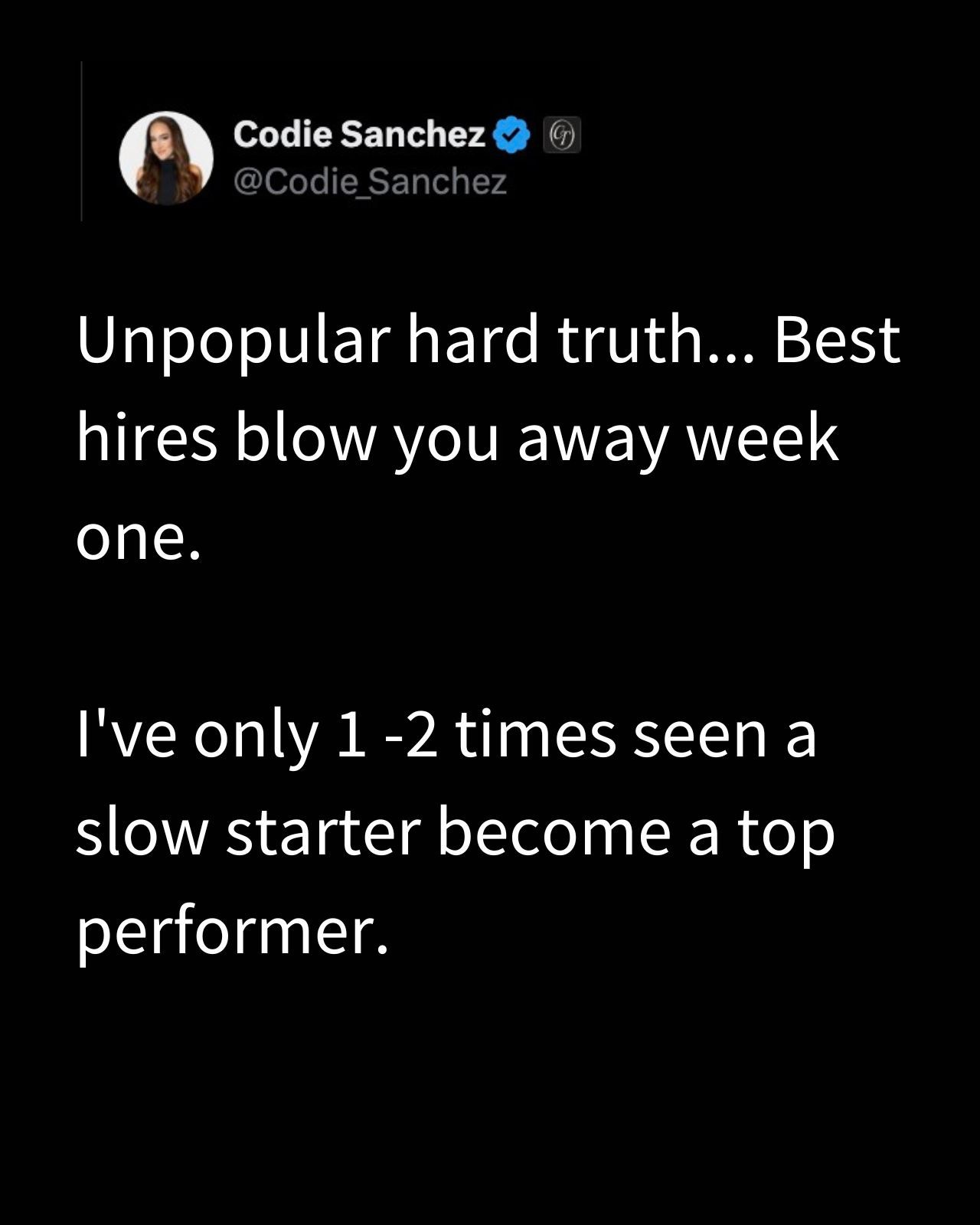
In a recent LinkedIn post, Tim Denning discusses a critical observation from his extensive experience in hiring: the immediate impact and performance indicators of exceptional employees. Denning, who co-founded an eCommerce company that scaled to $50 million in annual revenue with over 100 employees, asserts that top-tier hires distinguish themselves from the outset, often within the first week of employment.
The Undeniable Pattern of Top Performers
Denning’s core argument centers on the idea that truly outstanding employees don’t require lengthy onboarding periods to demonstrate their value. Instead, they exhibit a distinct operational frequency from day one. He elaborates on this by stating:
“The best hires show up differently from day one. Not in a flashy way. Not because they’re trying to impress anyone. They just operate at a different frequency. They ask better questions. They figure things out without being told. They take ownership of problems nobody assigned them.”
This immediate difference, according to Denning, is palpable. He recounts a specific instance of hiring a sales team member with less experience than other candidates. This individual, despite weaker initial qualifications on paper, quickly identified and resolved a follow-up process gap within his first week, eventually outperforming seasoned colleagues within three months. This anecdote serves to underscore Denning’s point that great hires are proactive and self-driven.
The Pitfalls of Over-Patient Management
Conversely, Denning addresses the common managerial tendency to give underperformers excessive time to improve. He admits to having provided candidates three, six, or even longer months, attributing their struggles to adjustment periods or the need for more training. However, he concludes that this patience is often misplaced.
“Almost every time, I was wrong. The people who struggled in month one were still struggling in month six. The gap between them and the top performers only got wider.”
Denning quantifies this by noting that in hundreds of hires, he could count on one hand the number of slow starters who eventually became top performers, deeming these odds too unfavorable to rely upon. He suggests that while immediate termination after a poor first week isn’t the answer, managers should heed the early signals of potential.
Trusting Early Indicators
The challenge, as Denning sees it, is that the data indicating a hire’s trajectory is often available early on, but discomfort with making difficult decisions prevents managers from acting. He emphasizes that the difference between mediocrity and excellence is urgency.
“Great hires don’t need months to prove themselves. They prove it immediately because they can’t help it. Mediocrity is patient. Excellence is not.”
Ultimately, Denning’s post serves as a cautionary piece for hiring managers, advocating for a closer look at early performance indicators and a more decisive approach when those indicators suggest a mismatch. His insights, drawn from substantial practical experience, suggest that recognizing and acting on the immediate potential—or lack thereof—of new hires can significantly impact team performance and business success.
📝 About This Content
This article is based on insights shared by Tim Denning on LinkedIn.
📅 Originally posted on June 28, 2026 | View original post on LinkedIn →