
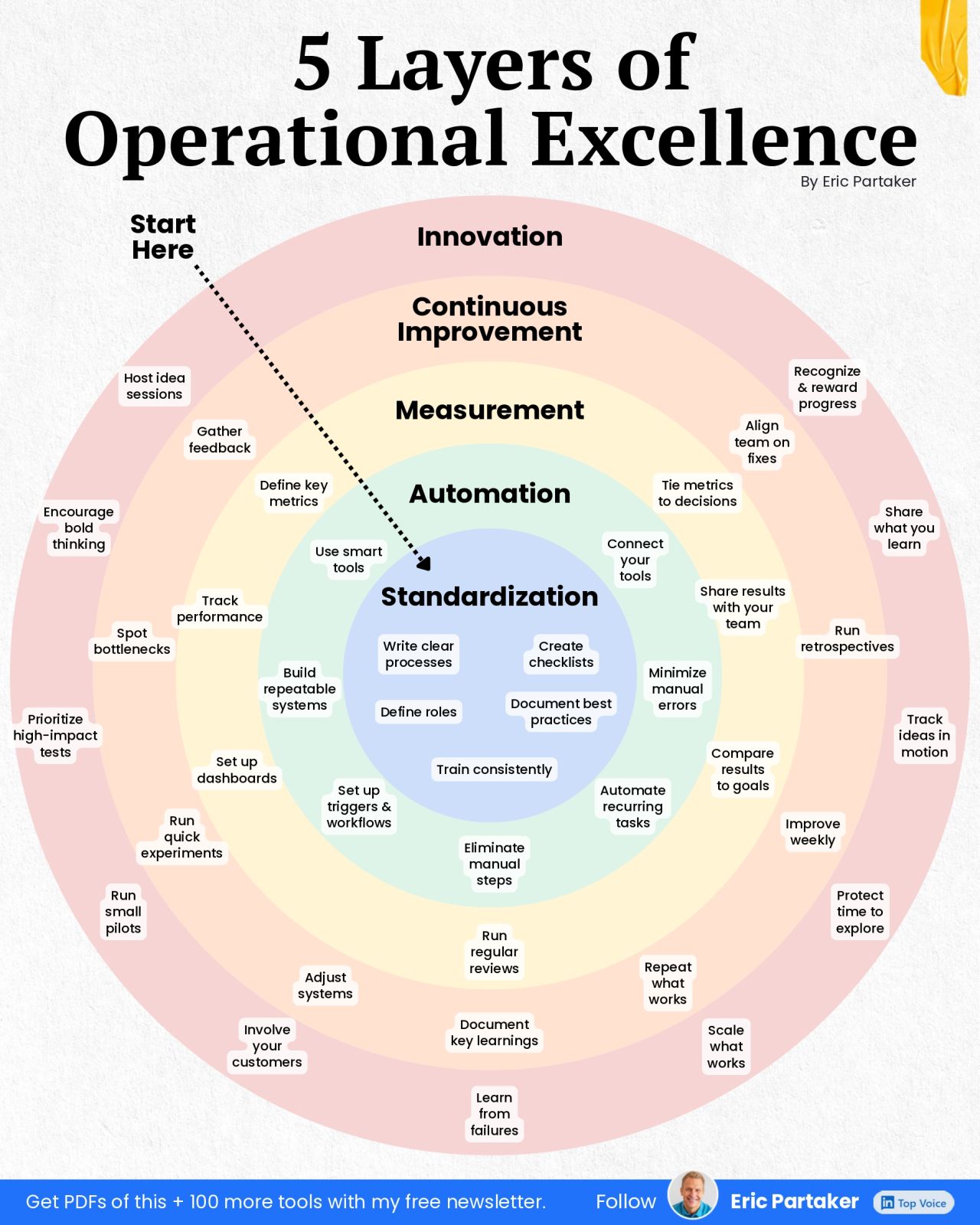
In a recent LinkedIn post, Eric Partaker discusses the common reasons why businesses experience growth stalls, attributing the primary causes to internal decision-making rather than external market forces. Drawing on research and his extensive experience coaching CEOs, Partaker challenges conventional wisdom that often blames downturns or competition for a company’s stagnation.
Partaker highlights findings from a Harvard Business Review study that examined Fortune 100-size companies over fifty years. The study revealed that a significant majority, 87%, encountered growth stalls. Crucially, the research by Matthew Olson and Derek van Bever indicated that only a small fraction of these stalls originated from outside the company.
“87% of them hit a growth stall.”
According to Partaker, the common excuses of market shifts, downturns, or government regulations are often a misdirection from the real issues. He contends that the overwhelming majority of growth stalls stem from decisions and operational deficiencies within the company itself.
Internal Roadblocks to Growth
Drawing from his experience of over 19,000 hours in business operations and coaching more than 650 CEOs, Eric Partaker identifies several internal symptoms that signal a company is beginning to stall. He notes that these issues rarely present as strategic failures initially.
Common Signs of a Stall
- The CEO remains overly involved in day-to-day decision-making.
- Critical processes are not formally documented and exist only in the minds of individuals.
- Despite hard work from the team, the execution of tasks is inconsistent.
Partaker observes that this environment leads to a cycle of “firefighting” where urgent, reactive tasks overshadow strategic focus, and ambitious goals devolve into a series of disconnected, reactive to-do items.
“Firefighting replaces focus. Big goals turn into reactive checklists.”
This internal friction, Partaker argues, is the primary culprit behind stalled growth. He emphasizes that addressing these internal operational weaknesses is paramount before attempting to accelerate further.
A Layered Approach to Operational Excellence
To combat growth stalls, Eric Partaker advocates for building “operational discipline” in a specific, layered order. He outlines five key layers, cautioning that many companies attempt to implement advanced strategies without a solid foundational structure.
The Five Layers of Operational Excellence
Partaker’s framework for building robust operations is as follows:
- Standardization: Establishing one clear, consistent method for performing tasks to eliminate individual variations.
- Automation: Implementing systems to handle repetitive tasks, thereby freeing up employee time for more strategic and complex work.
- Measurement: Tracking key performance indicators and making this data visible to guide decision-making objectively.
- Continuous Improvement: Fostering a culture of making small, weekly adjustments and learning from rapid iterations.
- Innovation: Developing and scaling bold ideas on a stable, well-established operational foundation.
He strongly advises against trying to leap to the final layer of innovation without first solidifying the preceding stages.
“You have to tighten the engine before you step on the gas.”
In essence, Partaker’s analysis, shared via his LinkedIn post, underscores the critical importance of internal operational rigor. As he puts it, a company must ensure its internal mechanics are sound and efficient before attempting to push for greater speed and expansion. He prompts readers to consider where they believe most teams encounter these stalls, inviting further discussion on the topic.
📝 About This Content
This article is based on insights shared by Eric Partaker on LinkedIn.
📅 Originally posted on September 14, 2026 | View original post on LinkedIn →