
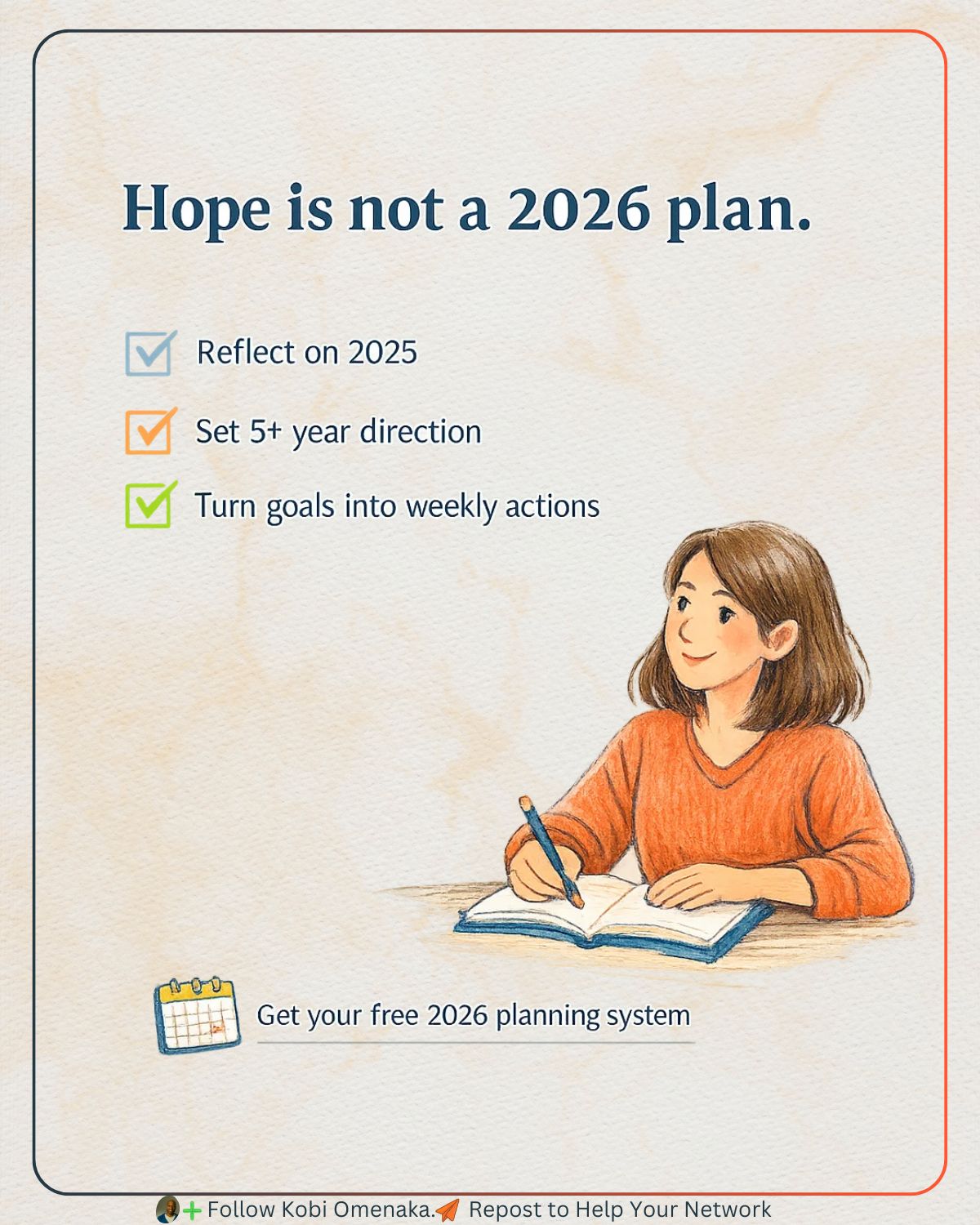
In a recent LinkedIn post, Kobi Omenaka discusses the critical importance of strategic planning for the future, particularly as the year 2026 approaches. Omenaka emphasizes that relying on hope alone is insufficient for business success and highlights a practical planning system shared by his long-time mentor, Howard Kingston, to prevent a common pitfall: drifting into the new year without direction.
The Perils of Unplanned Futures
Omenaka opens his post by directly addressing the inadequacy of passive anticipation. He states:
“Hope is not a 2026 plan.”
This stark declaration sets the stage for his argument that proactive and structured planning is essential. Omenaka credits Howard Kingston, whom he has known for over a decade, as a significant influence on his own marketing thinking. Kingston’s annual practice of helping others plan ahead stems from his personal experience with the positive impact of such foresight.
Kingston’s Three-Step Planning System
While Omenaka is unsure if Kingston is currently running a formal 2026 planning session, he emphasizes that Kingston has made his planning system freely available. Omenaka believes this system is designed to counteract the tendency for individuals and businesses to drift aimlessly into the new year. He outlines the core components of this approach:
Key Planning Stages
- Reflect on 2025: Understanding the past year’s achievements and challenges is the first step.
- Set 5+ Year Direction: Establishing a long-term vision beyond the immediate year is crucial for sustained growth.
- Turn Goals into Weekly Actions: Breaking down overarching goals into manageable, actionable steps ensures consistent progress.
According to Omenaka, this structured process moves beyond mere aspiration. He poses a direct question to his audience, probing their preparedness:
“Yes or no, are you planning 2026 properly?”
This rhetorical question serves to underscore the urgency and personal relevance of strategic planning. Omenaka’s endorsement of Kingston’s system suggests it offers a tangible solution for those who may not have their own robust planning mechanisms in place.
Actionable Insights for Business Leaders
Omenaka further elaborates on the value of Kingston’s freely shared resource. He notes the system’s potential to provide clarity and purpose, preventing the common scenario of starting a new year without a clear roadmap. The simplicity of the three-step order is highlighted as a key benefit, making strategic planning accessible even for those who might find it daunting.
As Omenaka points out, the system is designed to be practical and immediately applicable:
“But he has shared his planning system for free, and it will stop you drifting into January.”
By sharing Kingston’s methodology, Omenaka positions himself as a conduit for valuable business wisdom. He encourages his network to engage with the resource, providing a direct link for access and inviting them to acknowledge his referral. This collaborative approach underscores Omenaka’s belief in the power of shared knowledge and mentorship within the business community.
Ultimately, Omenaka’s message is a call to action for businesses and individuals alike: move beyond passive hope and embrace structured, forward-thinking planning. The insights shared from Howard Kingston’s system offer a clear pathway to achieving long-term goals and ensuring a purposeful start to 2026 and beyond.
📝 About This Content
This article is based on insights shared by Kobi Omenaka on LinkedIn.
📅 Originally posted on December 29, 2025 | View original post on LinkedIn →