
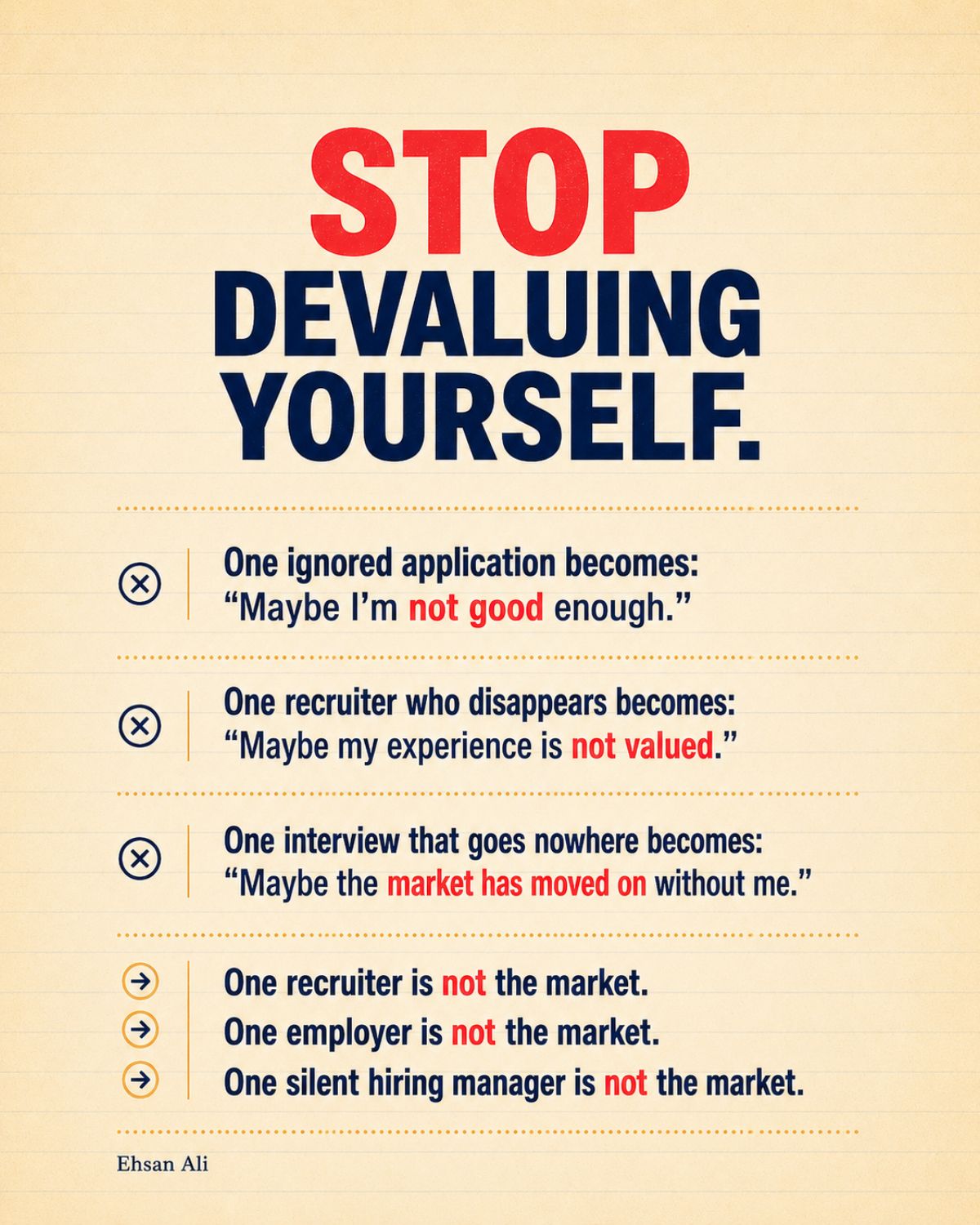
In a recent LinkedIn post, Ehsan Ali offers a critical perspective on how senior professionals often misinterpret silence in their job search, turning it into a personal indictment rather than a neutral event.
Ali challenges the common tendency to equate a lack of response from recruiters or hiring managers with personal rejection. He writes:
“No reply is not rejection. It is just no reply.”
The post elaborates on various professional reasons why a response might be delayed or absent, suggesting that factors like recruiter busyness, shifting role requirements, internal candidates, budget approvals, or simply off-timing are more likely culprits than a reflection of the candidate’s worth.
The Danger of Turning Silence into Identity
Ehsan Ali argues that a significant pitfall for senior professionals is their tendency to internalize this silence, allowing it to shape their self-identity and professional confidence. This, he contends, is a dangerous practice that can undermine a career search.
Ali highlights how one ignored application or a non-responsive recruiter can lead to damaging self-perceptions:
“One ignored application becomes: ‘Maybe I’m not good enough.'”
He further explains that this pattern can escalate, with a single silent hiring manager being interpreted as a sign that one’s experience is no longer valued or that the market has moved past their skillset. This emotional response, Ali suggests, is counterproductive to an effective job search strategy.
Rethinking Career Strategy Beyond Single Points of Failure
A core message from Ehsan Ali’s post is the need for senior professionals to broaden their job search strategy beyond relying on individual applications or recruiters. He emphasizes that confidence should not be built on such narrow foundations.
According to Ali, a robust career strategy involves cultivating multiple avenues for opportunity simultaneously. He states:
“You need conversations, market insight and real relationships.”
Ali advocates for developing a clear value proposition and ensuring multiple opportunities are being pursued concurrently. This approach, he argues, prevents the entire job search from collapsing when one channel yields no response. When a job search hinges on a single reply, every instance of silence feels intensely personal, which Ali labels as “emotional gambling” rather than a strategic plan.
The High Cost of a Flawed Strategy
The post underscores the long-term financial implications of a job search strategy overly dependent on applications and hope. Ehsan Ali points out that over several years, a single missed opportunity or a series of underpaid roles resulting from a weak strategy can amount to significant financial loss, potentially ranging from $500,000 to $1 million.
Ali concludes by urging professionals to analyze the situation objectively when faced with non-responsiveness. Instead of immediate self-doubt, he advises examining the role, the communication, the target audience, and the diversity of channels being used. He stresses that a lack of reply does not diminish one’s inherent value.
However, if silence can halt an entire job search, Ali suggests the problem lies not just with confidence but with a strategy that is too reliant on a single application, a specific recruiter, or mere hope. This, he warns, is how senior professionals can lose valuable years in their careers.
📝 About This Content
This article is based on insights shared by Ehsan Ali on LinkedIn.
📅 Originally posted on July 14, 2026 | View original post on LinkedIn →