
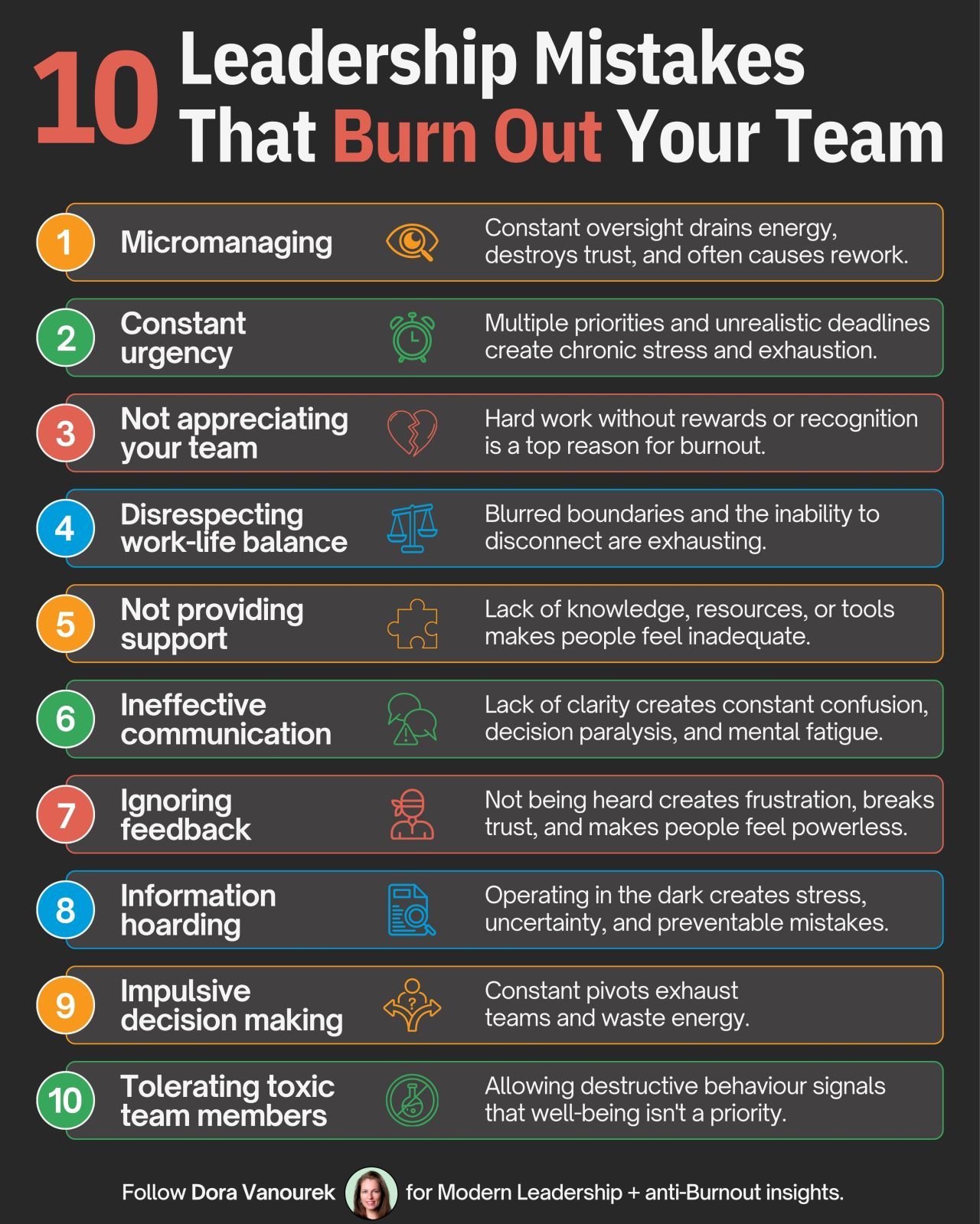
In a recent LinkedIn post, Ben Sands discusses the often-overlooked root causes of team burnout and underperformance, arguing that poor leadership habits, rather than excessive working hours, are the primary culprits. Sands challenges the conventional wisdom that long hours are the main destroyer of teams, positing that the real damage stems from detrimental leadership behaviors that erode trust and sustainability.
According to Sands, burnout is not an overnight phenomenon but a gradual consequence of daily, repeated habits. He emphasizes that many leaders implementing these damaging practices are often unaware of their negative impact.
“Long hours don’t break teams. Poor leadership does.”
The Ten Habits Undermining Team Health
Sands identifies ten specific leadership habits that he believes inflict the most significant damage on team cohesion and effectiveness. He details how each of these practices contributes to a toxic work environment and ultimately hinders performance.
Micromanaging and Constant Urgency
Among the top damaging habits, Sands lists micromanaging, which he states kills trust and drains a sense of ownership from team members. He also calls out the practice of creating constant urgency, explaining that when everything is treated as a top priority, nothing truly feels sustainable, leading to chronic stress.
“Constant urgency ↳ Everything feels important → nothing feels sustainable”
Lack of Appreciation and Unrealistic Expectations
Another critical habit highlighted by Sands is the lack of appreciation. He argues that hard work without recognition inevitably breeds resentment. Coupled with this is the expectation of being ‘always-on,’ which, as Sands points out, eliminates necessary boundaries for recovery and leads to exhaustion.
“Always-on expectations ↳ No boundaries = no recovery”
Furthermore, Sands addresses the detrimental effects of withholding support, stating that setting high expectations without providing the necessary resources is a recipe for guaranteed failure. Unclear communication is also a major issue, as it forces employees to waste energy on guessing rather than executing tasks effectively.
Ignoring Feedback and Information Hoarding
The post also touches upon the disengagement that arises when feedback is ignored. “When people aren’t heard, they disengage,” Sands writes, underscoring the importance of listening to team members. Information hoarding is another point of concern, leading to confusion and mistakes within the team.
Constant Pivots and Tolerating Toxicity
Sands further criticizes constant strategic pivots, which can erode a team’s trust in leadership’s direction. Perhaps most critically, he identifies the tolerance of toxic behavior as a significant drain on team morale and productivity, noting that “one person can drain an entire team.”
The Path to a Better Environment
Concluding his post, Sands offers a hopeful outlook, suggesting that addressing these ten habits can lead to profound positive changes. He asserts that trust will build, energy will return, and performance will follow. He directly advises leaders that their teams do not need more wellness programs but rather a better working environment, which is their direct responsibility to create.
Sands concludes by posing a direct question to leaders, prompting self-reflection: “Which one of these shows up in your leadership right now?” This call to action encourages leaders to assess their own practices and take ownership of the environment they foster.
📝 About This Content
This article is based on insights shared by Ben Sands on LinkedIn.
📅 Originally posted on April 4, 2026 | View original post on LinkedIn →