
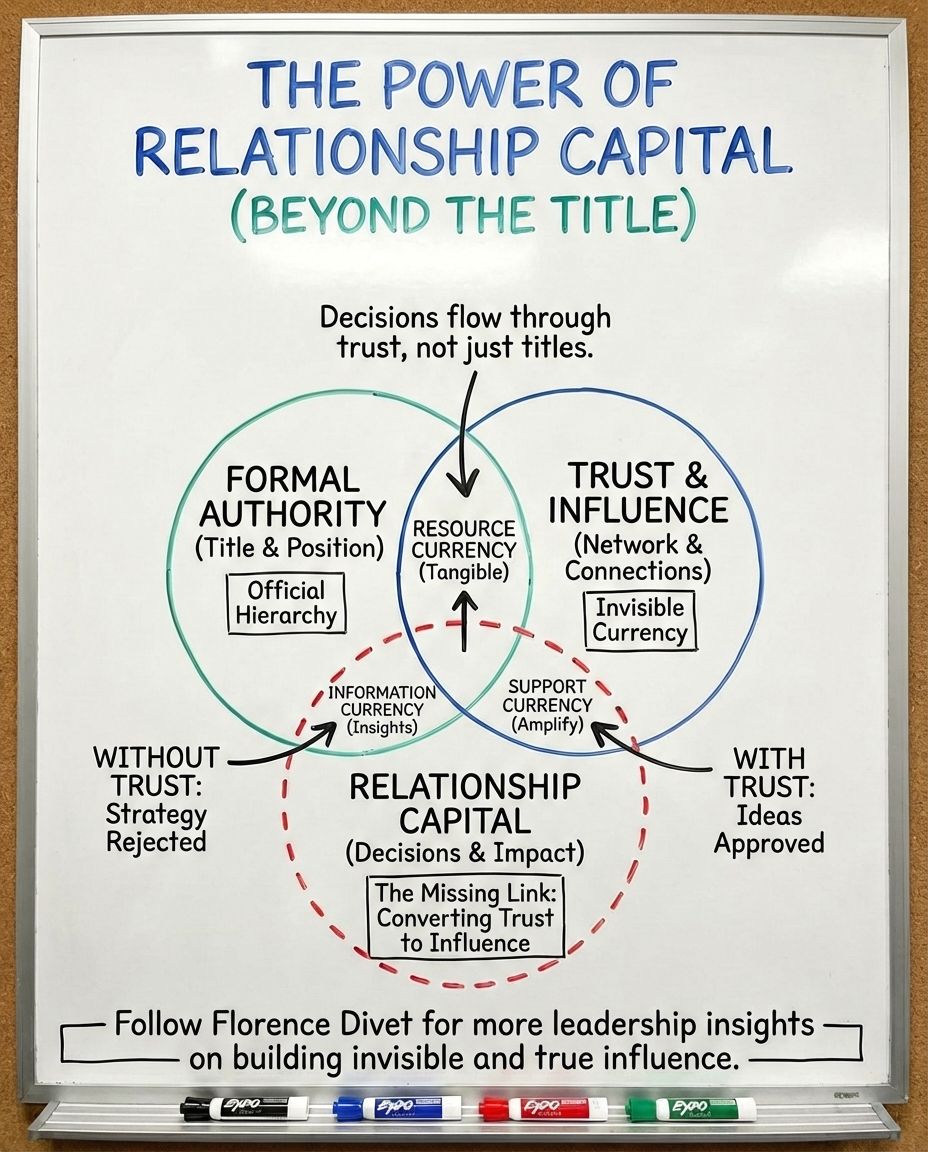
In a recent LinkedIn post, Florence Divet ☀️ challenges conventional leadership wisdom, arguing that true influence and decision-making power stem not from formal titles, but from robust relationships and “relationship capital.” The post highlights a common pitfall for leaders: over-investing in hierarchical authority rather than the networks of trust that actually drive organizational progress.
Florence Divet ☀️ opens with a stark assertion: “Your title won’t save you. Your relationships will.” This sets the stage for an exploration of how decisions in organizations are often made through informal channels, influenced by trust and established connections, rather than solely by those with official authority.
“Research on relationship capital reveals a truth many miss: Decisions in organisations are rarely made by formal authorities alone. They flow through networks of trust and influence.”
The Flawed Pursuit of Authority Over Influence
The post illustrates this point with an anecdote about a client whose well-researched strategy was rejected, while a less developed idea from a colleague was approved. Florence Divet ☀️ attributes this disparity not to the quality of the ideas themselves, but to the strength of relationship capital. As Florence Divet ☀️ notes, actions such as delivering bad news honestly, crediting others, admitting what you don’t know, and supporting colleagues in crisis are not merely acts of kindness; they are strategic investments in building this essential currency.
Decades of research, including work by Rob Cross, Ronald Burt, and McKinsey, support this perspective, as highlighted by Florence Divet ☀️. The core argument is that decisions follow trust, not titles. Florence Divet ☀️ identifies three common mistakes leaders make:
- Chasing authority instead of influence.
- Tracking deliverables over connections.
- Optimizing for transactions rather than trust.
Florence Divet ☀️ emphasizes that an individual’s greatest leverage comes from their network of supporters, people willing to back them even without formal power.
Actionable Steps to Cultivate Relationship Capital
To help leaders build this vital asset, Florence Divet ☀️ outlines four key steps employed by high-performing clients:
1. Map the Real Influence Network
This involves identifying trusted voices within departments, noting who is consulted before official decisions, and observing who speaks last in meetings, as they often hold true authority, according to Florence Divet ☀️.
2. Invest Before You Need Returns
Florence Divet ☀️ advises building relationships during periods of calm, scheduling dedicated time for relationship-building, and aiming for regular “deposit-only” conversations where the focus is on giving rather than asking.
3. Master the Three Relationship Currencies
These currencies are:
- Resource currency: Tangible provisions.
- Information currency: Exclusive insights.
- Support currency: Amplifying others’ priorities.
4. Build Bridges
This step encourages connecting with individuals across different departments, becoming a translator between silos, and creating value through coordination rather than solely through individual contribution. Florence Divet ☀️ argues that this cross-functional connection is key to expanding influence.
In conclusion, Florence Divet ☀️ posits that the most valuable leadership skill is not technical expertise or strategic thinking, but the ability to build trust with those outside one’s direct reporting line. The post powerfully concludes:
“Your title might get you in the room. Your relationships determine what happens next.”
Ultimately, Florence Divet ☀️ suggests that without trust, even the most brilliant strategies remain mere documents. The insights shared underscore the critical importance of nurturing interpersonal connections as a foundation for effective leadership and organizational success.
📝 About This Content
This article is based on insights shared by Florence Divet ☀️ on LinkedIn.
📅 Originally posted on February 27, 2026 | View original post on LinkedIn →