
In a recent LinkedIn post, Alvin Huang discusses the critical, yet often overlooked, importance of employee well-being and recognition in driving business success, even when facing significant operational challenges. Huang emphasizes that a company’s greatest asset is its people, and neglecting their needs can undermine even the most robust strategies.
Huang recounts a difficult period at Truegenics where the company faced declining revenue and a stretched team. While the initial, natural instinct was to focus on systems and operational adjustments, Huang realized the root of the problem lay elsewhere. He writes:
“The easy answer would’ve been to look at the numbers and start cutting. Maybe tighten the budget, or restructure the ops. And honestly, that’s exactly where my mind went first. When things go wrong in a business, the instinct is always to look at the systems. Those feel controllable and fixable. People, on the other hand, are messier.”
Shifting Focus from Systems to People
Huang’s reflection highlights a common business tendency to prioritize tangible systems over the intangible, yet crucial, human element. He argues that when problems arise, leaders often look to fix processes or budgets because these seem more manageable. However, Huang discovered that the underlying issues were related to the team’s state: burnout, lack of clarity on priorities, and a feeling of being unacknowledged.
This realization led Huang to pivot from a systems-focused approach to a people-centric one. He initiated genuine conversations, moving beyond superficial check-ins to understand the team’s actual needs and roadblocks. As Huang puts it:
“The kind where you actually sit down, be quiet, and listen: → What do you need to do your job well? → Where are you stuck? → What’s slowing you down that I don’t know about?”
These direct, empathetic conversations, according to Huang, provided the crucial insights needed to address the real problems. By focusing on improving the human side – fostering clarity, ownership, and a positive culture – the business began to see improvements across the board.
Key Strategies for People-Centric Leadership
Huang outlines several actionable strategies that made a significant difference in his experience:
- Replacing routine status-update meetings with meaningful conversations about employee needs.
- Creating a safe environment where team members feel comfortable raising issues early.
- Clearly defining and providing what each individual needs to perform at their best.
- Acknowledging not only results but also ownership and effort.
- Proactively building company culture rather than letting it develop passively.
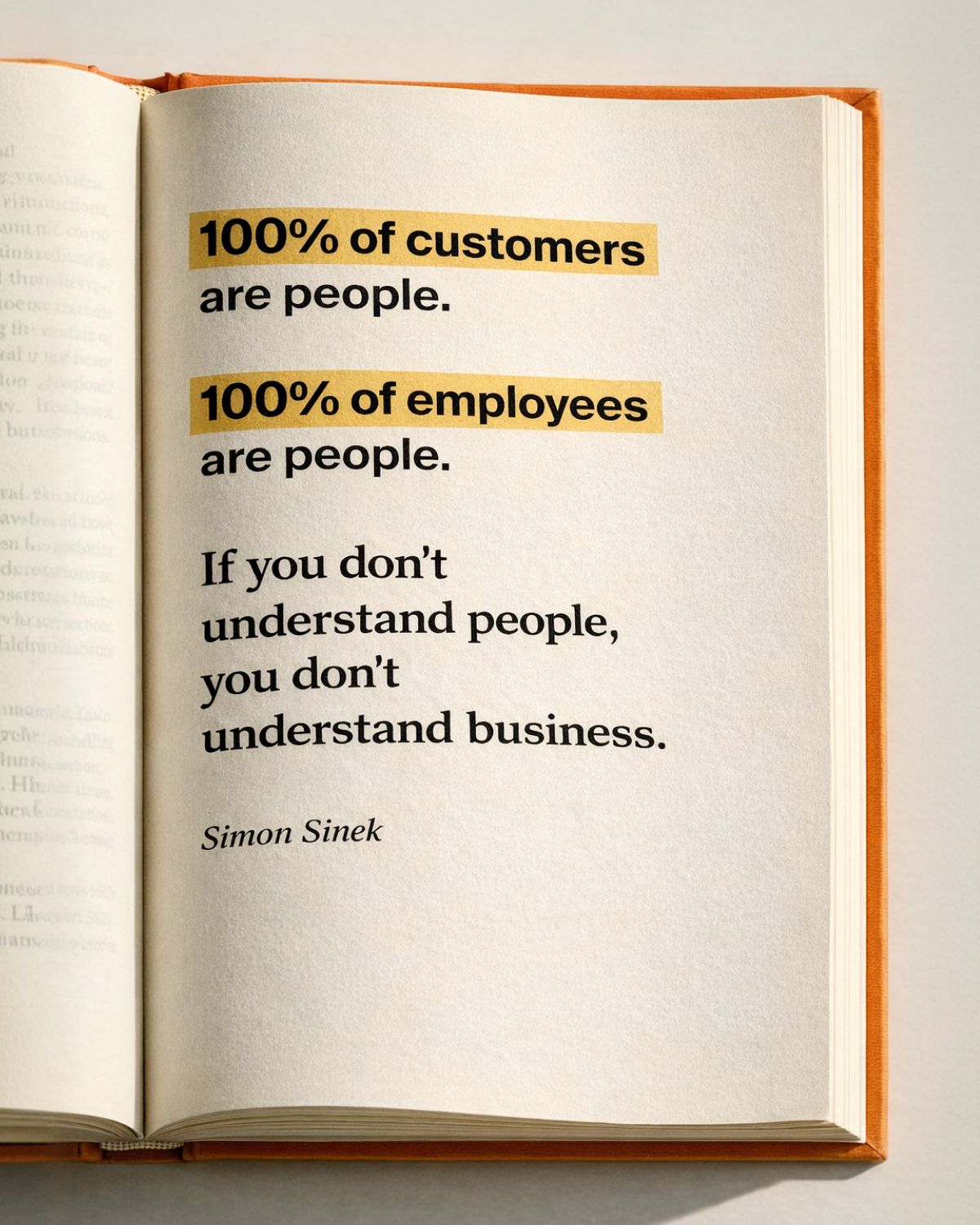
He stresses that leaders must intentionally carve out time to pay attention to their people, regardless of how demanding the operational tasks may be. Citing Simon Sinek, Huang reiterates that employees are the core of any organization.
The Interplay of People and Systems
Alvin Huang’s insights underscore a vital leadership principle: while effective systems are necessary, they are powered by motivated and supported individuals. When people feel seen, valued, and understood, their capacity to execute strategies and overcome challenges is amplified. Huang argues that addressing the human element first can unlock the potential of existing systems and pave the way for sustainable growth.
The post concludes with a reminder that focusing on people is not a deviation from business objectives but a fundamental requirement for achieving them. As Huang notes:
“Stop and take the time to pay attention to your people. As Simon Sinek says, they’re the heart of everything.”
Huang’s perspective serves as a valuable reminder for leaders to balance operational focus with genuine care and attention for their teams.
📝 About This Content
This article is based on insights shared by Alvin Huang on LinkedIn.
📅 Originally posted on April 8, 2026 | View original post on LinkedIn →