
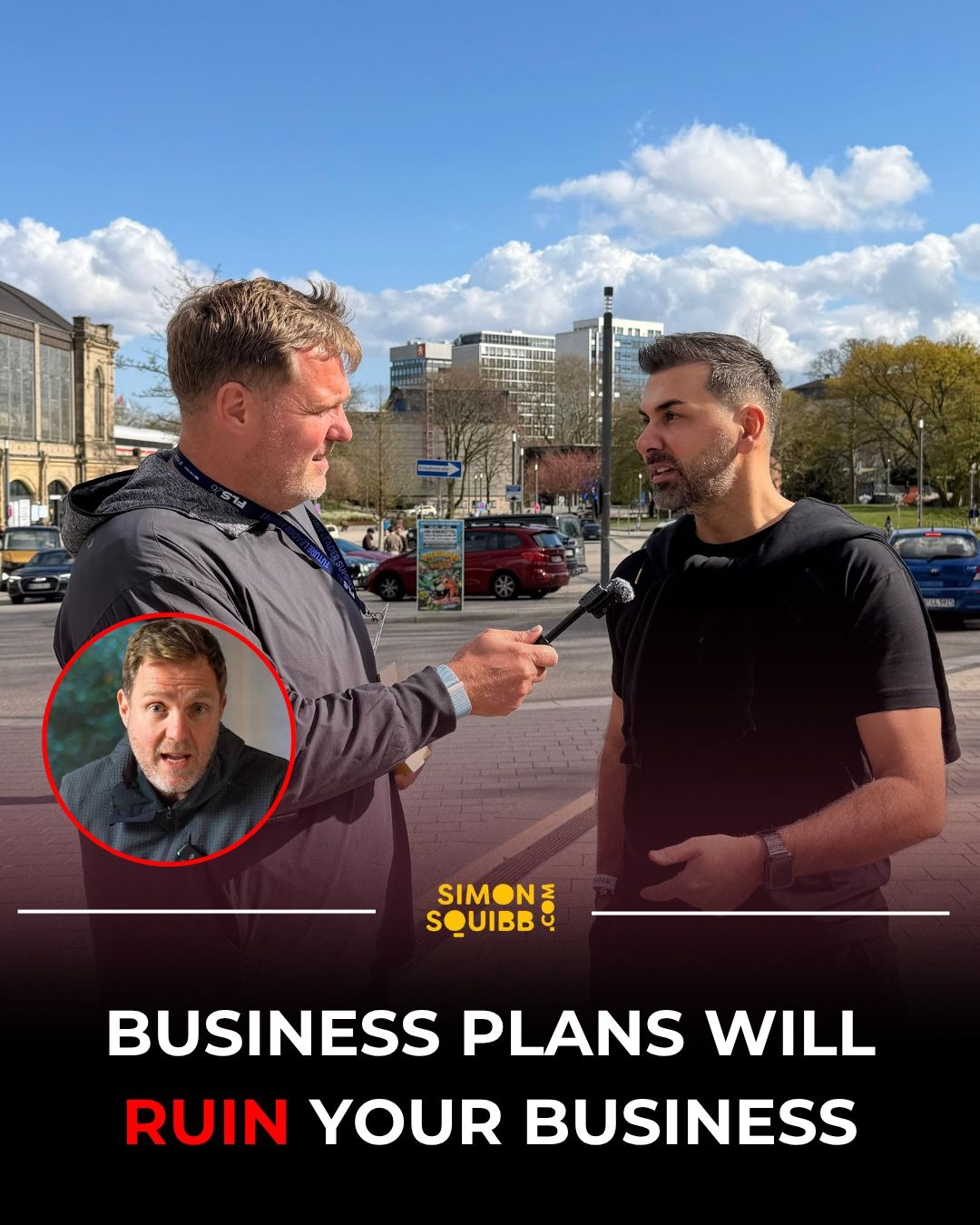
In a recent LinkedIn post, entrepreneur Simon Squibb shares a counterintuitive piece of advice for aspiring business owners: discard your business plan. Squibb, known for his entrepreneurial ventures, argues that rigid business plans can actually hinder growth by locking founders into outdated assumptions, preventing them from adapting to real-world opportunities.
Squibb’s central argument is that the most valuable business opportunities often emerge after a business has already launched, not before. He states:
The best opportunities appear after you start, not before. And a plan locks you into the version of the business you imagined before you had any real information.
This perspective challenges the conventional wisdom that a detailed business plan is a prerequisite for success. Squibb contends that such documents create a false sense of certainty and can lead founders astray.
The Limitations of Traditional Business Plans
According to Simon Squibb, the fundamental flaw in a business plan lies in its assumption of foreknowledge. He points out that the business landscape is dynamic, and trying to predict every variable in advance is an exercise in futility. This rigidity can be detrimental when market conditions shift.
Squibb elaborates on this point:
Every business I’ve built that worked followed instinct and adapted constantly. Every business I’ve seen fail was following a plan long after the plan stopped making sense.
In Squibb’s view, founders become so committed to their initial document that they fail to recognize when it’s no longer relevant. This can lead to a costly disconnect between the business’s strategy and its actual market performance.
Mind Mapping as a Flexible Alternative
As an alternative to traditional business plans, Simon Squibb advocates for the use of mind maps. He describes mind maps as “liquid,” allowing for greater flexibility and adaptability in real-time decision-making.
Squibb explains the advantage of this approach:
A mind map on the other hand is liquid. You can pull threads, follow ideas, connect things that a rigid document can’t. When something changes, whether that be a new client, a new market, a competitor disappearing, you adapt in real time instead of defending a document nobody reads anyway.
This method, according to Squibb, enables entrepreneurs to pivot quickly in response to new information, client feedback, or market changes. It encourages a more intuitive and adaptive approach to building and scaling a business, prioritizing learning and iteration over adherence to a predetermined path.
Embracing Uncertainty and Adaptation
The core message from Simon Squibb’s LinkedIn post is to embrace the inherent uncertainty of entrepreneurship. He suggests that rather than spending excessive time creating a detailed plan that may quickly become obsolete, founders should focus on mapping out their initial idea and then be prepared to let their experiences shape the business’s evolution.
Squibb concludes with a powerful directive:
Ditch the business plan. Map out your idea. Then let what you learn on day one change everything you thought you knew on day zero. The business you build will be nothing like the one you planned.
His insights highlight the importance of agility and continuous learning in the entrepreneurial journey, positioning instinct and adaptation as more critical drivers of success than a static, pre-conceived plan.
📝 About This Content
This article is based on insights shared by Simon Squibb on LinkedIn.
📅 Originally posted on April 22, 2026 | View original post on LinkedIn →