
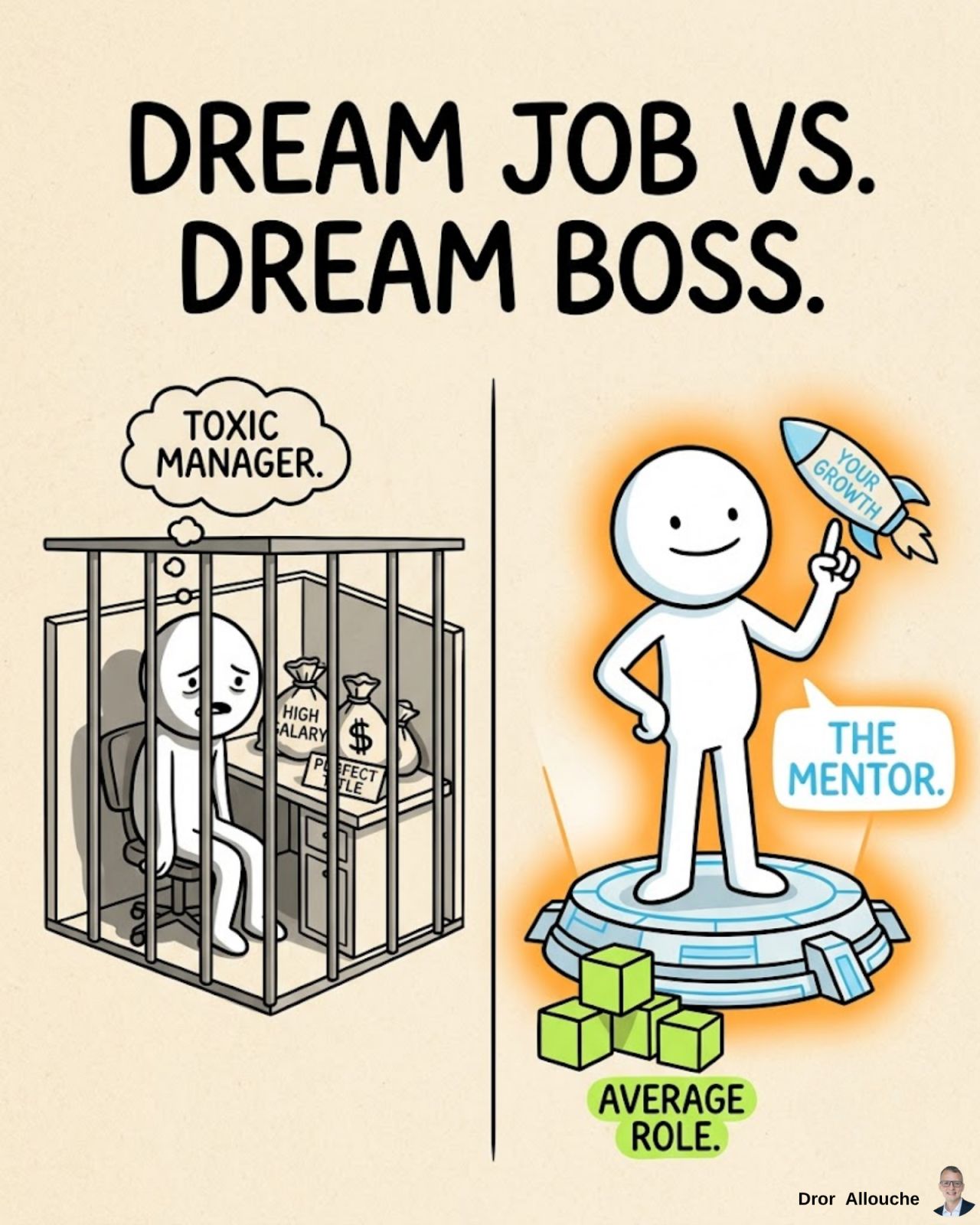
In a recent LinkedIn post, Dror Allouche challenges the conventional notion of a “Dream Job,” arguing instead for the primacy of a “Dream Boss.” Allouche posits that a supportive and effective manager can transform even an average role into a career launchpad, while a toxic leader can make a high-profile position feel like a “well-paid prison.” This perspective shifts the focus from job titles and company prestige to the immediate impact of one’s direct supervisor on professional growth and well-being.
The Defining Characteristics of a ‘Dream Boss’
Dror Allouche outlines several key distinctions between a detrimental manager and an exemplary one. The core difference, according to Allouche, lies in how they handle common workplace scenarios, particularly mistakes, visibility, control, growth, wellbeing, and feedback.
Regarding mistakes, Allouche contrasts a bad boss who blames an employee to self-protect with a dream boss who collaborates on a solution and emphasizes learning. “✅ Dream Boss: Fixes it with you and asks, ‘What did we learn?'” the post states, highlighting a constructive approach to errors.
Visibility is another critical area. Allouche observes that a poor manager might hoard credit, whereas a good one actively promotes their team members. As Dror Allouche notes, a dream boss “Pushes you onto the stage when the executives are watching.” This action not only acknowledges an employee’s contributions but also provides crucial exposure.
Leadership’s Impact on Career Trajectory and Wellbeing
The analysis extends to how leaders manage their teams’ development and personal lives. Dror Allouche argues that a bad boss might intentionally limit an employee’s growth to ensure they remain dependent on the role. In contrast, a dream boss invests in their team’s skills, even if it means preparing them for future opportunities elsewhere, with the understanding that fair treatment encourages loyalty.
“The person you spend time with every day has a major impact on your well-being and your career.”
This sentiment underscores the profound influence a manager has, affecting not just job satisfaction but also mental health and long-term career progression. Allouche emphasizes that a dream boss prioritizes employee wellbeing, illustrating this with the example of respecting personal time, such as scheduling emails for business hours rather than sending them late at night.
Identifying a ‘Dream Boss’ During Recruitment
To help individuals navigate the hiring process and identify potentially great managers, Dror Allouche suggests a proactive approach: auditing the interviewer. Instead of merely answering questions, candidates are encouraged to ask insightful questions that reveal the interviewer’s leadership style.
Allouche proposes specific questions designed to elicit revealing responses:
- “How did you handle the last mistake a team member made?”
- “How do you deliver difficult feedback?”
By carefully observing the answers and even the body language of the potential manager, candidates can gain valuable insights into their leadership philosophy and determine if they align with the characteristics of a “Dream Boss.” Dror Allouche concludes that these interactions are vital for making informed career decisions.
📝 About This Content
This article is based on insights shared by Dror Allouche on LinkedIn.
📅 Originally posted on July 24, 2026 | View original post on LinkedIn →