
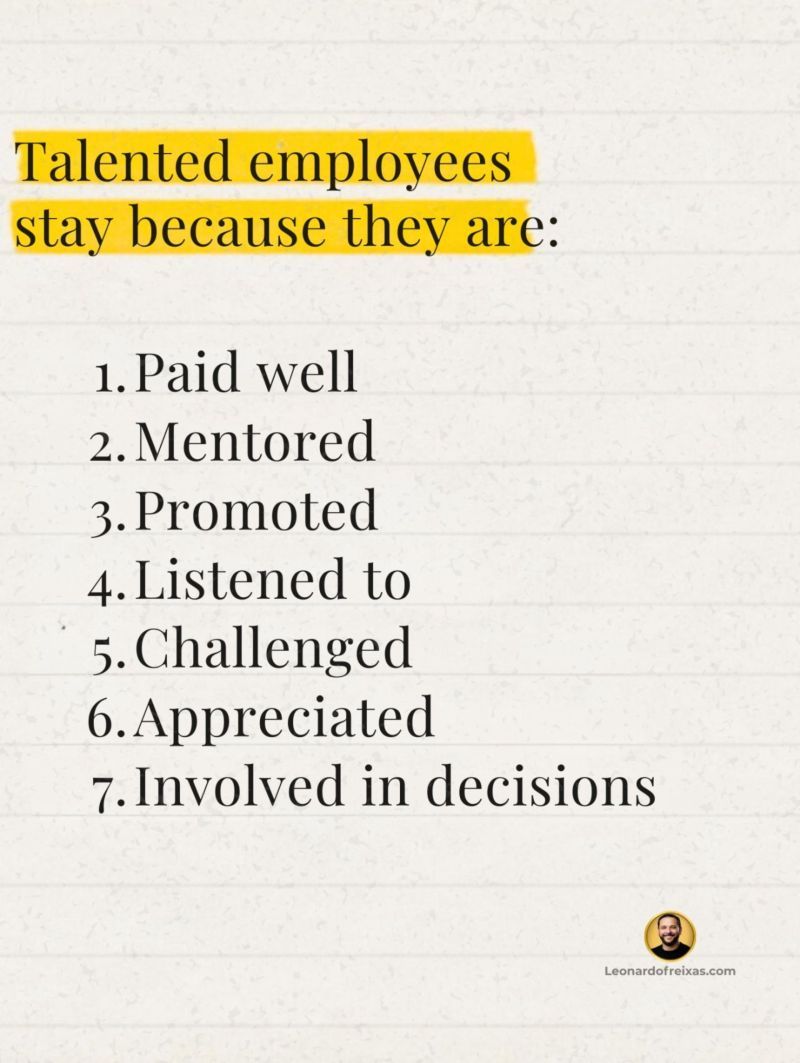
In a recent LinkedIn post, Leonardo Freixas delves into the critical issue of employee retention, arguing that the departure of valuable employees is often a result of preventable neglect rather than unavoidable circumstances. Freixas, a recognized voice in talent management, shared his perspective on the underlying reasons why employees choose to leave, emphasizing that proactive measures, centered on respect and genuine care, are far more effective than superficial perks.
The Cost of Neglect in Talent Retention
Freixas opens with a stark observation about the common experience of losing top performers: “Your best employee just quit. You had six months to stop it. You didn’t.” This immediately sets a tone of accountability for employers, suggesting that such departures are rarely sudden but rather the culmination of a prolonged period of unaddressed issues. He further elaborates on this point from a personal standpoint, noting,
“Personal truth: Every time I’ve resigned, the counteroffer came. By then I was already gone mentally. Too late.”
According to Freixas, the timing of a company’s response is crucial. A counteroffer, often seen as a solution, is typically too late because the employee has already made the emotional and mental decision to leave. This highlights the need for continuous engagement and satisfaction, rather than reactive measures.
Seven Pillars of Employee Retention
Freixas outlines seven key areas that genuinely contribute to employees choosing to stay with an organization. He contends that these factors are fundamental to building loyalty and ensuring long-term commitment. These pillars include:
- Paid Well: Compensation should reflect an employee’s impact and value, not just their length of service. Freixas stresses transparency and fairness, stating, “Compensation equals respect.”
- Mentored: Employees need leaders who invest time in their growth, providing direction and constructive feedback that fosters development.
- Promoted: Opportunities for advancement should be based on skills and performance, with internal candidates prioritized over external hires.
- Listened To: Employees need to feel that their ideas are valued and that their voices can shape the work they do, creating a culture of open communication.
- Challenged: Stagnation can be detrimental to an employee’s career. Freixas suggests that providing meaningful challenges keeps employees engaged and motivated.
- Appreciated: Recognition for achievements, both big and small, is essential. Celebrating wins and giving credit where it’s due fosters a positive work environment.
- Involved in Decisions: Granting employees a voice in relevant decision-making processes and trusting them with ownership builds a sense of belonging and accountability.
Respect as the Ultimate Retention Tool
The core of Freixas’s message is that true employee loyalty is built on respect and genuine care, not on superficial perks. He directly challenges common workplace practices by stating,
“Free snacks don’t build loyalty. Respect does.”
Freixas argues that the cost of implementing these retention strategies is minimal compared to the immense cost of losing talent. He concludes his post with a powerful statement: “The cost of caring is zero. The cost of not caring? Everything.” This sentiment underscores his belief that a culture of care and respect is not just a beneficial practice but an essential component for sustainable business success.
By highlighting these fundamental aspects of the employee experience, Leonardo Freixas provides a clear roadmap for organizations looking to not only retain their best talent but also foster a more engaged and committed workforce.
📝 About This Content
This article is based on insights shared by Leonardo Freixas on LinkedIn.
📅 Originally posted on March 9, 2026 | View original post on LinkedIn →