
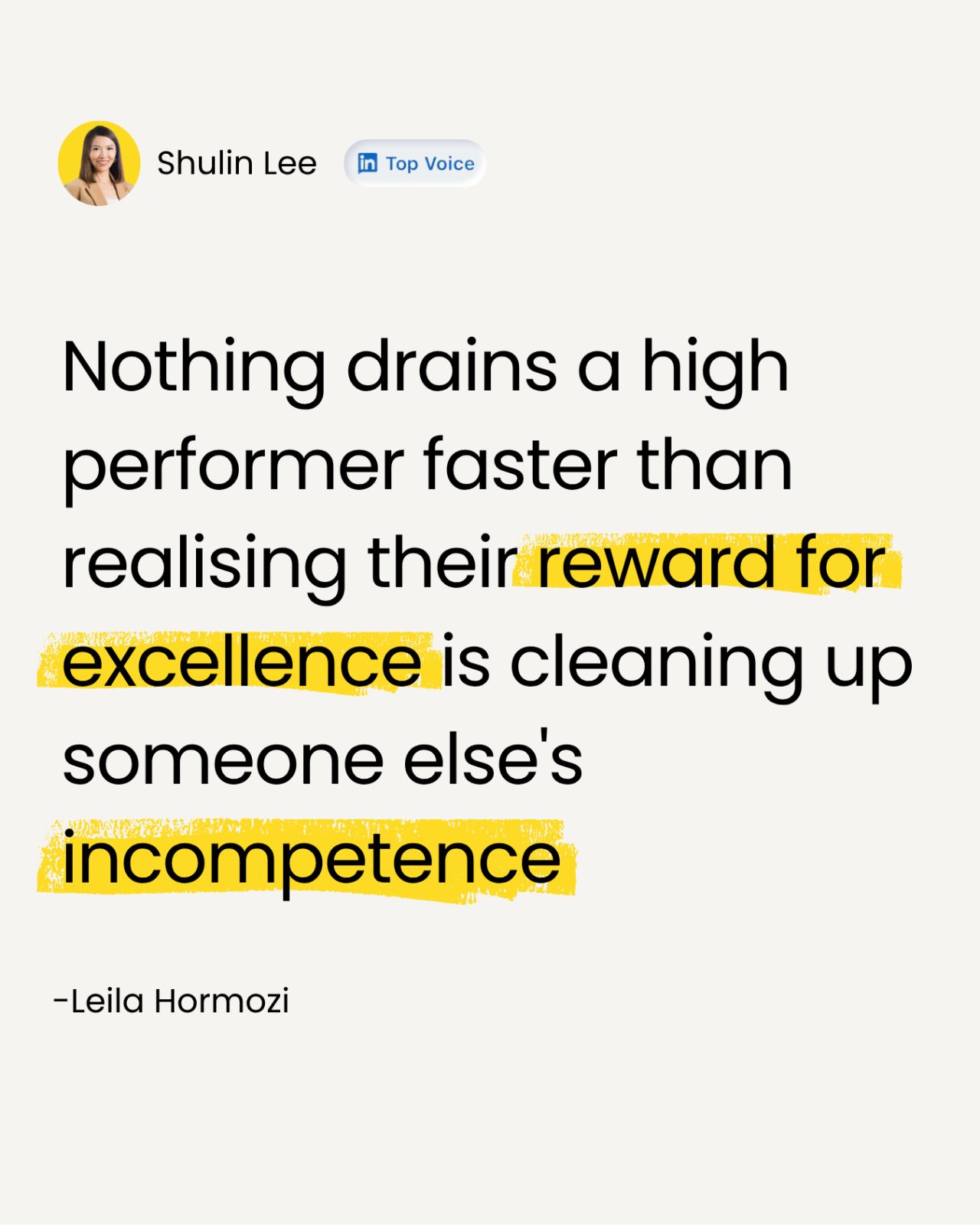
In a recent LinkedIn post, Shulin Lee explores a common misconception about employee retention, arguing that top performers often leave not because of external competition, but due to internal frustration. Lee’s insights challenge conventional thinking by focusing on the impact of team dynamics and leadership effectiveness on retaining valuable employees.
The core of Lee’s argument centers on the idea that high-achievers are not deterred by hard work itself, but by the burden of compensating for underperforming colleagues. Lee states:
“You don’t lose A-players to competition. You lose them to frustration – when they’re forced to carry D-players.”
This sentiment underscores a critical point for leaders: the environment and the team’s overall performance are significant factors in employee satisfaction and retention. As Shulin Lee points out, the true burnout for top performers stems from working with individuals who lack the drive or ability to contribute effectively.
The Real Burnout Factor for A-Players
Lee elaborates on the distinction between hard work and working with underperformers. According to Shulin Lee, the issue isn’t the workload, but the inefficiency and lack of commitment from others on the team. This can lead to a draining experience for those who are highly motivated and productive.
Defining Effective Leadership
Shulin Lee emphasizes that effective leadership is not about doing the work for the team, but rather about cultivating an environment where everyone can succeed. This involves several key responsibilities:
- Setting clear expectations: Ensuring that every team member understands their role, objectives, and performance standards.
- Measuring what matters: Focusing on key performance indicators that truly reflect progress and contribution.
- Giving consistent, honest feedback: Providing regular and constructive criticism to foster growth and address performance issues proactively.
In Lee’s view, these elements are crucial for managing a team effectively and preventing the frustration that drives away top talent.
“Top performers don’t burn out from hard work. They burn out from working with people who CMI.”
CMI, as Lee clarifies, stands for “cannot make it,” highlighting a lack of capability or commitment.
Strategic Recommendations for Retention
Building on these points, Shulin Lee offers a series of actionable strategies for leaders aiming to retain their A-players. These include advice on hiring, performance management, and team support.
Hiring, Firing, and Coaching
Lee advocates for a more deliberate approach to building a team:
- Hire slower: Taking more time to find the right candidates who align with the team’s culture and performance standards.
- Fire faster: Making timely decisions about underperformers to avoid prolonged negative impacts on the team.
- Coach better: Investing in the development of all team members, particularly those with potential, and addressing performance gaps constructively.
This approach, as Shulin Lee suggests, is essential for maintaining a high-performing team and protecting valuable employees.
“And protect your A-players… or you’ll spend next quarter replacing them.”
The post concludes with a call to action, asking readers about their most painful HR decisions, further engaging the audience in a crucial aspect of business management.
📝 About This Content
This article is based on insights shared by Shulin Lee on LinkedIn.
📅 Originally posted on November 11, 2025 | View original post on LinkedIn →