
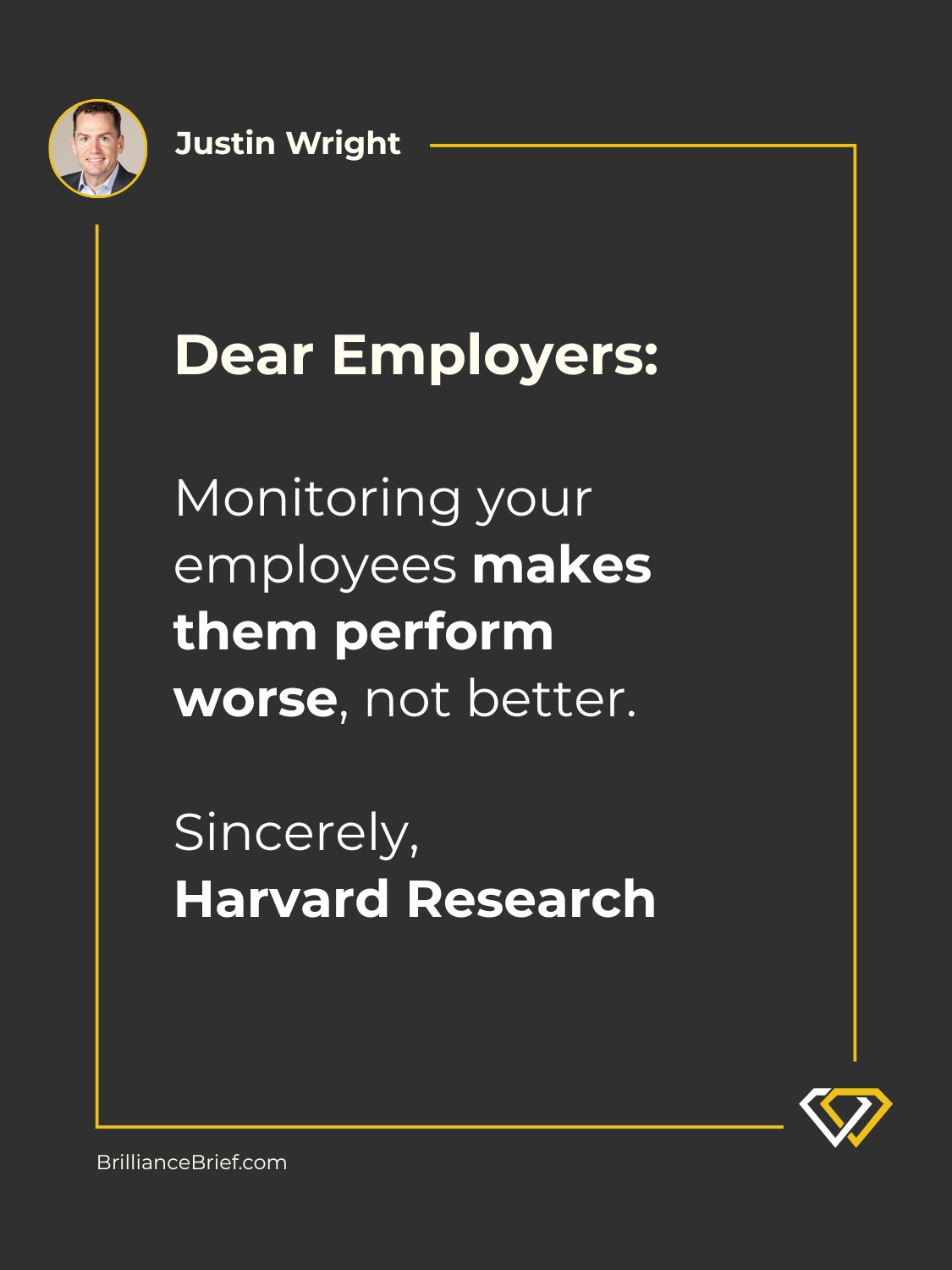
In a recent LinkedIn post, Justin Wright explores the critical role of trust in employee productivity, arguing that traditional monitoring tactics can be counterproductive. Wright directly challenges the notion that constant oversight is necessary for ensuring employee output, especially in remote work environments.
He highlights the surge in employer searches for employee monitoring solutions, citing Harvard research indicating a 1,705% increase. This trend, according to Wright, underscores a pervasive anxiety among employers about productivity in the absence of direct supervision.
“You can’t afford not to trust your people. Trust isn’t just nice. It’s essential.”
Wright contends that while methods like “carrots and sticks” can influence behavior, they are less effective than fostering an employee’s intrinsic sense of responsibility. He warns that excessive monitoring can have the opposite effect of what employers intend.
The Downside of Constant Surveillance
According to Justin Wright, an overemphasis on monitoring can lead to a significant decline in employee performance and morale. He points to studies revealing that monitored employees are more prone to cheating, working slower, performing worse, exerting less effort, and experiencing lower morale.
“If you monitor too much… It backfires. They feel LESS accountable.”
This observation suggests a fundamental disconnect between the desire for control and the actual drivers of engagement and productivity. Wright implies that the very act of being watched can erode the psychological contract between employer and employee, leading to disengagement rather than diligence.
Building a Culture of Trust and Results
Instead of resorting to intrusive monitoring, Wright proposes a series of constructive alternatives aimed at fostering a more positive and productive work environment. He outlines six key strategies for employers:
- Listen: Making employees feel valued through active listening.
- Be Fair: Recognizing that fairness motivates employees to increase their effort.
- Trust More: Granting autonomy, which Wright believes leads to better performance.
- Focus on Results: Prioritizing outcomes over the mere passage of time.
- Celebrate Good Work: Using appreciation and recognition to reinforce positive behavior.
- Help, Don’t Hover: Providing support for growth rather than creating an atmosphere of fear.
Wright emphasizes that transparency is key if any form of monitoring is deemed necessary. He notes that informing employees about when, what, and why they are being monitored can increase acceptance by as much as 70%, according to Harvard research.
The Human Element in the Workplace
Ultimately, Justin Wright’s message is a call to recognize the humanity of employees. He reminds leaders that behind every employee’s screen is an individual with personal aspirations, goals, and emotions.
“Behind every screen is a person. They have dreams, goals & emotions. Trust taps into that.”
By fostering an environment of trust, Wright argues, organizations can unlock greater potential and achieve superior results. He concludes with a powerful statement on the impact of setting high expectations based on trust: “Set the trust bar. They’ll rise to meet it.” This perspective positions trust not as a risk, but as a strategic imperative for modern business success.
📝 About This Content
This article is based on insights shared by Justin Wright on LinkedIn.
📅 Originally posted on April 10, 2026 | View original post on LinkedIn →