
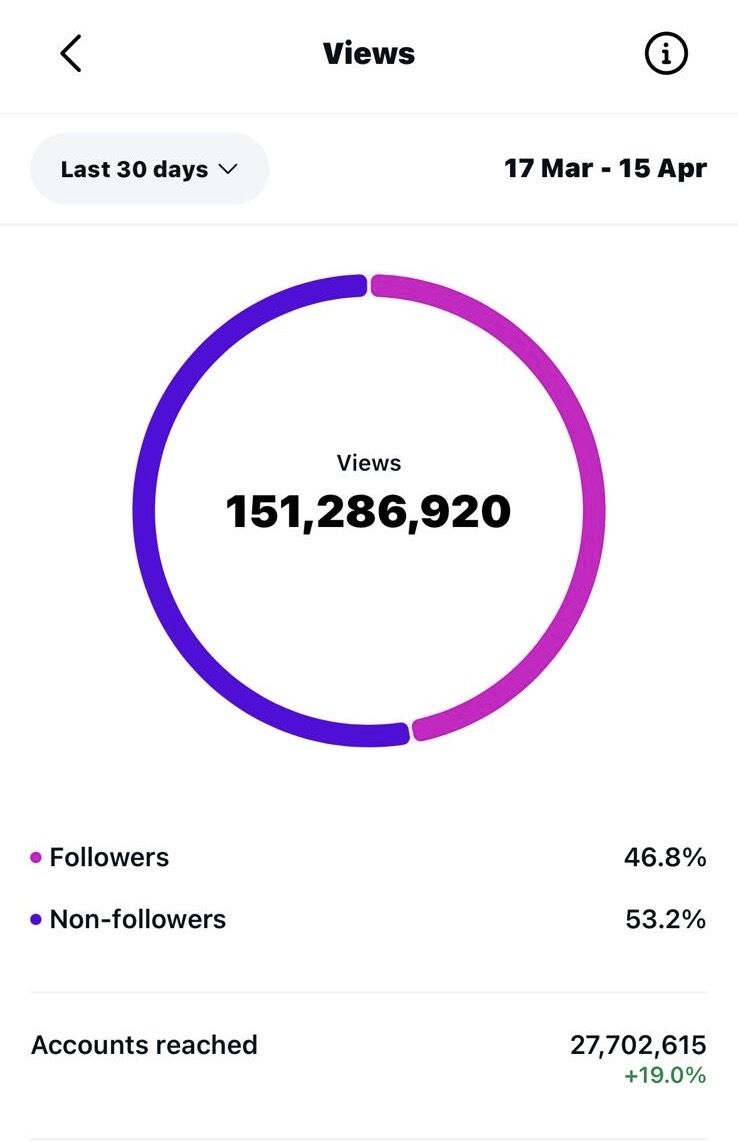
In a recent LinkedIn post, Karishma Mehta, the founder of Humans of Bombay, delves into the remarkable performance of their Instagram content, which garnered over 150 million organic views in just 30 days. Mehta shares her analysis of what made certain posts resonate so deeply that they achieved millions of views, often from non-followers, and led to significant shares and saves.
The Power of Provocation and Raw Emotion
Mehta highlights that highly successful content often begins with a hook that challenges the viewer or presents a raw, emotional narrative. She points to a reel about road rage that started with a provocative statement: “People say Mumbai is the safest city.” This opening, Mehta explains, immediately draws the audience in by creating a sense of debate before the story even unfolds.
“Our top 5 reels did 7.8M, 7.3M, 6.2M, 4.7M and 4M views.”
Another example of successful content, according to Mehta, was a son’s account of an armed robbery at his elderly parents’ home. This story succeeded not through dramatic plot twists, but through its “raw retelling that leaves you with a sense of helplessness and empathy.” This emphasis on genuine emotion, rather than manufactured drama, is a key takeaway from her analysis.
Relatability and the Desire to Connect
Stories that tap into universal human experiences, particularly those involving love and strong familial bonds, also performed exceptionally well. Mehta notes a reel about a woman who fell in love with her best friend at 16, describing it as “Light, warm, familiar. People love love… especially when it’s low-stakes and real and relatable!”
Furthermore, a story about a family unofficially adopting their househelp’s daughter resonated deeply due to its inherent shareability. Mehta observes that this particular story achieved the highest reshares because it prompted viewers to immediately think of someone to tag or send the story to. “The story did the forwarding for us,” she states, underscoring the power of content that organically encourages connection and sharing.
What Falls Flat: The Low Tolerance for Low-Emotion Content
Mehta contrasts these successes with content that, despite its objective merit, did not achieve similar reach. She identifies a pattern where content with a clear, resolved narrative arc or a lack of emotional depth struggled to gain traction. For instance, a story about a young woman who turned down a Harvard PhD for the Indian Army, while objectively inspiring, only garnered around 400,000 views.
“We tried good news carousels — just headlines, no stories. It confirmed something: people don’t have short attention spans. They have low tolerance for low-emotion content. Give them feeling, they’ll stay.”
Similarly, a birthday tribute to actor Vikrant Massey, highlighting his journey from a background dancer to a National Award winner, also saw around 400,000 views. Mehta attributes this to the framing, which felt more like a “greeting card” than a revelation, signalling celebration rather than an unfolding, emotionally engaging narrative. “The arc was remarkable but the framing gave it away,” she writes.
The Open End: The Algorithm’s Preference
Mehta concludes that the most effective content possesses an “open end,” leaving viewers with an unresolved feeling that prompts them to share. This sharing is not about explaining the content, but about wanting others to experience the same emotion.
“The best-performing content has an open end… unresolved in a way that makes you feel something you haven’t fully named yet. It makes you want to share it. You share it because you want someone else to feel it too, not because you want to explain it.”
Even the least successful posts during this period achieved between 400,000 and 500,000 views, indicating a high baseline for engagement. Mehta’s core insight is that understanding the ‘why’ behind a story’s travel—its ability to evoke emotion and encourage sharing—is more critical than simply avoiding poor content. She suggests that this pattern aligns with what the algorithm favors, ultimately driving organic reach.
📝 About This Content
This article is based on insights shared by Karishma Mehta on LinkedIn.
📅 Originally posted on April 17, 2026 | View original post on LinkedIn →