
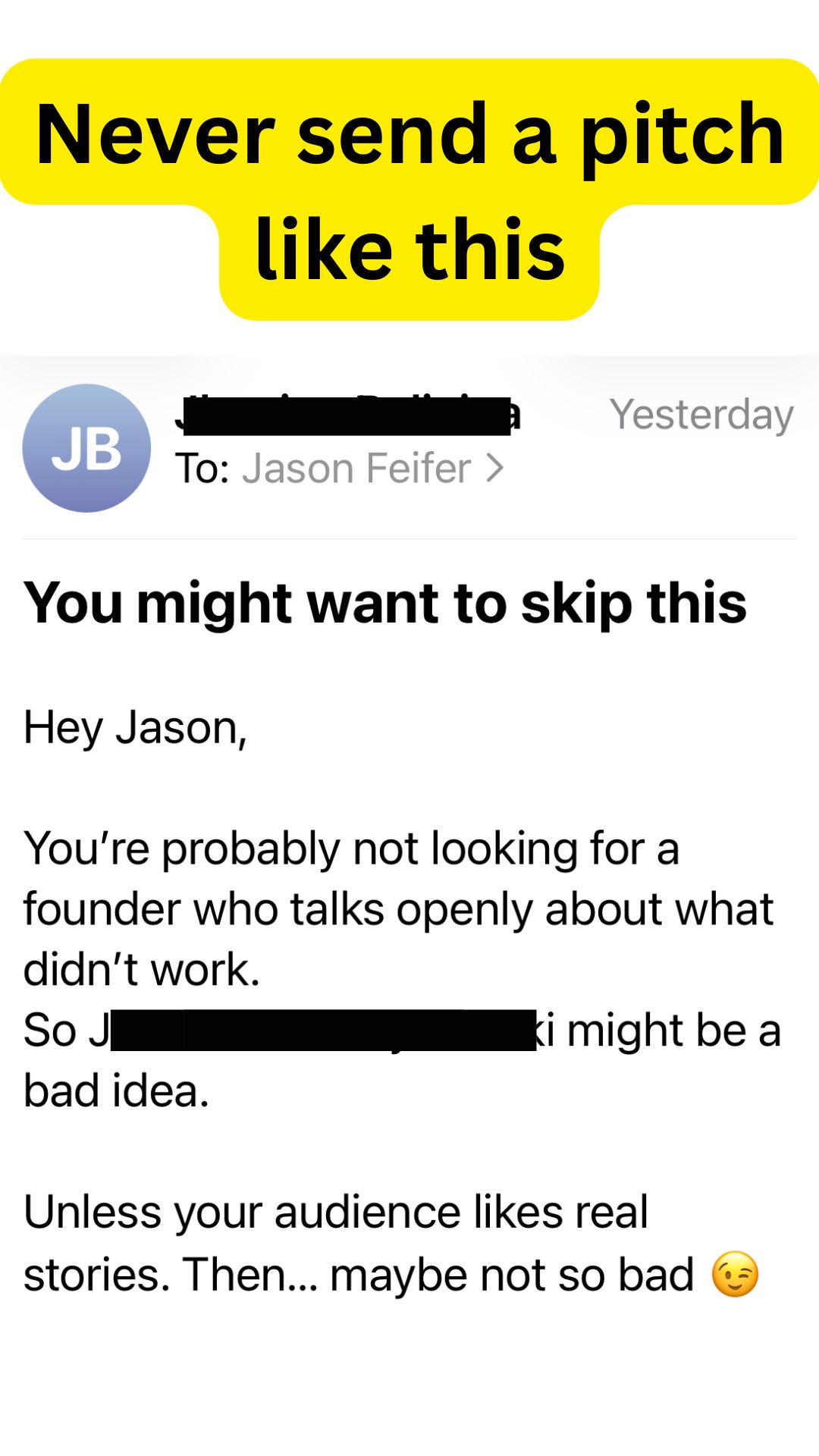
In a recent LinkedIn post, Jason Feifer discusses a common pitfall in business communication: prioritizing cleverness over genuine value. Feifer, an entrepreneur and podcast host, highlights how many pitches, sales messages, and even job applications fail to connect because they focus on being unique or witty rather than demonstrating clear benefit to the recipient.
Feifer uses an example of a pitch he received for his podcast to illustrate his point. The pitch attempted to be memorable by suggesting he wasn’t looking for a certain type of founder, only to reveal the client’s supposed differentiator was telling “real stories.” Feifer found this approach to be ineffective.
“What!? That’s not a differentiator! That’s table stakes.”
He argues that this focus on delivery tricks detracts from the essential elements of a strong pitch. As Jason Feifer notes, the core issues were missed: the identity of the client, what they had learned, and their relevance to his specific audience.
The Perils of Prioritizing Uniqueness
Feifer’s central argument is that in the quest to stand out, many individuals and businesses mistakenly believe that being unusual is the key to getting attention. This often leads to pitches that are, in his words, “the worst kind of pitch.” He elaborates on this by stating:
“It tries to be clever — but it forgets to be useful.”
According to Feifer, this is a fundamental misunderstanding of what makes a pitch successful. While breaking through noise is a challenge, he contends that the solution doesn’t lie in elaborate delivery methods or witty remarks alone. Instead, the energy spent on these superficial aspects could be better directed toward establishing genuine value.
The Undeniable Power of Value
Jason Feifer emphasizes that the ultimate goal of any pitch is to elicit a positive response, and this is achieved through demonstrating value, not through mere cleverness. He points out that people say “yes” because they see a clear benefit or solution to their problem.
Feifer extends this principle beyond podcast pitches to all forms of business communication. “People don’t yes because of cleverness. They say yes because of VALUE,” he asserts. This applies equally to sales proposals, job applications, and any other scenario where one party is trying to persuade another.
Focusing on Relevance Over Difference
In his concluding remarks, Feifer offers a directive for professionals aiming to improve their communication effectiveness. He advises a strategic shift in focus:
“Stop trying to be different. Start being relevant.”
This advice underscores the importance of understanding the recipient’s needs, context, and audience. Feifer suggests that by concentrating on what is truly relevant and beneficial to the other party, communicators are far more likely to capture attention and achieve their desired outcomes. The underlying message is that authentic connection and persuasion stem from understanding and addressing the needs of others, rather than from simply trying to be noticed for the sake of it.
📝 About This Content
This article is based on insights shared by Jason Feifer on LinkedIn.
📅 Originally posted on February 3, 2026 | View original post on LinkedIn →