
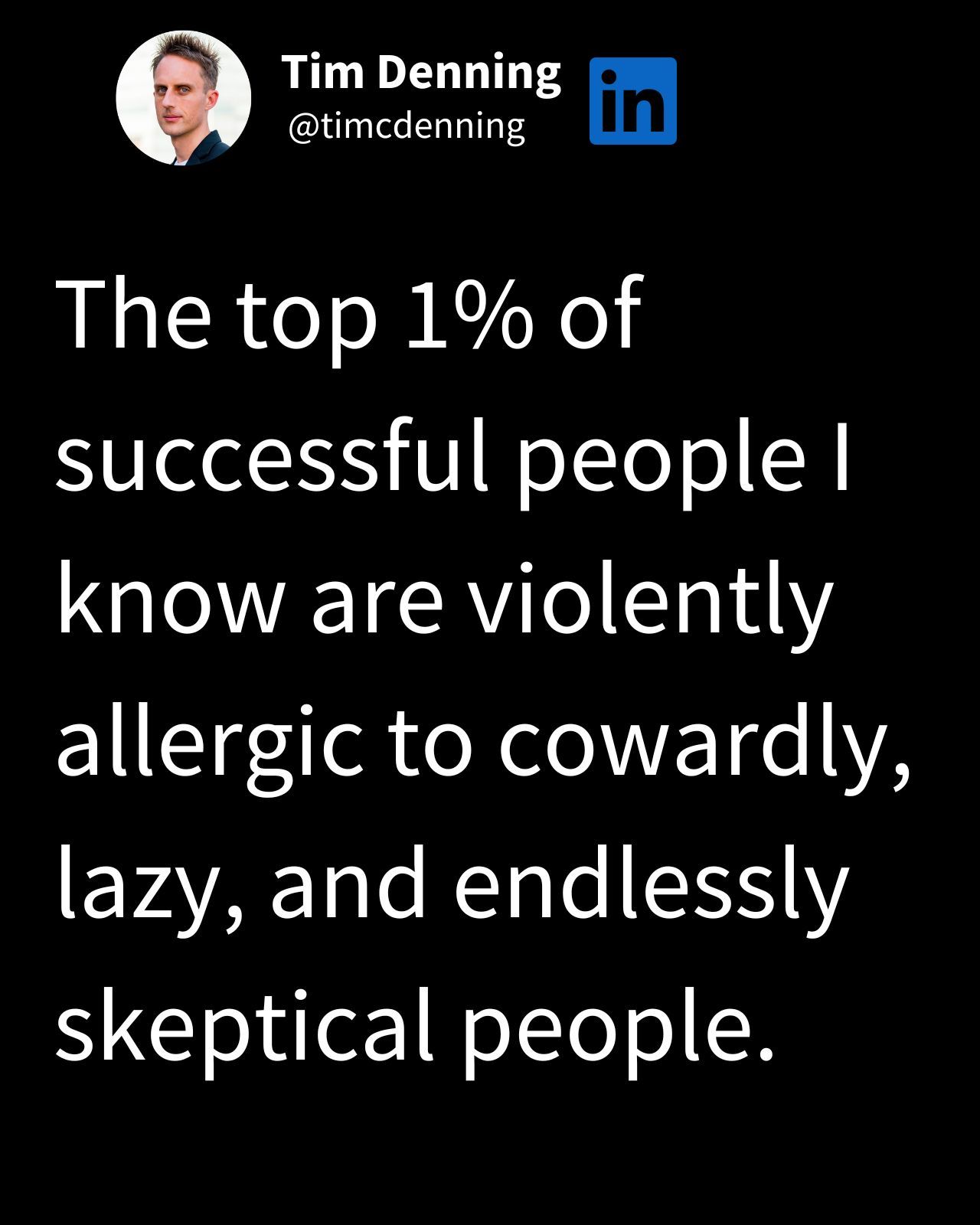
In a recent LinkedIn post, Tim Denning explores the profound impact of one’s inner circle on professional and financial success. Denning, a prolific business writer, argues that the people we surround ourselves with fundamentally shape our potential and limit our income ceiling.
He illustrates this point with a personal anecdote from his experience running a $50 million business in his twenties. Denning recounts the story of an employee named Tarquin, who, despite possessing talent, consistently stifled innovation by focusing on reasons why new ideas would fail. Denning writes:
“New marketing channel? ‘Too risky.’ New product line? ‘The market isn’t ready.’ Tarquin never actually built anything. He just critiqued what others were trying to build. His entire contribution was telling people why their ideas would fail.”
This negative influence, Denning explains, led to the team’s productivity doubling after Tarquin’s departure. This experience underscored a key lesson for Denning: the critical importance of cultivating a supportive and forward-thinking network.
The Cost of Negative Networks
Denning further elaborates on how negative or unsupportive networks can hinder growth, particularly when individuals are attempting to make significant career changes or pursue entrepreneurial ventures. He shares his own experience of rebuilding his network after being fired, noting that his previous associates offered advice rooted in fear and safety rather than ambition.
According to Denning, individuals who have achieved significant success tend to communicate differently. They focus on solutions and pathways to success, rather than dwelling on obstacles. He observes:
“They talked differently. They didn’t waste time discussing why things couldn’t work. They spent their energy figuring out how things could work.”
This distinction, Denning argues, is crucial. Surrounding oneself with people who are actively working towards solutions and breakthroughs is far more conducive to growth than associating with those who are primarily critical or risk-averse.
Identifying Limiting Influences
Denning categorizes the negative influences within a network into several key types:
- Cowardly people: These individuals, according to Denning, teach others to play it safe, often masking their own fears as wisdom and discouraging risk-taking.
- Lazy people: They can subtly lower one’s standards for hard work, leading to a celebration of minimal effort.
- Endlessly skeptical people: This group, as exemplified by Tarquin, can kill momentum by over-analyzing ideas to the point of inaction.
In Denning’s view, these types of individuals, while perhaps well-intentioned, ultimately cap an individual’s potential by instilling fear, lowering standards, or preventing progress.
Proximity Shapes Psychology
The core of Denning’s argument rests on the idea that our environment and the people we interact with daily profoundly influence our mindset and behavior. He states:
“The top performers I know guard their inner circle like their life depends on it. They understand that proximity shapes psychology. The conversations you have repeatedly become the thoughts you think automatically.”
This principle suggests that to achieve higher levels of success, one must be intentional about curating their network. Denning emphasizes that the people we associate with not only influence our current trajectory but also shape who we are becoming. His concluding advice is a direct call to action for readers to carefully consider their own inner circles and their impact on personal and professional growth.
📝 About This Content
This article is based on insights shared by Tim Denning on LinkedIn.
📅 Originally posted on March 2, 2026 | View original post on LinkedIn →