


| Author | Background |
|---|---|
| Leonardo Freixas | Top 100 Most Influential Men 2025 | Creator of The Signal | Guiding leaders and brands to grow influence and attract premium opportunities |
| Leila Hormozi | Founder and CEO of Acquisition.com |
| Leslie Venetz | Sales Strategy & Training for Outbound Orgs | SKO & Keynote Speaker | 2024 Sales Innovator of the Year | Top 50 USA Today Bestselling Author – Profit Generating Pipeline ✨#EarnTheRight✨ |
| Cristina Grancea | CEO & Founder Sylvian Care Franchising | Built a £2.4M Home Care Franchise | Now Helping Others Do the Same |
| Daniel O. Livvarcin, PhD | LinkedIn thought leader |
You’ve got a team member who’s struggling. They’re missing deadlines, their work is sloppy, and they just seem… off. What’s your first instinct? Is it to schedule a 1-on-1 to talk about their ‘motivation’? Maybe put them on a performance improvement plan?
That’s what most managers would do. And according to a handful of sharp leaders, that’s exactly why most managers fail to fix the real problem.
What if the issue isn’t the person? What if it’s the environment you’ve put them in? What if you’re asking an elephant to climb a wall when what it really needs is for you to remove the pit it’s stuck in? The best leaders have stopped trying to ‘fix’ their people and have started fixing the broken systems around them. Here’s how they do it.
Leonardo Freixas: Stop Asking for More Effort
Leonardo Freixas tells a simple story about an elephant stuck in a pit. It tries everything—pushing, climbing, straining—but gets nowhere. It’s not a lack of effort. It’s the hole it’s in. Then, a single intervention from the outside changes everything. The elephant is free, not because it tried harder, but because someone changed its environment.
This is a powerful metaphor for how we lead. We see someone struggling and our default is to demand more. ‘Just try harder!’ we think. But Freixas argues this is a massive leadership failure. You can’t hustle your way out of a broken system. At some point, more effort just leads to more exhaustion.
“Good leaders don’t ask for more effort. They remove the pit.”
Freixas’s point is a gut check for any manager. It forces you to look past the individual and at the context they’re operating in. Is the process flawed? Are the tools inadequate? Is communication unclear? These are the real ‘pits’ that trap good people.
What to do with this:
- Become a ‘Pit Detector’: Next time a team member struggles, your first question shouldn’t be “Why aren’t you trying harder?” but “What’s getting in your way?”. Your job is to find and remove the organizational friction.
- Shift from Coach to Architect: Stop just coaching the player and start redesigning the game. A well-designed system makes success the path of least resistance.
Read our full coverage of Leonardo Freixas’s insights →
Leila Hormozi: Choose Mentoring Over Yelling
Leila Hormozi gets straight to the point. Yelling at people when they mess up is easy. It’s a quick release of your own frustration. But it’s also lazy. It doesn’t fix anything long-term and it certainly doesn’t make you a leader worth following.
Hormozi frames it as a choice between speed and skill. Yelling is fast. Mentoring is slow. Yelling transfers stress. Mentoring transfers capability. One creates temporary compliance born of fear, while the other builds long-term ownership. If your team keeps making the same mistakes, she argues, it’s not a sign that they’re undisciplined. It’s a sign that your training system is broken.
“When you yell, you transfer stress. When you mentor, you transfer capability.”
This is a critical system-level insight. A leader who defaults to yelling has no system for development. A leader who mentors is building a scalable system where people grow, solve their own problems, and eventually don’t need constant oversight.
What to do with this:
- Build a Training System: Don’t just correct mistakes. Document the right way to do things. Create checklists. Record short videos. Turn every error into an asset for your training library.
- Swap Frustration for Curiosity: When a mistake happens, replace the impulse to blame with the question, “Where did our training fail this person?” This reframes the problem from the person to the process.
Read our full coverage of Leila Hormozi’s insights →
Leslie Venetz: Stop Doing Their Job For Them
Every manager has felt this temptation. It’s just faster and easier to do it yourself. Your sales rep is struggling with an email? Just rewrite it for them. Problem solved, right? Wrong. As sales leader Leslie Venetz points out, this is a disastrous long-term strategy.
Venetz calls this the ‘downward doom spiral.’ By fixing the immediate problem, you create a much bigger one: a system of dependency. You train your team to stop thinking for themselves and to come to you for every little thing. It might make you feel important and needed, but it makes your team weak and it makes your own job impossible. You become the bottleneck for everything.
“The true mark of exceptional sales leadership is that your team is so enabled and empowered – they can do it without you.”
The real system you should be building is one of empowerment. It requires patience. It means coaching them through the messaging instead of just fixing it. It’s painful in the short term, but it’s the only way to build a team that can function, grow, and win without you hovering over their shoulder.
What to do with this:
- Adopt the ‘Coach, Don’t Fix’ Rule: When someone brings you a problem, your first response should be a question, not a solution. Try: “What have you tried so far?” or “What do you think the next step should be?”
- Celebrate Self-Solving: Publicly praise people who figure things out on their own. Make autonomy and resourcefulness the most rewarded behaviors on your team. This creates a culture where people try first.
Read our full coverage of Leslie Venetz’s insights →
Cristina Grancea: Provide Peace, Not Just Perks
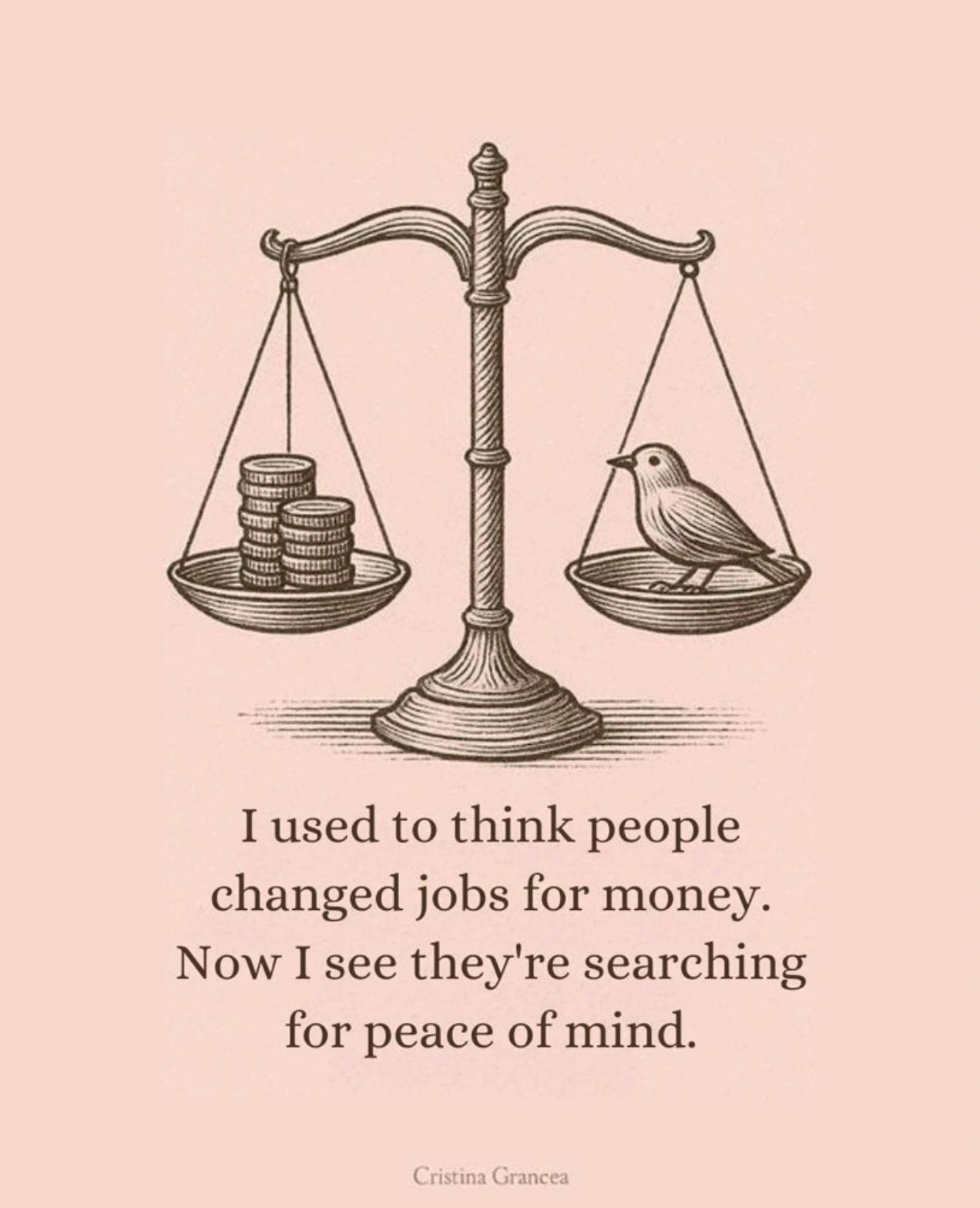
Why do your best people leave? Managers love to complain that they’re being poached for a bigger salary. But Cristina Grancea says that’s a convenient excuse that ignores a deeper truth. People with options aren’t just chasing money. They’re chasing peace of mind.
Top talent will walk away from a great salary if it comes with chaos, disrespect, and emotional exhaustion. They’re tired of micromanagers, office politics, and the constant, unsupported pressure to perform. Grancea puts it perfectly: a toxic or chaotic culture is a fundamentally broken operating system. No amount of money or perks can fix it.
“People don’t leave jobs. They leave chaos. They leave disrespect. They leave emotional exhaustion.”
This reframes the entire retention conversation. Your culture is the system. Is it a system that protects your team’s focus and energy, or one that drains it? Leaders who get this understand that their primary job is to create an environment of psychological safety and clarity. That’s the ‘peace’ that people will stay for.
What to do with this:
- Conduct a ‘Chaos Audit’: Ask your team: What’s the most confusing or frustrating part of our workflow? Where do you feel the most unnecessary pressure? Their answers will give you a roadmap to the broken parts of your system.
- Prioritize Clarity Above All: Unclear expectations are a primary source of chaos. Ensure every project has a clear owner, a clear deadline, and a clear definition of what ‘done’ looks like.
Read our full coverage of Cristina Grancea’s insights →
Daniel O. Livvarcin: Enable Change, Don’t Force It
Change is scary for everyone. But as Dr. Daniel O. Livvarcin explains, bad leaders make it worse. They treat change like a mandate, expecting everyone to adapt at the same pace and pressuring those who lag behind. This approach creates resistance and anxiety, sabotaging the very change they want to implement.
Effective leaders see change differently. They recognize that their job isn’t to push people through a transition. It’s to create the conditions that allow people to move forward with confidence. It’s a system of support, not a system of pressure. This means providing clarity about what’s happening and why, building trust through open communication, and giving people the support they need to feel ready.
“Sustainable change is not driven by pressure. It is enabled by alignment and readiness.”
This is the ultimate test of a systems-thinking leader. Instead of blaming individuals for being ‘resistant to change,’ they ask, “Have I created a system of clarity and trust that makes this change feel like an opportunity instead of a threat?”
What to do with this:
- Over-communicate the ‘Why’: Don’t just announce what’s changing. Explain the rationale behind it relentlessly. People are more likely to get on board if they understand the destination.
- Create Safety Nets: Acknowledge the uncertainty. Provide training, resources, and regular check-ins. Make it safe for people to be slow, to ask questions, and even to fail as they adapt to the new way of doing things.
Read our full coverage of Daniel O. Livvarcin’s insights →
It’s Always a System Problem
The message from these five leaders is incredibly consistent. From removing environmental ‘pits’ to building systems of training, empowerment, and psychological safety, the lesson is the same. Stop focusing on the symptoms—the struggling employee—and start fixing the disease: the broken system they’re forced to work in.
The next time you’re faced with a ‘people problem,’ pause and ask yourself a different set of questions. Is the path clear? Are the tools right? Is the culture supportive? Is the process simple? When you start thinking like a system architect instead of a people-fixer, you don’t just solve one problem. You build a team that can solve its own.
So, what’s one ‘pit’ in your team’s environment you could remove this week?
| Author | Key Takeaway |
|---|---|
| Leonardo Freixas | Don’t demand more effort; remove the environmental constraints that are trapping your team. |
| Leila Hormozi | Stop reacting with frustration (yelling) and start building a system of capability (training). |
| Leslie Venetz | Build an empowered team that can succeed without you by coaching them instead of doing the work for them. |
| Cristina Grancea | A chaotic, disrespectful culture is a broken system. People stay for peace of mind, not just paychecks. |
| Daniel O. Livvarcin | Manage change by creating a system of clarity and trust, not by pressuring people to adapt. |
Featured in this Roundup
This article synthesizes insights from the following LinkedIn thought leaders. Click through to read their original posts: