
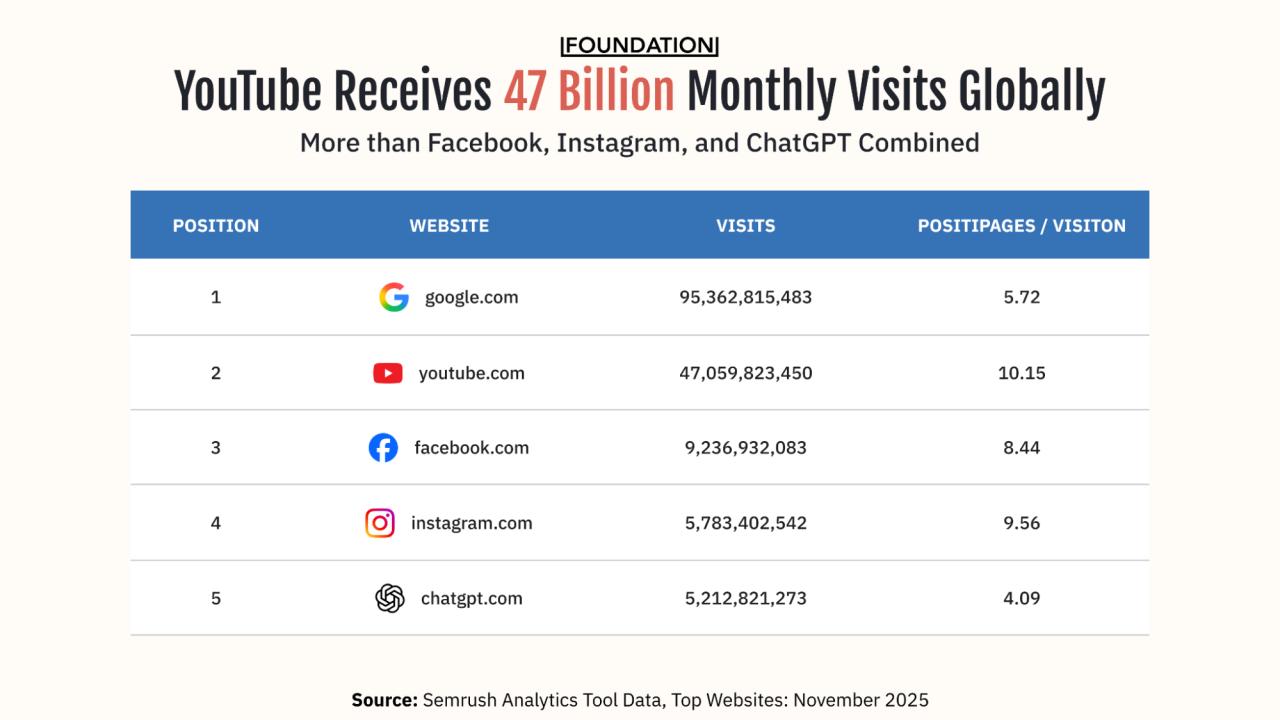
In a recent LinkedIn post, Ross Simmonds highlights the significant, yet often underestimated, role of YouTube in B2B buyer research, urging brands to reconsider their content strategies. Simmonds presents compelling data that positions YouTube not just as a video-sharing platform, but as a critical discovery engine for potential customers.
Simmonds points to a substantial data point that could reshape strategic thinking for many businesses:
“YouTube drives 47B monthly visits and is one of the top sources cited by AI search.”
This figure alone underscores the vast reach and influence of the platform. However, Simmonds delves deeper, revealing a key nuance about how this traffic is generated. He notes that a significant portion of YouTube’s impact is driven by specific types of search queries.
The Power of Non-Branded Educational Content
A crucial aspect of Simmonds’ analysis is the nature of the searches that lead to YouTube’s prominence. He states:
“75% of those citations come from non-branded, educational queries.”
This insight is vital for B2B marketers. It suggests that potential buyers are not necessarily searching for specific companies or products initially. Instead, they are seeking answers to problems, learning about industry trends, and educating themselves on solutions. YouTube, with its rich repository of how-to guides, tutorials, expert interviews, and explainer videos, is perfectly positioned to satisfy this demand. As Simmonds argues, this represents a prime opportunity for brands to capture attention during the early stages of the buyer’s journey.
Leveraging YouTube for Buyer Research Fuel
Ross Simmonds frames this data as direct ‘buyer research fuel.’ This implies that B2B brands can strategically utilize YouTube to become a source of information and authority when potential clients are in their research phase. By creating and optimizing educational content that addresses common questions and challenges within their industry, businesses can:
- Increase brand visibility among a highly engaged audience.
- Establish themselves as thought leaders and trusted advisors.
- Drive qualified traffic to their websites or other conversion points.
Simmonds’ post, which links to further discussion on his website, suggests that a proactive YouTube strategy is no longer optional but essential for B2B growth. He advocates for a shift in perspective, viewing YouTube as a powerful search engine and educational hub, rather than just a supplementary content channel.
Rethinking B2B Video Strategy
According to Simmonds, B2B brands need to think critically about their presence on YouTube. The emphasis should be on creating valuable, educational content that answers potential customers’ questions. This approach not only helps in attracting new audiences but also in nurturing leads by providing them with the information they need to make informed decisions. As Simmonds concludes, understanding the search behavior on YouTube is key to unlocking its potential as a significant driver of business growth.
📝 About This Content
This article is based on insights shared by Ross Simmonds on LinkedIn.
📅 Originally posted on March 19, 2026 | View original post on LinkedIn →