
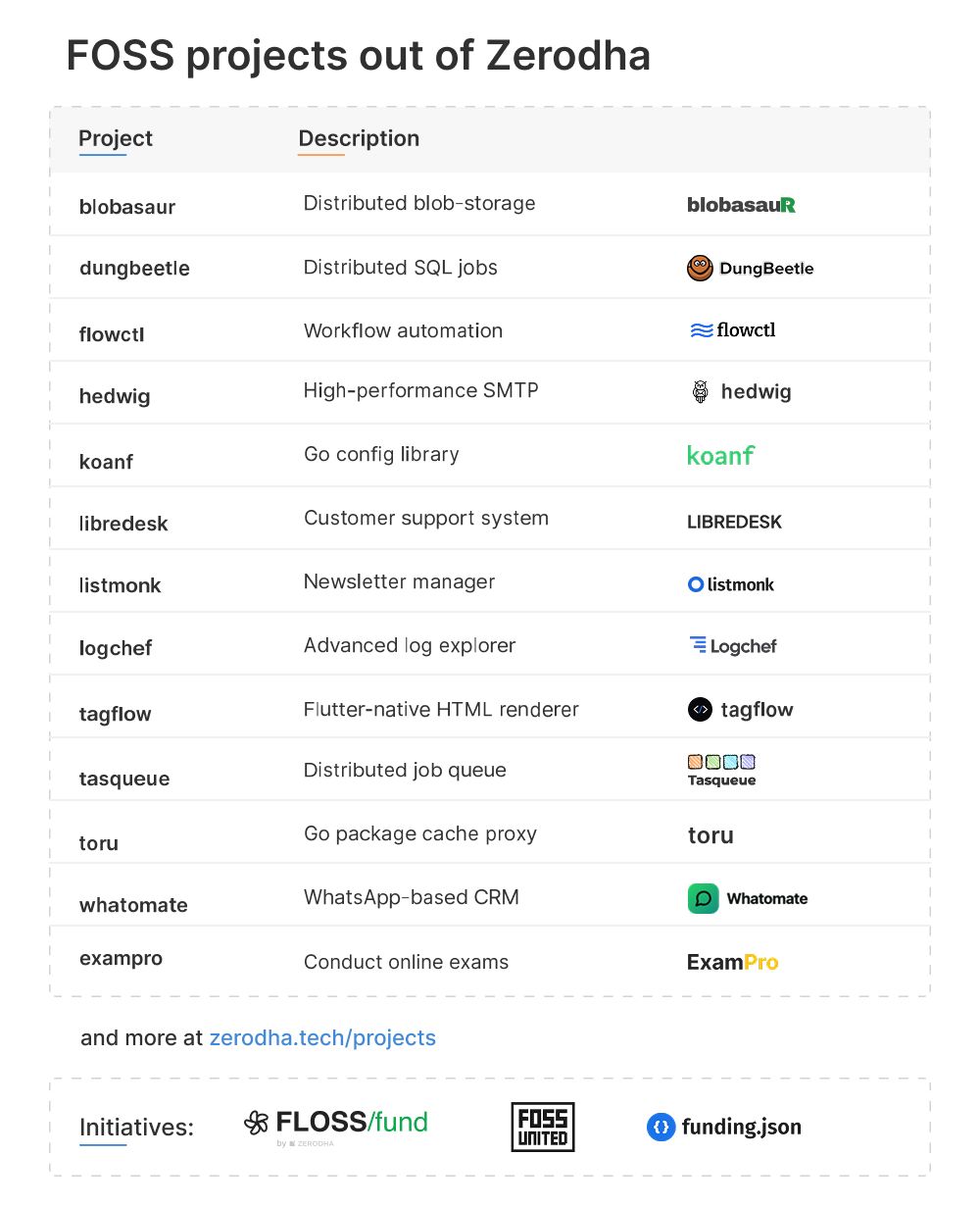
In a recent LinkedIn post, Nithin Kamath discusses the significant output of Free and Open-Source Software (FOSS) initiatives originating from Zerodha’s 4th Phase, JP Nagar tech team. Kamath emphasizes the scale and impact of these projects, particularly given the relatively small size of the team responsible.
Kamath highlights the internal motivation behind these FOSS developments, stating:
The number of full-fledged Free and open-source software (FOSS) products and initiatives coming out of the 4th Phase, JP Nagar (Zerodha Tech), must be unprecedented for a team of its size globally.
According to Nithin Kamath, the genesis of these software solutions lies in addressing internal challenges faced by Zerodha. He elaborates on this pragmatic approach to innovation:
All of these projects started as a way to solve problems we faced internally and were then open-sourced.
This strategy, as detailed by Kamath, has not only benefited Zerodha internally but has also gained traction in the broader technological landscape. He points out the widespread adoption of these tools:
We use them at scale in our stack, and several large organisations and even government departments globally use many of these tools today.
Analysis of Zerodha’s FOSS Strategy
Nithin Kamath’s LinkedIn post underscores a powerful model for internal innovation leading to external contribution. By focusing on solving immediate, real-world problems within Zerodha’s operational stack, the tech team has managed to create software that possesses both utility and scalability.
From Internal Tool to Global Solution
The narrative presented by Kamath suggests a clear pathway from internal necessity to open-source generosity. The fact that these FOSS products are not only used internally at scale but are also adopted by large organizations and government bodies globally speaks volumes about their robustness and reliability. This dual benefit—improving internal efficiency while contributing to the global tech commons—is a key takeaway from Kamath’s observations.
The Significance of Team Size
A crucial element highlighted by Nithin Kamath is the team’s size. He posits that the volume of FOSS products emerging from the JP Nagar tech hub is likely unprecedented for a team of its scale. This suggests a highly efficient and effective development process, possibly driven by a culture of problem-solving and a commitment to open-source principles. The ability to produce and maintain such a significant portfolio of FOSS while managing internal infrastructure demands considerable organizational skill and technical prowess.
Broader Implications for Tech Development
Kamath’s insights offer a compelling case study for other technology companies. The approach of open-sourcing internal solutions can foster a collaborative ecosystem, attract talent, and even create new avenues for technological advancement. As Nithin Kamath implies, when software is built to solve genuine problems and then shared openly, it has the potential to create a ripple effect, benefiting a wide array of users and industries worldwide.
📝 About This Content
This article is based on insights shared by Nithin Kamath on LinkedIn.
📅 Originally posted on January 5, 2026 | View original post on LinkedIn →