
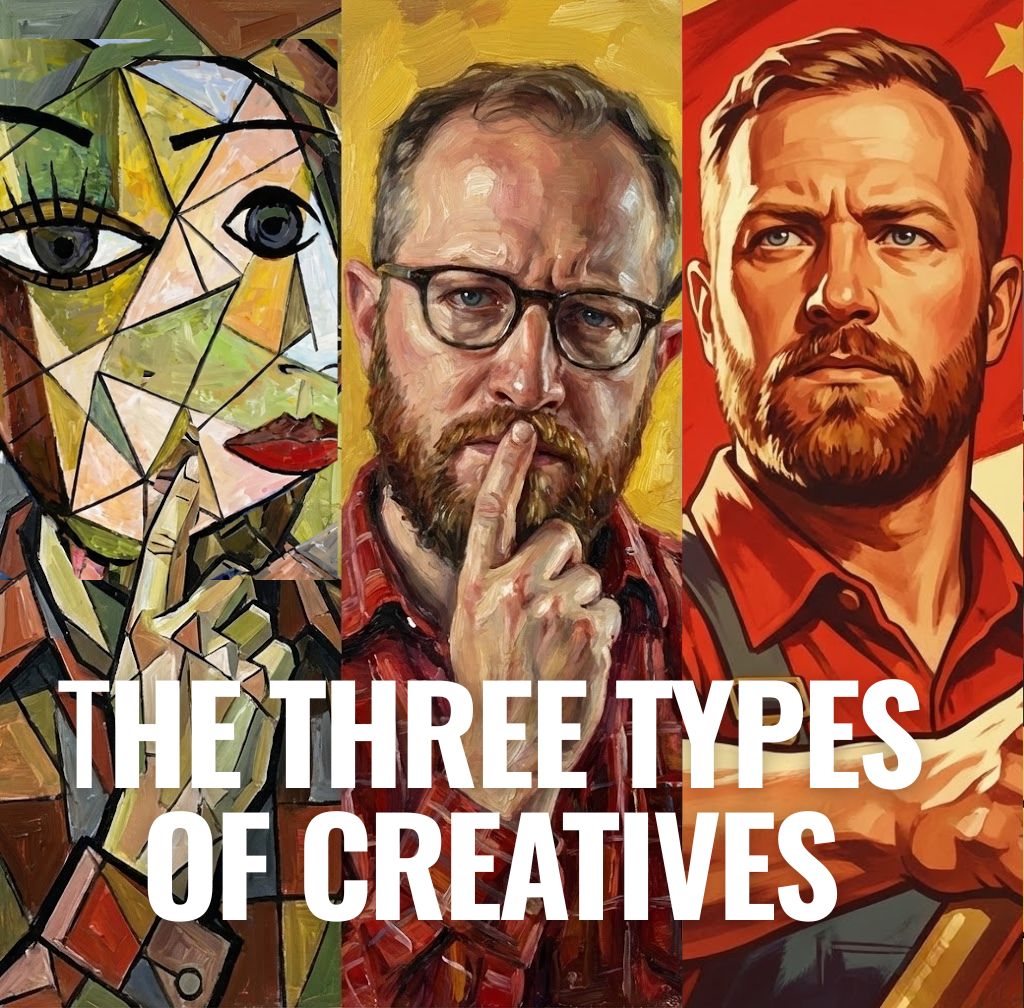
In a recent LinkedIn post, Justin Oberman offers a framework for understanding different types of creative professionals and how to best utilize their unique strengths. Oberman, drawing from his extensive experience in hiring, identifies three distinct categories of creatives, each suited for specific project phases and objectives.
Understanding the Three Creative Archetypes
Oberman begins by stating a core belief derived from his hiring experiences: understanding these creative types early on could have saved significant frustration. He outlines:
“There are, essentially, three types of creatives. And you need different ones for different jobs.”
According to Oberman, the first type are the Disruptors. These individuals are characterized by their drive for originality and their ability to generate unexpected ideas. They excel in situations requiring a complete overhaul, a fresh market entry, or cutting through significant noise. However, Oberman cautions that Disruptors may become disengaged if asked to maintain consistency over long periods.
The Nuance of World Builders and Closers
The second category, World Builders, are described by Oberman as rarer. These creatives thrive on complexity, depth, and long-term vision. They are adept at developing intricate brand architectures and multi-channel narratives that build value over time. Oberman notes that their inclination towards depth might make them less suited for tasks requiring brief, punchy taglines or isolated concepts.
“They’re brilliant at brand architecture, multi-channel narratives, and campaigns that compound over time. Just don’t ask them to come up with a punchy tagline or a one-off concept? Chances are, they’ll overcomplicate it.”
The third type, Closers, are focused on achieving tangible results and driving action. Oberman explains their obsession with human nature and their skill in crafting conversion-focused content, such as landing pages and calls to action. While invaluable for finalizing projects and driving conversions, Oberman suggests they might struggle with brand development in its nascent stages without a clear objective.
Matching Talent to Project Needs
Oberman emphasizes the critical importance of aligning the right creative type with the appropriate project. He argues that successful matches lead to exceptional outcomes, while mismatches result in frustration and subpar work.
“When you match the right creative to the right project, magic happens. When you get nothing but frustration on both sides, and mediocre work in the middle.”
To help identify these types, Oberman shares a surprisingly effective, albeit informal, method he uses: asking individuals about their favorite movie trilogy and their preferred film within it. He posits that:
- Disruptors often gravitate towards the first film in a trilogy, which typically introduces the original concept and catalyst.
- World Builders tend to favor the second film, appreciating its role in deepening the narrative and developing characters, even if it’s perceived as slower.
- Closers usually prefer the third film, drawn to its resolution and the culmination of the story.
While acknowledging this method is not scientific and that individuals can embody traits from multiple types, Oberman finds it to be a remarkably predictive tool for understanding creative inclinations.
“It’s not scientific. No creative is only really one type. Or total. But it’s surprisingly predictive.”
By employing this understanding, Oberman suggests leaders can foster more effective creative collaborations and achieve better project outcomes.
📝 About This Content
This article is based on insights shared by Justin Oberman on LinkedIn.
📅 Originally posted on January 5, 2026 | View original post on LinkedIn →