
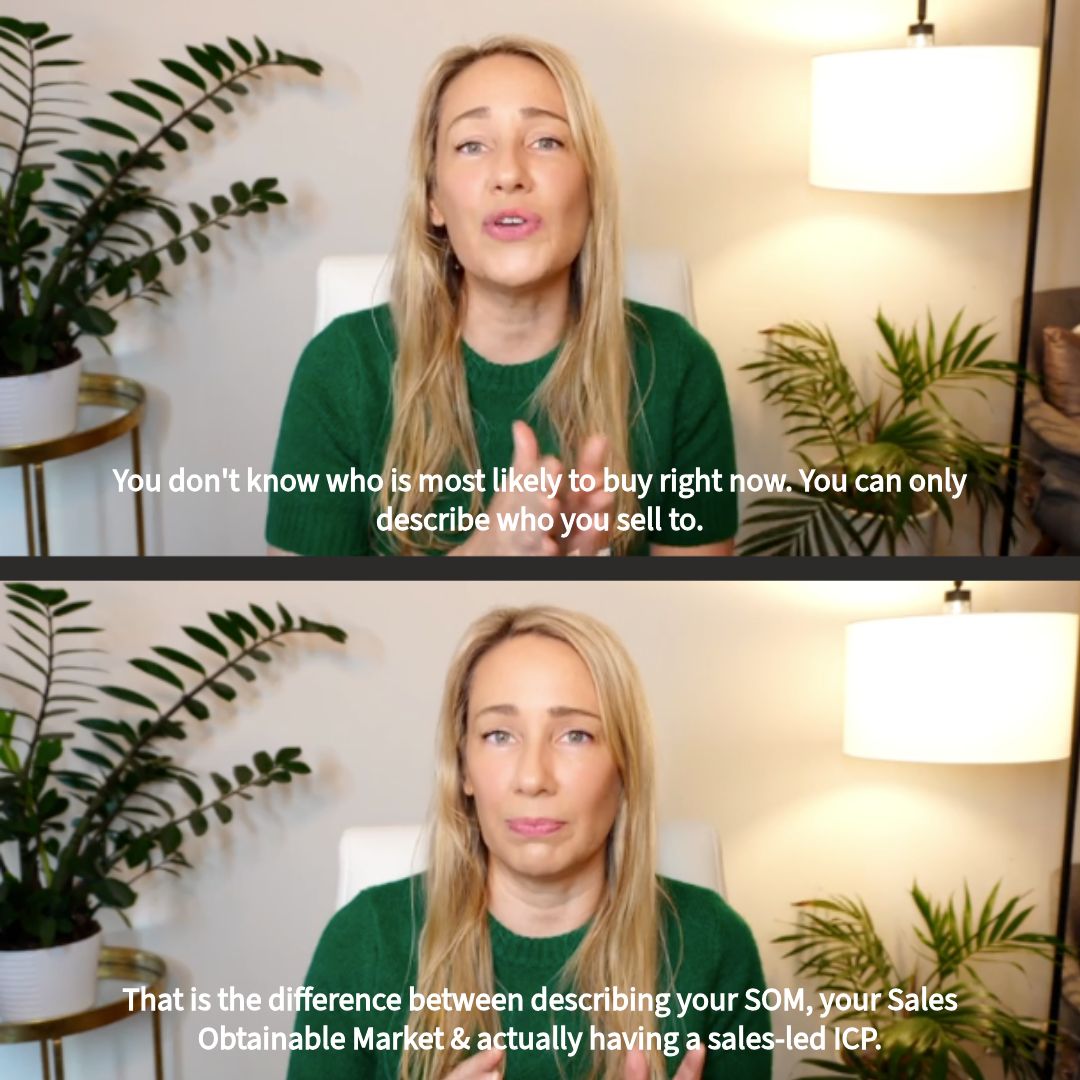
In a recent LinkedIn post, Leslie Venetz discusses a critical distinction for sales professionals: the difference between knowing your target market and identifying which accounts are most likely to purchase in the near future. Venetz argues that while many sales representatives can define their ideal customer profile (ICP) and target industries, they often struggle to pinpoint which specific accounts are ready to buy right now.
Venetz highlights this gap, stating:
Knowing your market is not the same as knowing your moment.
The post elaborates on the concepts of Serviceable Available Market (SAM) and Serviceable Obtainable Market (SOM). According to Venetz, SAM encompasses all realistic potential customers based on a company’s business model, while SOM represents the portion of that market most likely to buy. Elite sellers, Venetz explains, go a step further by understanding the specific reasons why multiple ICPs within their SOM are poised to buy imminently.
The Pitfalls of Treating All Leads Equally
Leslie Venetz points out the negative consequences of failing to differentiate between market knowledge and timely buying intent. When sales teams do not prioritize accounts based on their immediate buying readiness, Venetz observes, reps tend to:
- Treat every qualified account with the same level of attention.
- Spread their efforts too thin across numerous leads without clear focus.
- Dilute their messaging by attempting to appeal to a broad, undifferentiated audience.
This lack of focus, as Venetz argues, leads to a decline in seller confidence, transforms the work into a monotonous grind, and ultimately causes conversion rates to plummet.
Your SAM is everyone you could realistically sell to based on your business model and capabilities. Your SOM is the portion of that market most likely to buy.
Prioritizing for Quota Attainment
Venetz emphasizes that success in sales, particularly in hitting targets like those expected in 2026, hinges on identifying accounts with the highest probability of imminent purchase. By deeply understanding the triggers and motivations that make these specific buyers ready now, sales professionals can achieve greater efficiency and effectiveness.
As Leslie Venetz advocates:
When you narrow your focus, your reps spend less time spinning their wheels and more time having conversations that actually move deals forward.
This focused approach allows sales teams to redirect energy away from accounts that are not ready to buy and concentrate on those that are, leading to increased closing rates. The core message from Venetz is that strategic prioritization, driven by an understanding of buying moments rather than just market segments, is key to sales success.
The post concludes with a pointed question for sales leaders:
Does your team know who is most likely to buy this quarter or are they just working a list?
This prompt encourages reflection on whether sales efforts are truly aligned with immediate revenue opportunities.
📝 About This Content
This article is based on insights shared by Leslie Venetz on LinkedIn.
📅 Originally posted on February 2, 2026 | View original post on LinkedIn →