
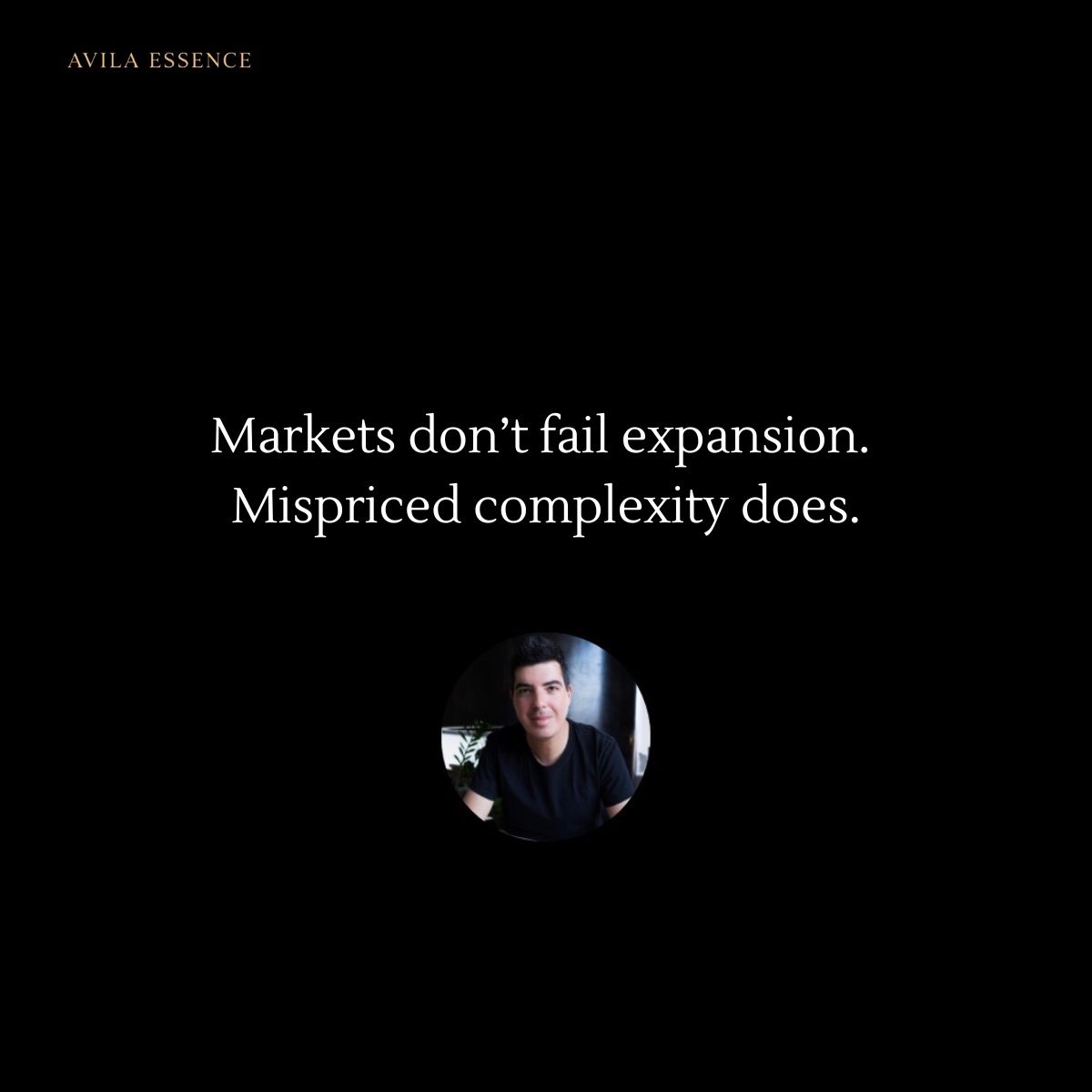
In a recent LinkedIn post, Mario Hernandez explores the critical variables that determine the success or failure of international business expansion, arguing that mispriced complexity, rather than market potential, is the primary pitfall. Having built companies across multiple continents, Hernandez identifies three key factors that significantly influence whether global ventures compound or destroy capital: regulatory velocity, cultural deal velocity, and distribution architecture.
Understanding the Pitfalls of Expansion
Hernandez challenges the conventional approach of evaluating new markets solely by their demand size. Instead, he advocates for a deeper analysis of what he terms “system friction.” This focus on operational complexities is crucial for seasoned operators aiming for sustainable growth.
“Markets don’t fail expansion. Mispriced complexity does.”
This core assertion sets the stage for his detailed examination of the operational hurdles businesses often encounter when venturing beyond their home turf. As Hernandez points out, the allure of large market sizes can blind leaders to the underlying challenges that, if underestimated, can derail even the most promising ventures.
The Impact of Regulatory Velocity
One of the primary areas of underestimated complexity, according to Hernandez, is regulatory velocity. He explains that while initial steps like entity formation might seem straightforward, the subsequent processes for licensing, banking, and sector-specific approvals can add significant, often unbudgeted, delays. Hernandez emphasizes the need for experienced operators to map out distinct timelines before entering a new market:
- Legal entity setup
- Sector licensing
- Banking and payment activation
He warns that if these timelines collectively exceed approximately 90 days, the expansion strategy likely requires either additional capital or the engagement of a local partner to navigate the bureaucratic landscape effectively. The financial implications are stark: an extended approval period directly impacts burn rate while delaying revenue generation, fundamentally altering the initial financial model.
Navigating Cultural Deal Velocity and Distribution Architecture
Hernandez also highlights the importance of understanding cultural deal velocity, noting that how deals are closed varies significantly across different global regions. He contrasts the structured procurement processes common in the U.S. with the risk and reputation-focused decision-making prevalent in many European markets, and the relationship-driven transactions characteristic of Asia and parts of the Middle East. Exporting a domestic sales model without adaptation, he argues, often leads to sharp drops in conversion rates until local credibility is established.
Furthermore, distribution architecture is presented as a critical determinant of unit economics. Hernandez points out that markets with robust infrastructure, such as fast payment systems and reliable logistics, offer distinct advantages. Conversely, in regions where payment cycles are longer, logistics are inconsistent, and digital adoption is uneven, companies must adapt their strategies.
“In several international expansions I’ve led, redesigning pricing and distribution around local infrastructure improved margins by 20–30 percent.”
This practical insight underscores Hernandez’s central theme: successful global scaling is not merely about entering new markets but about designing new systems tailored to the realities of each environment.
Designing Systems for Global Scale
The overarching lesson from Hernandez’s analysis is that companies that achieve true global scale do not simply view international expansion as entering different markets. Instead, they focus on designing entirely new systems that are inherently adapted to the unique regulatory, cultural, and infrastructural landscapes they encounter.
“The companies that scale globally don’t think in terms of new markets. They design new systems.”
This strategic shift from market-centric to system-centric thinking, as articulated by Mario Hernandez, provides a valuable framework for business leaders contemplating international growth, emphasizing proactive planning and adaptation over assumptions about market demand.
📝 About This Content
This article is based on insights shared by Mario Hernandez on LinkedIn.
📅 Originally posted on March 10, 2026 | View original post on LinkedIn →