
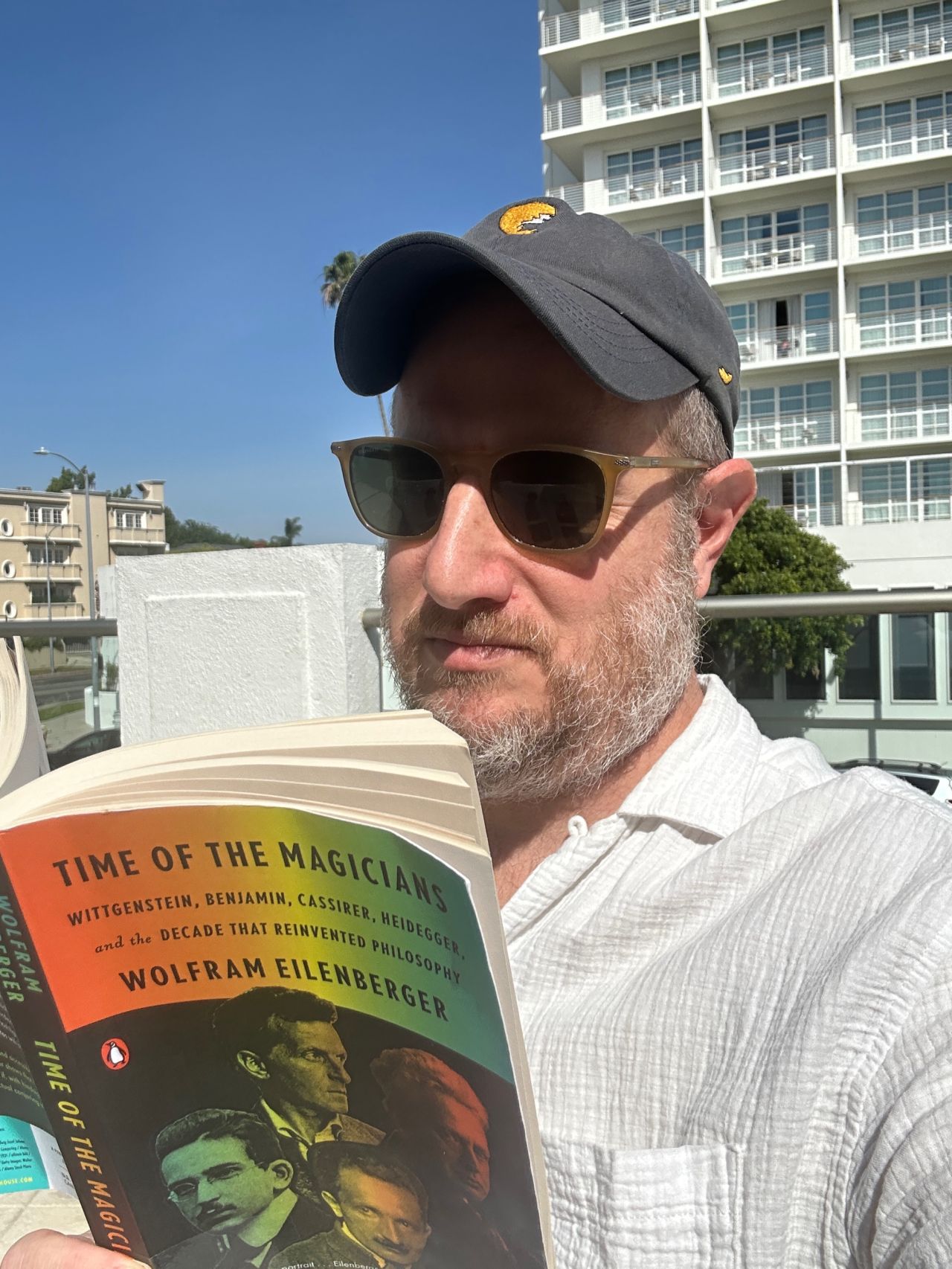
In a recent LinkedIn post, Justin Oberman delves into the profound connection between lived experience and intellectual output, using the lens of philosophy to critique the current discourse around Artificial Intelligence. Oberman contrasts the depth of human thought, forged in the crucible of personal struggle and profound life choices, with the capabilities of AI.
He begins by highlighting the tendency to focus on grand ideas while overlooking the substantial lives that give rise to them. Referencing Wolfram Eilenberger’s “Time of the Magicians,” which chronicles philosophers like Wittgenstein, Benjamin, Cassirer, and Heidegger, Oberman emphasizes that these thinkers’ frameworks shaping modern society emerged not in a vacuum, but from intense personal journeys.
“But this book is less about their philosophies then about the life moments and debates they were formed in.”
Oberman illustrates this point with compelling examples from the book. He notes how Wittgenstein renounced his family fortune for intellectual clarity and how Heidegger’s concepts were intertwined with his ambition to rise from humble origins. The post also touches on Benjamin’s prolific writing amidst financial hardship and anxiety.
According to Oberman, these narratives serve as a crucial reminder that profound ideas, particularly in language and meaning, are deeply rooted in the lived realities of their creators.
The AI vs. Human Thinker Dichotomy
The core of Oberman’s argument pivots to a comparison between AI and human cognition. While acknowledging AI’s capacity to process vast amounts of information and summarize complex philosophical works rapidly, he asserts that AI fundamentally lacks the experiential basis of human thought.
“AI can process every philosophy paper ever written. It can summarize Heidegger in 30 seconds. It can tell you how Wittgenstein would respond to every metaphysical question you throw at it. But it has never given up an inheritance for spiritual clarity. It has never written from desperation.”
Oberman argues that AI, by its nature, cannot replicate the motivations and pressures that drive human innovation and deep thinking. He posits that thinking and living are inextricably linked, a truth demonstrated by the very philosophers whose lives informed their theories before their writings did.
AI as a Mirror, Not a Source
Expanding on this, Oberman presents AI as a reflective tool rather than an originator of genuine insight. He contends that the quality of AI’s output is a direct reflection of the user’s input—not just the data fed into the AI, but crucially, the user’s own mind and interpretation.
“And that is simply that AI is a mirror. It reflects the quality of thinking you bring to it. If your input is shallow, your output is shallow. But by input I don’t mean what you input into AI. I mean what you input into your own mind.”
In Oberman’s view, no technological workaround can compensate for a lack of critical thinking or depth in the user. He suggests that the true limitation of AI, particularly language models, lies in its inability to bridge the gap created by a user’s own intellectual or experiential shallowness.
The Enduring Competitive Advantage: A Deeper Life
Oberman concludes by identifying the real differentiator in an AI-augmented world: not the tools themselves, nor mastery of their use, but the cultivation of a more examined and richer personal life. He advocates for engaging with challenging literature, embracing difficult experiences, and practicing mindful reflection before interacting with AI tools.
“AI doesn’t replace depth. It exposes whether you have any.”
For Oberman, the path to genuine insight and a competitive edge lies in personal growth and intellectual rigor, suggesting that the future belongs not to those who simply use AI, but to those who possess the depth of thought that AI can only mirror. He recommends Eilenberger’s book for those seeking to understand the origins of ideas beyond the current AI-centric narratives.
📝 About This Content
This article is based on insights shared by Justin Oberman on LinkedIn.
📅 Originally posted on March 15, 2026 | View original post on LinkedIn →