
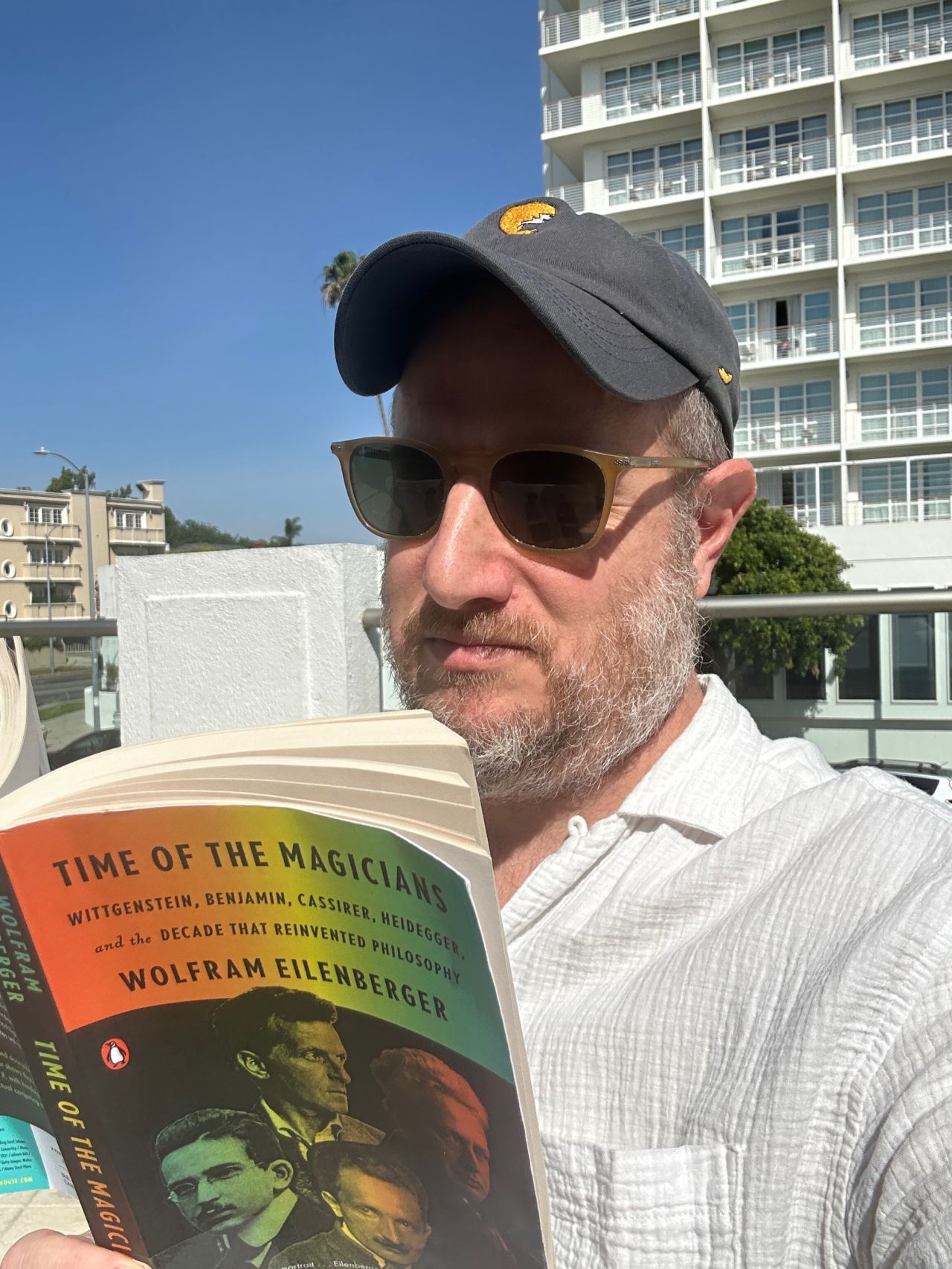
In a recent LinkedIn post, Justin Oberman explores the profound connection between lived experience and the generation of ideas, drawing a sharp contrast between human thought and artificial intelligence. Oberman uses his reading of Wolfram Eilenberger’s “Time of the Magicians” as a springboard to discuss how the lives of influential philosophers shaped their groundbreaking work.
Oberman highlights that the book, which chronicles figures like Wittgenstein, Benjamin, Cassirer, and Heidegger in the decade following World War I, focuses less on their abstract philosophies and more on the personal circumstances and intellectual debates that forged them. He points out the deeply personal sacrifices and struggles that underpinned their seminal ideas.
“It talks about how Wittgenstein gave away his entire family fortune to think more clearly. How Heidegger’s obsession with ‘being’ was forged with his obsession of rising to prominence as the first major philosopher to arise out of Black Forest peasant culture. And how Benjamin did list of his writing while was broke, anxious, and obsessed with Russian woman.”
The Crucial Distinction Between Human and AI Thinking
According to Justin Oberman, this emphasis on the lived reality of thinkers is a critical reminder, especially in the current discourse surrounding artificial intelligence. Oberman argues that while AI can rapidly process and summarize vast amounts of information, it fundamentally lacks the experiential basis from which human ideas emerge.
“AI can process every philosophy paper ever written. It can summarize Heidegger in 30 seconds. It can tell you how Wittgenstein would respond to every metaphysical question you throw at it. But it has never given up an inheritance for spiritual clarity. It has never written from desperation,” Oberman writes in his post.
Oberman’s central thesis is that thinking and living are not separate endeavors. He posits that the philosophers he’s reading about proved this connection through their lives before their theories fully articulated it. This lived experience, he suggests, is what AI cannot replicate.
AI as a Mirror to Human Input
Justin Oberman further elaborates on the nature of AI, describing it as a mirror that reflects the quality of the thinking directed towards it. “If your input is shallow, your output is shallow,” he states. However, he clarifies that this “input” refers not to the data fed into the AI, but to the individual’s own mind and capacity for interpretation.
In Oberman’s view, the true limitation of AI, particularly language models, lies in its inability to compensate for a lack of depth in the user. He contends that no prompt, trick, or hack can overcome this fundamental issue. The interpretation of AI-generated results is intrinsically linked to the user’s own intellectual and experiential framework.
The Real Competitive Advantage
As Oberman sees it, the genuine competitive advantage in today’s world is not found in simply using better tools or mastering their application. Instead, he frames the true advantage in more philosophical terms: cultivating a more examined life. This involves engaging with challenging material and experiences.
“AI doesn’t replace depth. It exposes whether you have any,” Oberman concludes, underscoring his belief that AI’s capabilities highlight, rather than diminish, the importance of human depth, critical thinking, and lived experience.
Oberman recommends “Time of the Magicians” for those seeking to understand the origins of ideas beyond the often-hyped perspectives of AI engineers and gurus, emphasizing its value in exploring where concepts truly come from.
📝 About This Content
This article is based on insights shared by Justin Oberman on LinkedIn.
📅 Originally posted on March 15, 2026 | View original post on LinkedIn →