
In a recent LinkedIn post, Hung Lee explores the evolving capabilities of AI agents, particularly in the realm of recruitment, arguing that true AI advancement lies not just in generating content but in proactive operational execution. Lee suggests that many current AI tools still require significant human input, a sentiment echoed by his colleague Adam Gordon, who describes AI agents as “themselves hard work!”
Beyond Prompt-Based AI: The Rise of Proactive Agents
Lee distinguishes between AI that assists with tasks like writing job ads or screening applications and the next generation of AI that can autonomously manage complex operational workflows. He points out that while AI can handle initial stages of recruitment, the subsequent stages – scheduling, managing reschedules, dealing with no-shows, and navigating bottlenecks – often remain mired in human-driven operational chaos.
“AI can write job ads, screen applications, answer candidate questions, conduct first screen. But most hiring teams are still stuck in the operational chaos of what happens after that: scheduling, reschedules, interviewer no-shows, follow-ups, bottlenecks, and endless coordination across recruiters, hiring managers, interviewers, and candidates – that’s where hiring actually breaks down for most teams”
The crux of Lee’s argument is that genuine AI progress in recruitment will be marked by agents that actively manage these behind-the-scenes complexities, rather than waiting for human commands. He highlights his experience with Cori from GoodTime as an example of this proactive approach.
Cori: A Digital Teammate Handling Hiring Coordination
Lee describes Cori not as another chatbot or copilot, but as a “digital teammate” designed to keep the hiring process moving without constant human intervention. He outlines a workflow where Cori takes over once applications begin to arrive:
- Cori screens and prioritizes candidates.
- She schedules interviews, adeptly handling complex arrangements involving multiple time zones and panels.
- Crucially, Cori adapts to changes dynamically.
As Lee elaborates on Cori’s adaptive capabilities:
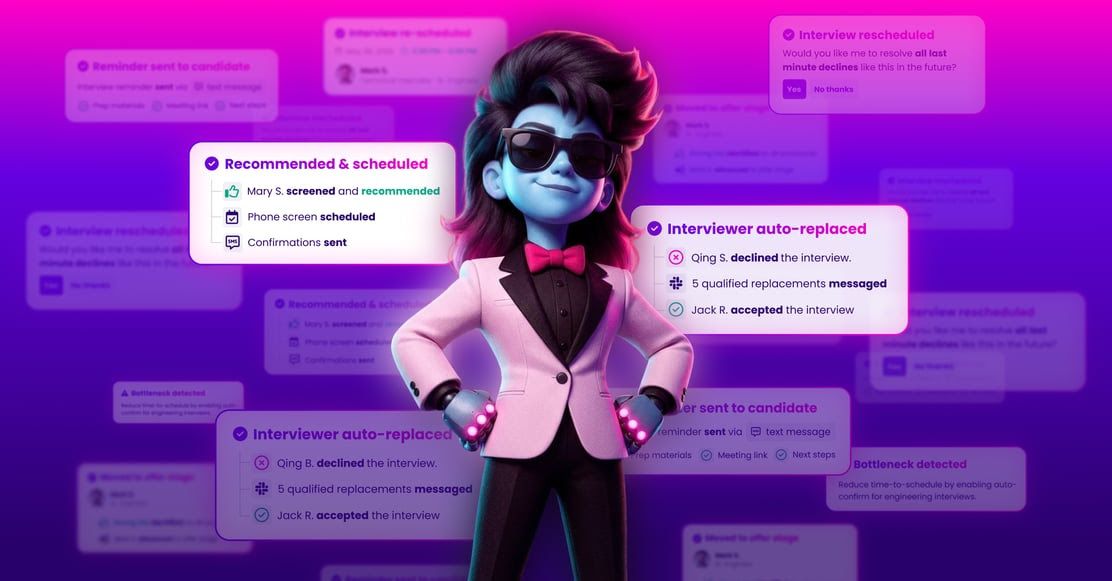
“If an interviewer declines at the last minute, Cori replaces them automatically. If candidates have questions, she responds in real time. If the pipeline starts slowing down, she detects the bottleneck before it becomes a bigger problem.”
This ability to autonomously manage disruptions and maintain momentum is what Lee finds particularly significant. He emphasizes that the AI’s value lies in its capacity to handle the actual coordination work that typically slows hiring teams down.
The Future of Recruitment: Less Coordination, More Human Connection
Lee posits that recruiters should not be burdened with the task of “chasing calendars.” According to his analysis, AI agents like Cori can free up valuable human resources.
“What stood out to me is that the AI isn’t just surfacing insights or generating content. It’s actually handling the coordination work that slows hiring teams down every day.”
This shift, in Lee’s view, leads to several benefits: less time spent on administrative coordination, increased momentum in the hiring process, and ultimately, more time for the essential human aspects of hiring. He concludes by posing a question to his audience about their willingness to trust such AI teammates with hiring coordination, indicating his keen interest in observing the future development and adoption of these advanced AI solutions.
📝 About This Content
This article is based on insights shared by Hung Lee on LinkedIn.
📅 Originally posted on May 19, 2026 | View original post on LinkedIn →