
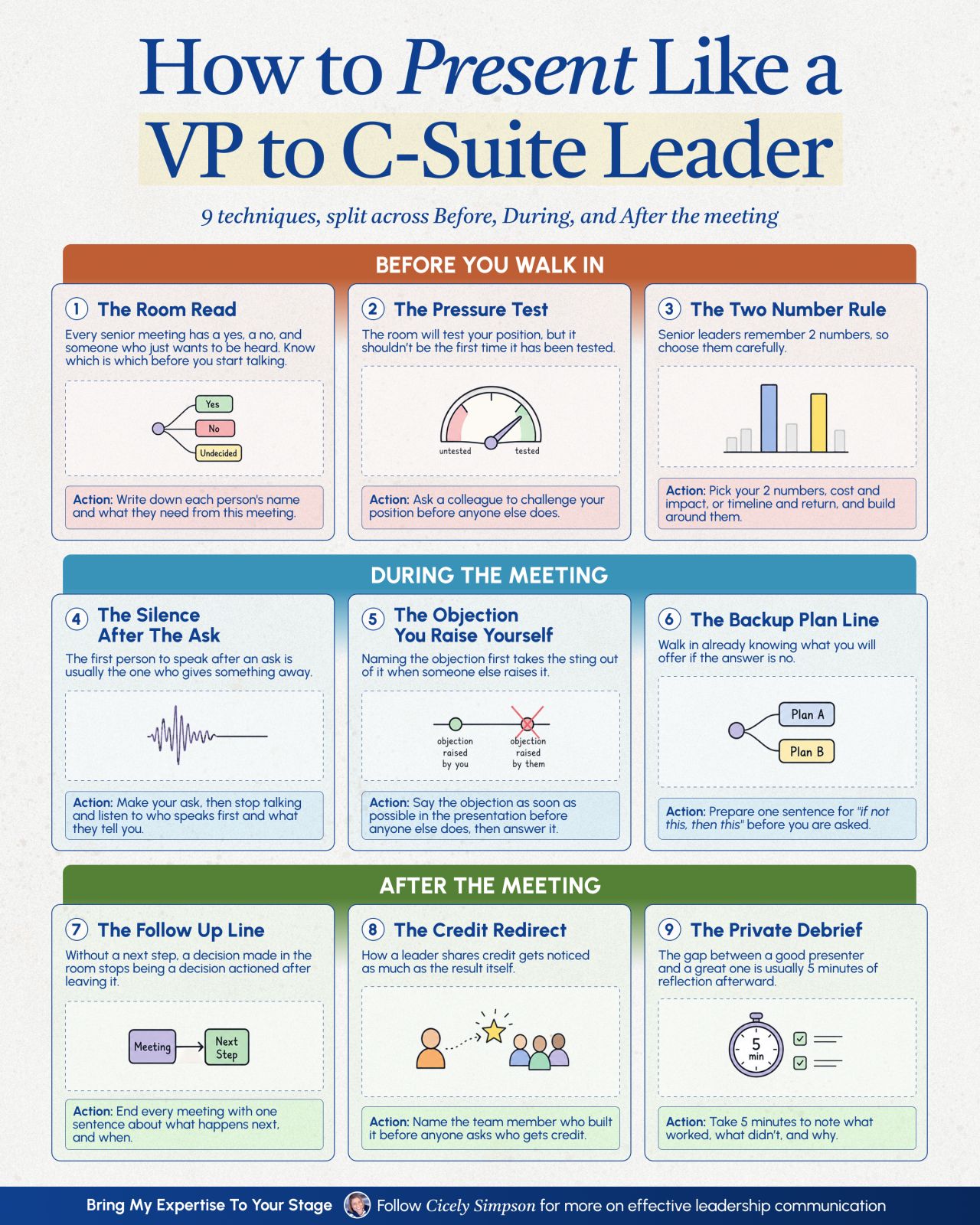
In a recent LinkedIn post, Cicely Simpson shares a compelling framework for navigating high-stakes boardroom presentations, emphasizing that success hinges not on slide aesthetics but on strategic preparation and execution before, during, and after the meeting. Simpson recounts an anecdote where two individuals presented identical data to the same board, with one securing approval and the other receiving ‘homework.’ The key differentiator, she explains, was not the numbers themselves, but the meticulous groundwork laid beforehand.
Cicely Simpson argues that effective presenting is a holistic process. She states:
“It was all about what happened long before either of them opened their mouth. And that’s because presenting well isn’t about how pretty your slides look. It’s about what you do before, during, and after the meeting.”
The Pre-Presentation Advantage: Setting the Stage for Success
Simpson’s advice begins with a crucial ‘Before You Walk In’ phase, highlighting three core strategies. Firstly, she advocates for ‘The Room Read,’ urging presenters to understand each board member’s needs and motivations before crafting any slides. This involves identifying who holds decision-making power, who needs to feel heard, and tailoring the approach accordingly.
Secondly, Simpson introduces ‘The Pressure Test,’ a method of proactively seeking challenges from a trusted colleague to refine one’s position before facing the actual board. As Cicely Simpson notes, “Test your positioning before the room does.”
The third pre-presentation tactic is ‘The Two Number Rule.’ Simpson emphasizes that senior leaders primarily retain two key figures: cost and impact, or timeline and return. She advises presenters to identify and build their entire narrative around these two critical numbers, ensuring clarity and focus.
Navigating the Meeting: Confidence and Control
During the meeting itself, Cicely Simpson outlines strategies to maintain control and build trust. One key tactic is ‘The Silence After the Ask.’ Simpson advises presenters to pause and allow the board to respond after making their proposal, as breaking the silence first can signal hesitation or concessions.
Another powerful technique is ‘The Objection You Raise Yourself.’ By proactively addressing the most significant potential concern, presenters can neutralize its impact. “Naming the biggest concern first takes the power out of the question,” Simpson explains. Furthermore, she recommends having ‘The Backup Plan Line’ ready, demonstrating foresight and preparedness by offering a clear alternative if the initial proposal is not accepted.
“Leaders and teams trust people who have already thought 2 moves ahead.”
Post-Meeting Momentum: Ensuring Follow-Through and Growth
Simpson’s framework extends beyond the presentation to the critical ‘After The Meeting’ phase. She stresses the importance of ‘The Follow Up Line,’ a concise statement about next steps and timelines that prevents the meeting from being forgotten. According to Cicely Simpson, “A meeting without this becomes a meeting people forget was ever decided.”
Additionally, Simpson advocates for ‘The Credit Redirect,’ where presenters ensure the team responsible for the plan’s success receives recognition. This builds goodwill and reinforces a collaborative environment. Finally, she emphasizes ‘The Private Debrief,’ a brief personal reflection to identify what worked and what could be improved for future presentations. As Cicely Simpson puts it, “You can only improve if you take time to reflect.”
By implementing these nine strategies, Simpson suggests that presenters can significantly increase their chances of securing approval and foster greater confidence in their leadership capabilities. She encourages readers to trial one new tactic this week to observe its impact on their presentation outcomes.
📝 About This Content
This article is based on insights shared by Cicely Simpson on LinkedIn.
📅 Originally posted on September 13, 2026 | View original post on LinkedIn →