
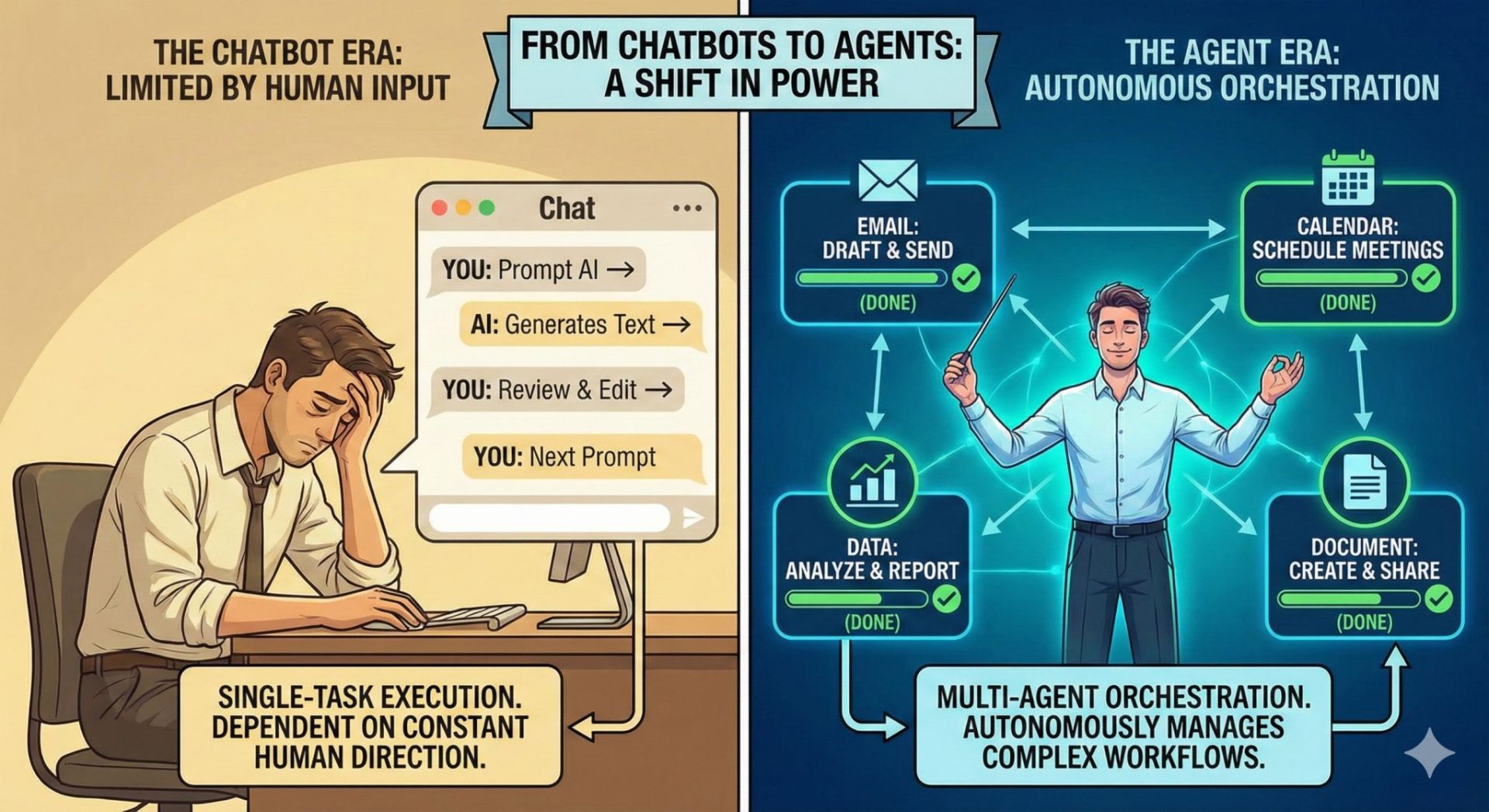
In a recent LinkedIn post, Jason Averbook distinguishes between a true AI strategy and a mere chatbot strategy, arguing that the latter significantly underestimates the disruptive potential of artificial intelligence on the modern workforce. Averbook contends that the limited experience most individuals have with AI, primarily through chatbots, prevents them from grasping the profound changes that AI agents are poised to bring about.
Averbook begins by highlighting the current reality of AI integration, stating:
Most organizations think they have an AI strategy. They have a chatbot strategy.
He elaborates on this distinction, explaining that while chatbots offer a limited interaction, AI agents are capable of performing complex, multi-faceted tasks. Averbook shares his personal experience:
Right now, as you read this, I have fifteen to twenty agents running simultaneously. One is researching. One is drafting. One is monitoring. One is following up on things I would have forgotten. I am not a more productive version of a knowledge worker. I am a different kind of worker entirely.
This personal anecdote serves to illustrate his central thesis: that AI is not merely augmenting existing roles but fundamentally redefining them. Averbook emphasizes that this shift is not a future possibility but a present reality.
The Chatbot Illusion vs. The Agent Reality
Averbook criticizes the common misconception that AI’s impact is limited to conversational interfaces. He uses the analogy of electricity to explain this limited perspective:
Here’s the thing nobody is saying out loud: when people only experience AI as a chatbot, they genuinely cannot see how it’s going to change or replace their job. The chatbot gives them a little more light in the room, so they think that’s what electricity does. They have no frame of reference for the electrical grid.
According to Averbook, the core difference lies in agency and initiative. He points out that a chatbot is reactive, requiring user input for each step, whereas an agent can operate autonomously.
Agents Drive Fundamental Change
The true transformative power, Averbook argues, comes from AI agents that can make decisions and execute tasks without constant human intervention. He states:
A chatbot talks. An agent works. A chatbot asks you what to do next. An agent decides what to do next.
This capability, Averbook suggests, has significant implications for employment. When one individual, empowered by multiple AI agents, can accomplish the work previously done by a team, the fundamental structures of employment, performance management, and compensation will inevitably change. He asserts that most organizations are unprepared for this seismic shift.
The Unseen Impact on the Job Market
Averbook concludes by stressing that the real disruption will come from AI agents, not just chatbots. He warns that the limited exposure to AI through chat interfaces leaves many unaware of the impending changes.
Jobs aren’t going to be transformed by chatbots. They’re going to be transformed by agents. And most people can’t see it coming because they’ve never experienced anything beyond the chat window.
His post serves as a critical call to action for leaders and individuals alike to understand and prepare for the deeper implications of AI, moving beyond the superficial understanding offered by chatbots to grasp the operational power of AI agents.
📝 About This Content
This article is based on insights shared by Jason Averbook on LinkedIn.
📅 Originally posted on February 25, 2026 | View original post on LinkedIn →