
In a recent LinkedIn post, Mario Hernandez challenges the prevailing narrative of a startup boom, arguing instead that the current landscape is characterized by a “capital concentration event disguised as innovation.” Hernandez, a keen observer of the tech and venture capital world, asserts that while AI is driving significant investment, the dynamics at play are fundamentally different from a healthy, broad-based startup ecosystem.
Hernandez points to the overwhelming flow of capital into AI, noting that in 2025, AI startups absorbed approximately 50% of all global venture capital, with some datasets placing this figure even higher. He highlights that this concentration is not accompanied by a proportional increase in deal count, but rather a flow of capital into fewer companies, leading to more extreme outcomes. This, in his view, is not a sign of a robust ecosystem, but rather “a power law on steroids.”
“We’re not. We’re in a capital concentration event disguised as innovation.”
AI as Infrastructure, Not a Category
A core argument from Hernandez is that AI has transitioned from being a distinct category to becoming foundational infrastructure, akin to cloud or mobile computing before it. He posits that startups identifying solely as “AI companies” may lack a sustainable advantage.
As Hernandez explains:
“If your startup is ‘just using AI,’ you have no moat.”
This shift implies that the true winners are not necessarily the applications built on AI, but rather those who hold strategic positions within the technology stack. Hernandez identifies key areas attracting capital, including foundation models, compute power, data centers, and distribution layers. He contrasts this with typical startup energy, stating that the massive projected spending by hyperscalers on infrastructure represents “industrialization” rather than startup activity.
The Trade-off Between Speed and Defensibility
Hernandez also addresses the rapid growth rates seen in AI-native startups, some of which achieve multi-billion dollar run rates in under two years. However, he cautions that this speed comes at the cost of defensibility. The commoditization of code, instant replication of features, and collapsing switching costs mean that while building may be faster, defending a market position has become significantly harder.
Distribution Over Product
Furthermore, Hernandez argues that the primary bottleneck in the current AI landscape is no longer product development, but distribution. He observes a critical shift where discovery itself is becoming problematic as users interact with AI through large language models. Unless a startup already possesses significant authority, it is unlikely to appear in search results.
According to Hernandez:
“In an AI world, discovery itself is broken. When people search through LLMs, new startups almost never show up unless they already have authority. Visibility is compounding toward incumbents.”
This dynamic fundamentally alters the game, leading Hernandez to conclude that “Distribution > Product,” “Relationships > Features,” and “Access > Awareness” are the new prevailing principles.
Entering the ‘Value Extraction’ Phase
Concluding his analysis, Mario Hernandez suggests that the market is moving beyond the hype phase into a period of “value extraction.” He notes that enterprises are now prioritizing Return on Investment (ROI) over demonstrations, investors seek margins over narratives, and customers demand outcomes rather than just copilot features.
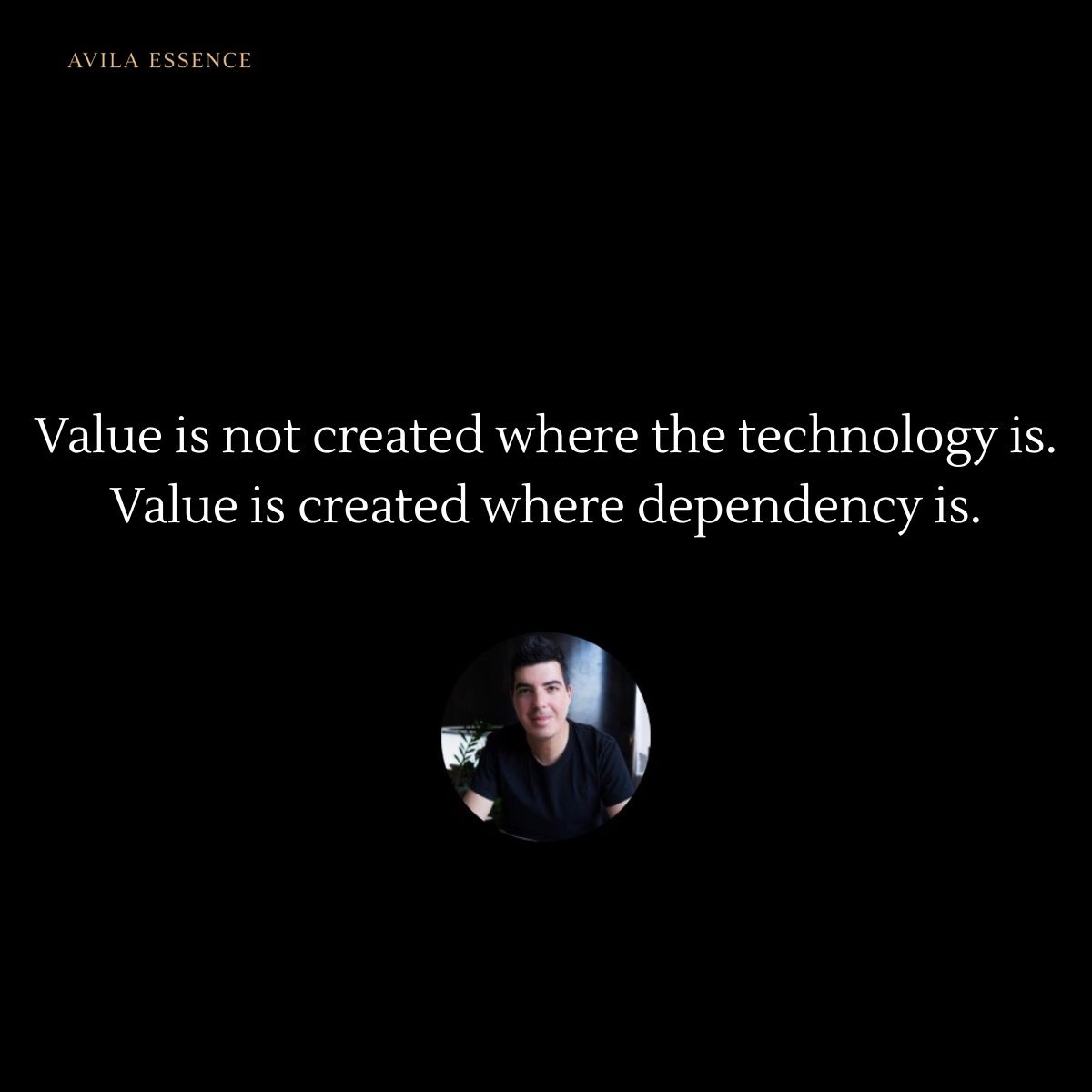
Hernandez asserts that the market signals for 2026 clearly indicate a focus on “trust, reliability, and cost efficiency, not experimentation.” He predicts that many AI startups currently receiving funding will ultimately fail, not due to technological limitations, but because they lack control over distribution, proprietary data, or a critical position in the tech stack. Ultimately, Hernandez emphasizes that true value is created not where the technology resides, but where dependency is established, and this dependency is currently being consolidated at an unprecedented rate.
📝 About This Content
This article is based on insights shared by Mario Hernandez on LinkedIn.
📅 Originally posted on March 27, 2026 | View original post on LinkedIn →