
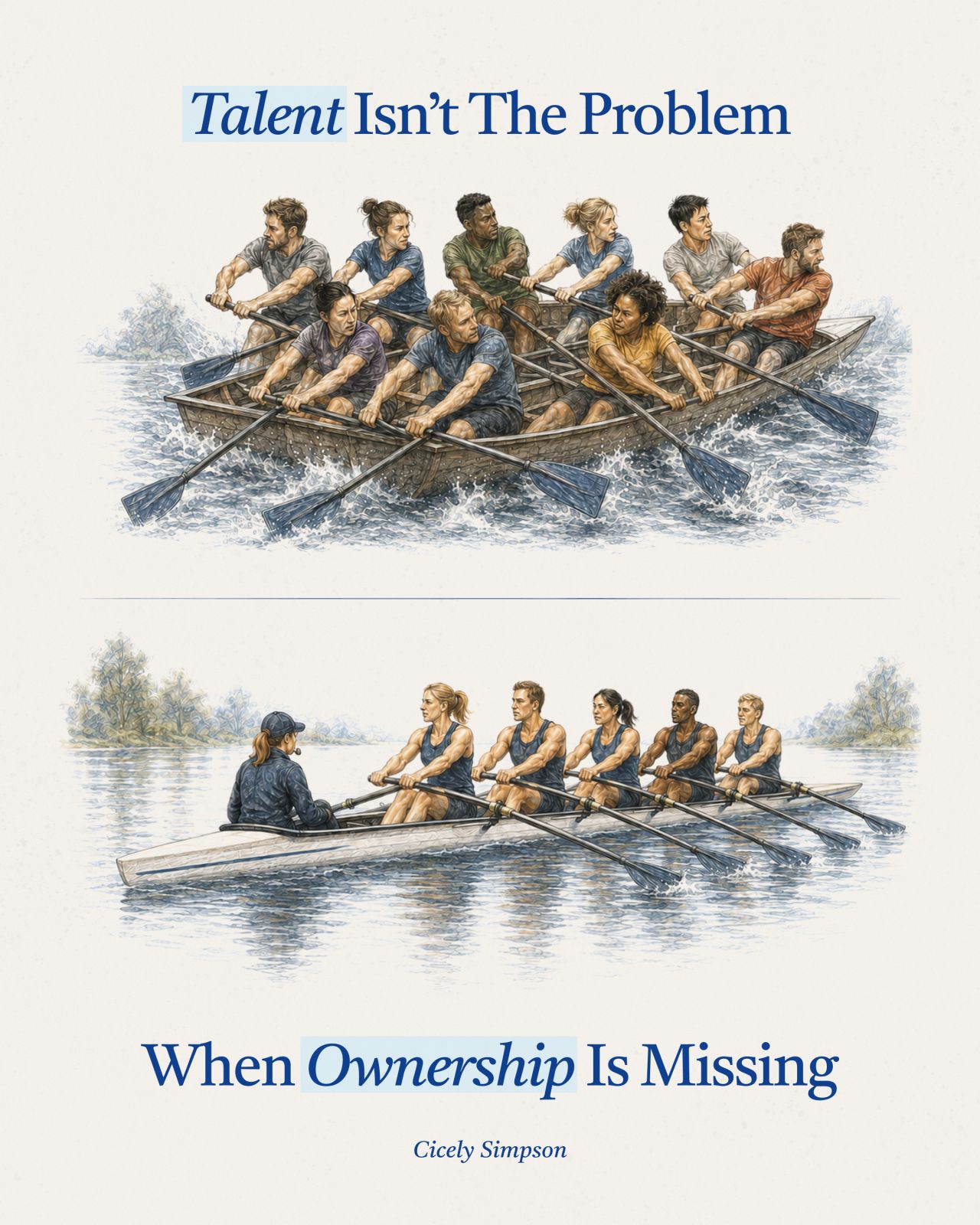
In a recent LinkedIn post, Cicely Simpson addresses a common pitfall that can derail even the most talented teams: a lack of clear ownership. Simpson argues that without defined roles and decision-making authority, even capable individuals can find their collective efforts falling short.
Simpson highlights how this ambiguity can manifest in several detrimental ways. “I have watched this happen with teams full of the most capable people in the building,” Simpson writes. “The talent was never the problem. Ownership was always vague, and nobody had bothered to fix it.” This lack of clarity, according to Simpson, leads to a range of inefficiencies.
“People start CC’ing everyone on everything, just to be safe”
Simpson points out that this often results in work stalling, duplicated efforts, and decisions being made and then unraveled. “On paper, everyone looks busy. In reality, the team lost alignment, and busy became a substitute for progress,” she observes. The issue, as Simpson frames it, is not a lack of individual effort, nor is it solved by simply adding more talented people who will inherit the same confusion.
The Hidden Cost of Vague Ownership
According to Cicely Simpson, the negative consequences of unclear ownership disproportionately affect the strongest team members. These individuals often end up “absorbing the gap, and paying for it in hours nobody sees.” This creates an unsustainable environment where valuable employees are overextended, not due to workload, but due to the inefficiencies stemming from poor role definition.
Symptoms of Misaligned Ownership
Simpson outlines several tell-tale signs that a team might be suffering from unclear ownership:
- Decisions are consistently revisited.
- Team members appear stretched thin.
- Projects or initiatives fail to reach a definitive conclusion.
These symptoms, she posits, are not indicative of a talent shortage but rather a systemic issue with how responsibilities are structured.
“No amount of individual effort fixes that.”
Pathways to Clarity and Progress
To combat these issues, Cicely Simpson proposes a series of actionable steps for leaders. She emphasizes the need to move beyond simply assigning project ownership to defining specific decision rights within those projects.
Defining Decision Ownership
Simpson suggests naming the specific decisions each role is accountable for. “Vague ownership creates 2 people who both think they’re in charge,” she states, underscoring the importance of precision.
Establishing Escalation Lines
A clear escalation path is another critical element. Simpson advises leaders to “Set a clear line for what needs to come to you.” This ensures that only appropriate decisions are escalated, preventing bottlenecks and empowering individuals to make decisions within their purview.
“Let a decision stand once it’s made”
Furthermore, Simpson stresses the importance of allowing decisions to stand once made, unless significant new information warrants a formal reconsideration. She also recommends periodically checking if existing decisions still align with current quarterly priorities, as shifting business landscapes can render old decisions obsolete.
Building a Self-Sufficient Team
Ultimately, Cicely Simpson’s insights point towards building a team that can operate autonomously, without requiring constant managerial oversight for every step. When ownership is specific and escalation paths are clear, decisions become more robust, and team members are less likely to be burdened by confusion that is not their responsibility to resolve.
📝 About This Content
This article is based on insights shared by Cicely Simpson on LinkedIn.
📅 Originally posted on September 12, 2026 | View original post on LinkedIn →