
In a recent LinkedIn post, Suzanne Lucas discusses the insidious ways manipulation can damage leadership, even among experienced professionals. She highlights that succumbing to external pressure, even when it feels wrong, is not exclusive to teenagers and can significantly impact adult decision-making and authority.
Lucas begins by posing a relatable scenario: “Have you ever done something you not only didn’t want to do, but deep down felt you shouldn’t do, but outside pressure worked and you did the dumb thing?” She asserts that unchecked manipulation creates three distinct forms of damage that quietly erode leadership effectiveness.
The Destabilizing Effect on Confidence
According to Suzanne Lucas, the first major consequence of manipulation is the destabilization of a leader’s confidence. When individuals are pressured into actions they deem incorrect, they begin to doubt their own perceptions and judgment. Lucas explains this internal shift: “You begin questioning your perception. You hesitate on decisions that once felt natural. You seek reassurance before acting.” This erosion of self-trust, as Lucas points out, leads to a slowdown in decision-making, not due to a lack of skill, but because the leader’s internal sense of authority has been compromised.
The Redirection of Loyalty and Influence
Secondly, Lucas identifies the redirection of loyalty as a critical outcome of manipulative tactics. In environments where manipulation is present, individuals may start seeking guidance or validation from sources other than their direct leader. “People begin checking with someone else before checking with you. The emotional center of gravity moves,” Lucas writes. This shift weakens the leader’s position, allowing their influence to slip sideways without overt confrontation, thereby diminishing their overall authority.
Leadership Degrades into Containment
The third form of damage, as outlined by Suzanne Lucas, is when leadership transforms from proactive development into reactive containment. Instead of focusing on strategic growth and forward momentum, leaders become preoccupied with managing the fallout of manipulative dynamics. Lucas elaborates on this shift: “You stop building forward. You start cleaning up behind. Strategy gets buried under emotional management.” In her view, this makes the leadership role feel more burdensome without offering greater clarity or purpose, fundamentally changing the nature of the job from one of creation to one of damage control.
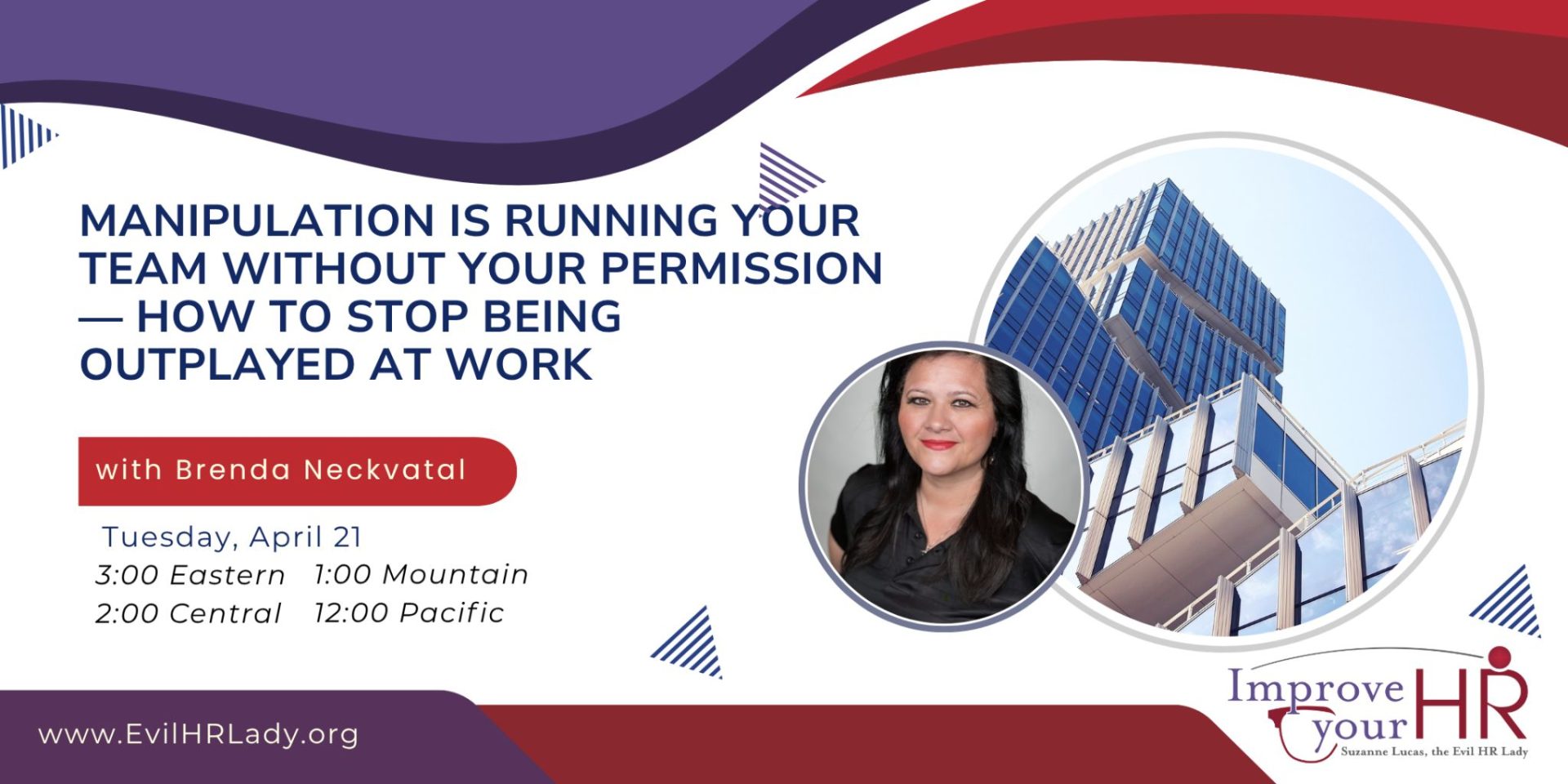
Lucas concludes her post by offering a path forward, suggesting that learning to counter these manipulative forces is crucial for effective leadership. She invites professionals to a session with Brenda Neckvatal on April 21 to learn how to address these challenges.
📝 About This Content
This article is based on insights shared by Suzanne Lucas on LinkedIn.
📅 Originally posted on April 16, 2026 | View original post on LinkedIn →