
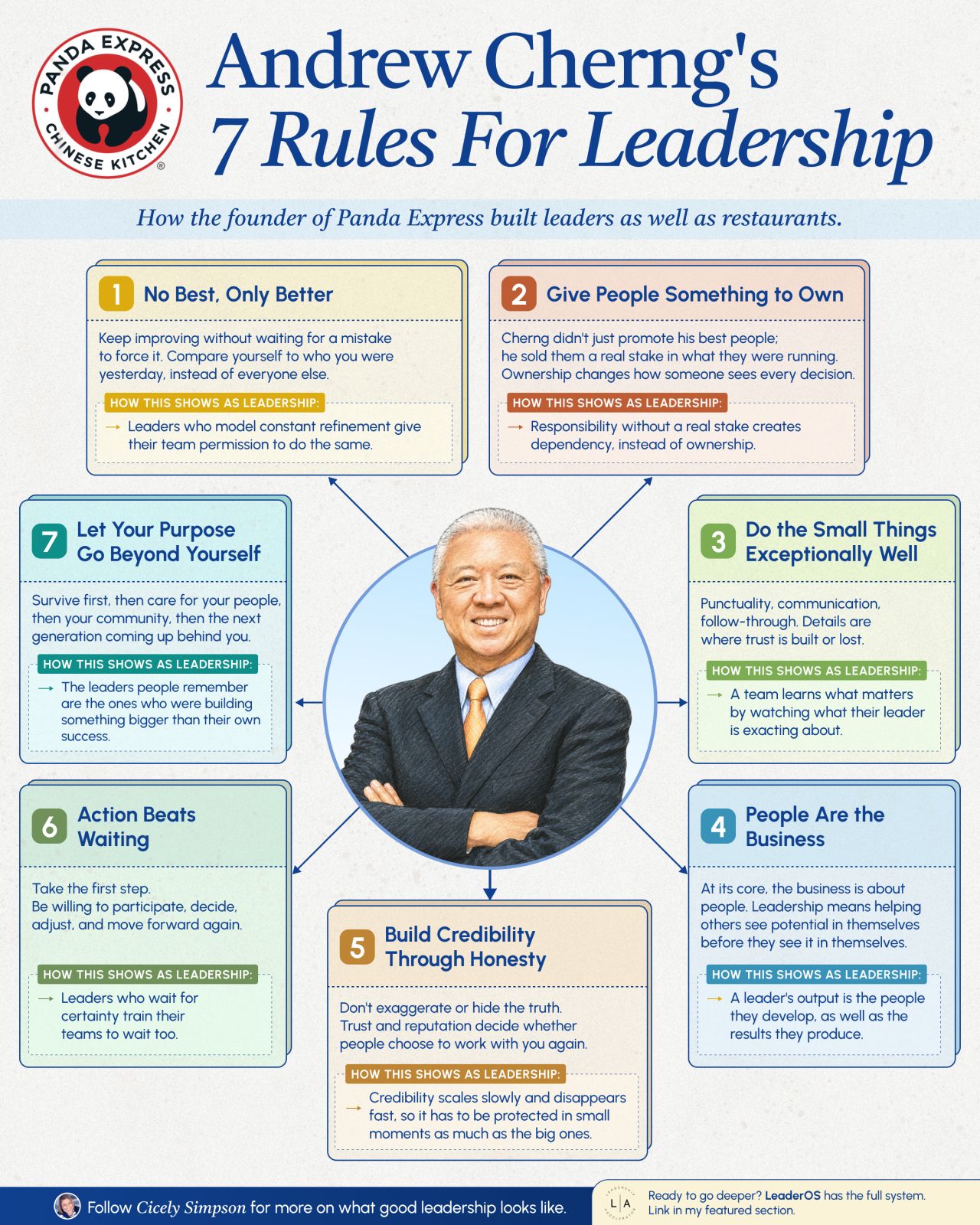
In a recent LinkedIn post, Cicely Simpson explores the critical distinction between assigning responsibility and fostering genuine ownership within a team. Simpson uses the example of Panda Express co-founder Andrew Cherng to illustrate how true leadership involves empowering individuals with the authority and stake needed to “run things better,” rather than simply expecting them to operate like owners.
“We can run them better.”
Simpson begins by recounting how Andrew Cherng, instead of merely franchising Panda Express for passive income, actively involved his employees in the business’s success. A key strategy highlighted by Simpson was Cherng’s practice of selling a 10% stake in new restaurants to key employees for a nominal amount. This, according to Simpson, was designed to align their decision-making with tangible ownership and the direct impact of their choices on the business’s performance, from managing the customer experience to controlling waste and labor costs.
The Gap Between ‘Owning It’ and True Ownership
The core of Simpson’s argument centers on a common leadership pitfall: asking employees to “own” initiatives without providing the commensurate control or autonomy. Simpson observes that many Vice President and C-suite leaders fall into this trap. They delegate tasks and use the language of ownership, but retain tight control over budgets, approve every minor change, and intervene immediately when challenges arise. This approach, Simpson contends, cultivates dependency rather than genuine ownership.
“You cannot ask someone to think like an owner while designing their role like an employee.”
Simpson elaborates on this disconnect, stating, “Responsibility without control doesn’t build ownership. It builds dependency.” This dynamic, she notes, often leads to leaders becoming frustrated when their teams fail to take initiative, when the underlying issue is the structural design of their roles and the limitations placed upon them.
Three Questions for Leaders to Assess Empowerment
To help leaders identify and rectify these issues, Simpson poses three probing questions:
1. Who’s Already Operating Beyond Their Role?
Simpson advises looking beyond tenure and identifying individuals who proactively anticipate problems and operate with initiative, even without explicit instruction. These are the individuals already demonstrating a capacity for greater responsibility.
2. What’s the Smallest Real Thing You Could Hand Them?
This question encourages leaders to identify a tangible task or area of responsibility that can be fully delegated, free from the leader’s direct oversight or sign-off. The goal is to give individuals something they can manage and execute independently.
3. What Are You Holding Onto Simply Because You’re Faster at It?
Simpson calls this question particularly challenging, urging leaders to confront the tendency to retain tasks due to personal efficiency. She argues that holding onto such tasks year after year prevents others from developing the necessary skills and capacity to carry them, thus hindering organizational scaling.
“Andrew didn’t open 2,600 Panda Express restaurants himself. He opened the first ones. Then he built people who could open the rest.”
Simpson concludes by emphasizing the difference between leaders who scale themselves and those who scale their organizations. By empowering individuals with true ownership, leaders can build teams capable of independent decision-making and execution, a principle she suggests is at the heart of her LeaderOS program.
📝 About This Content
This article is based on insights shared by Cicely Simpson on LinkedIn.
📅 Originally posted on September 11, 2026 | View original post on LinkedIn →