
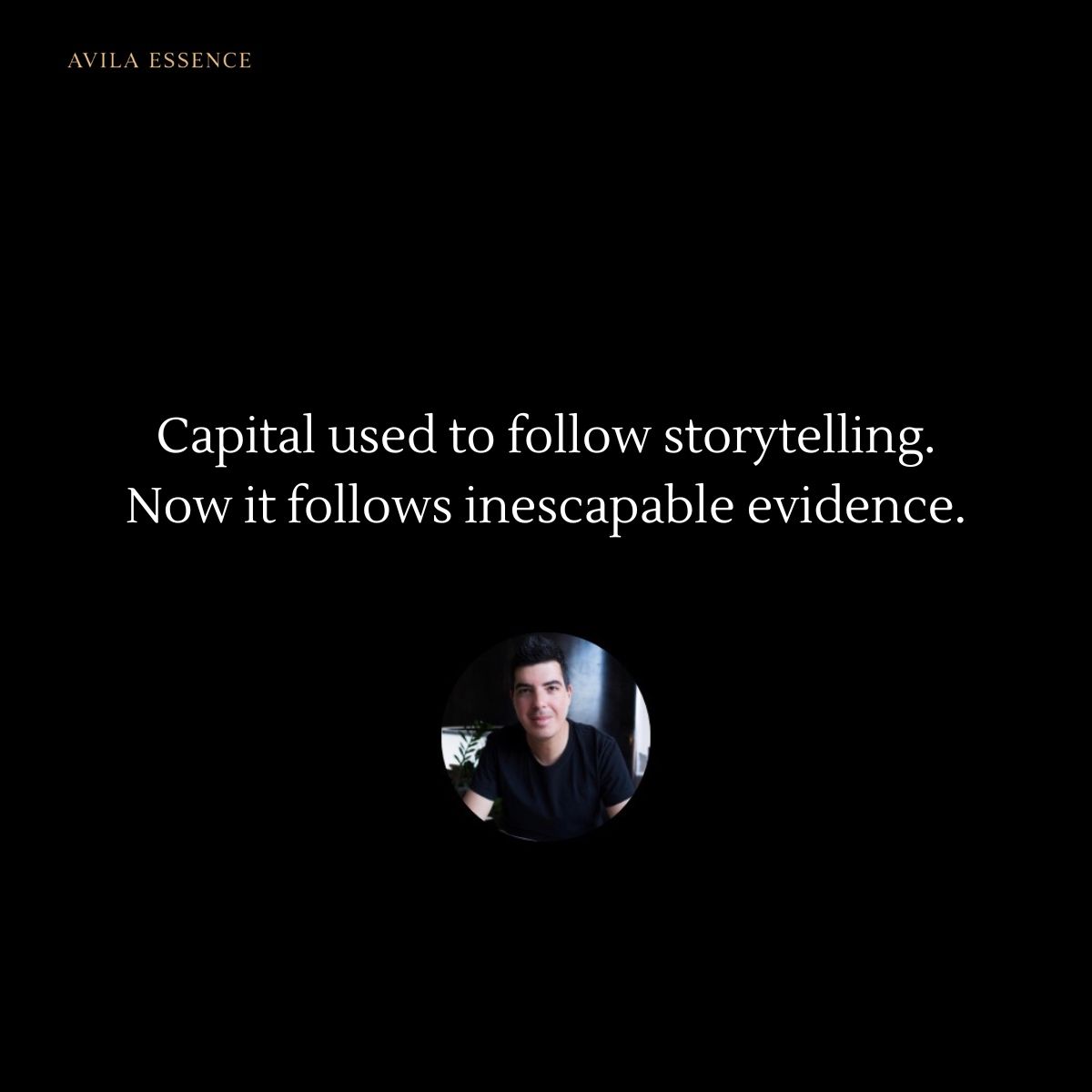
In a recent LinkedIn post, Mario Hernandez discusses a significant shift in the landscape of capital raising, emphasizing that by 2026, the ability to provide concrete proof will be paramount, even before a pitch is made. Hernandez argues that traditional pitch decks are losing their persuasive power, and instead, investors are prioritizing verifiable signals and evidence.
As Mario Hernandez notes:
“If an investor can’t validate you before the call, you’re already losing.”
The post outlines three critical shifts that founders need to address immediately to align with this evolving investor mindset. Hernandez suggests that the future of fundraising hinges on demonstrating tangible validation rather than relying on compelling narratives alone.
Distribution as the First Diligence Layer
Hernandez highlights that the initial diligence process for investors now heavily scrutinizes a company’s public engagement and customer advocacy. This means that the content a founder shares and how it resonates with their target audience has become a crucial early indicator of viability.
According to Mario Hernandez:
“Post insights your actual buyers agree with. If your content doesn’t attract customers, it won’t attract capital.”
This suggests that building a community and fostering genuine engagement around a product or service is no longer just a marketing effort but a fundamental part of the fundraising strategy. Investors are looking for evidence that a company’s offerings have real-world traction and that customers are willing to publicly endorse them.
Beyond Warm Introductions
The traditional reliance on warm introductions is also being re-evaluated, according to Hernandez. He posits that while introductions can open doors, they are no longer sufficient on their own to secure investment. The emphasis is shifting towards building genuine advocacy from credible sources.
Mario Hernandez argues for a proactive approach:
“Stop asking for intros. Start earning advocates.”
He advises founders to cultivate relationships with 2-3 credible operators or clients who can genuinely vouch for the business, stating that such endorsements carry far more weight than a simple introduction. This requires founders to deliver exceptional value and build strong, trust-based relationships.
Underwriting Fragility, Not Just Upside
A third significant shift identified by Hernandez is the investor’s focus on a company’s resilience and defensibility rather than solely on its growth potential. In an uncertain economic climate, investors are increasingly concerned about a company’s ability to withstand challenges and its inherent durability.
Hernandez elaborates on this point:
“They care less about how big you get More about how easily you break”
Founders, therefore, need to clearly articulate their revenue’s stickiness, their unique competitive advantages, and their contingency plans for slower growth periods. Failure to adequately address these aspects, Hernandez warns, can lead to a collapse in valuation.
In conclusion, Mario Hernandez’s analysis on LinkedIn presents a clear roadmap for founders navigating the 2026 fundraising environment. The core message is that demonstrable evidence, strong customer advocacy, and inherent business resilience are the new currency for attracting capital, moving beyond the era where compelling storytelling was sufficient.
📝 About This Content
This article is based on insights shared by Mario Hernandez on LinkedIn.
📅 Originally posted on April 8, 2026 | View original post on LinkedIn →